
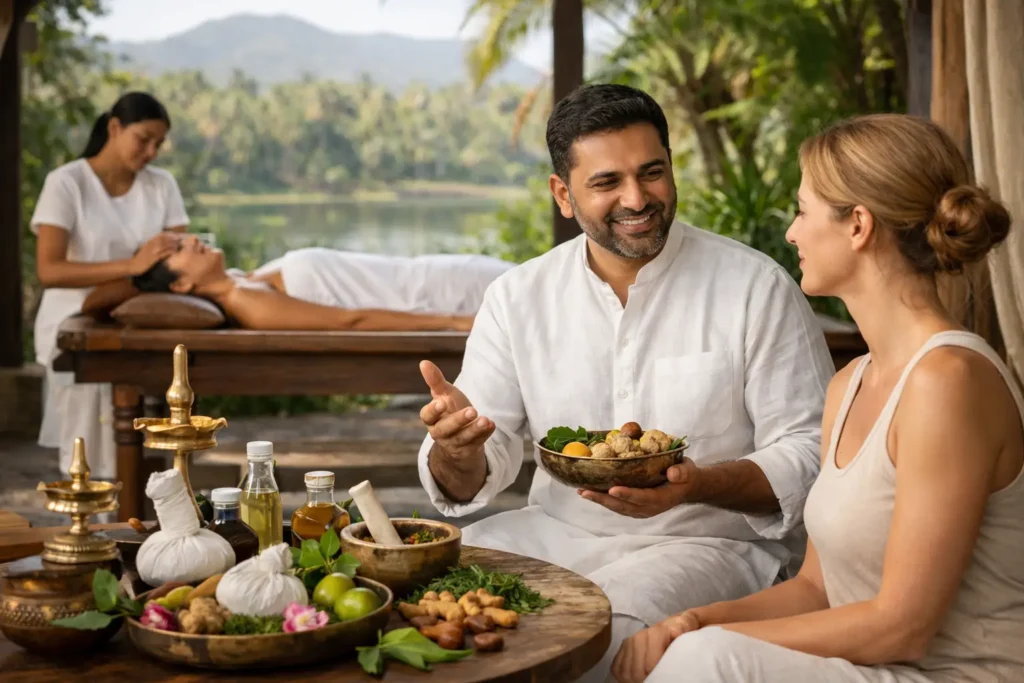
When a retreat promises detox, stress relief, and deep healing, the real question is not how beautiful the setting looks. It is who is guiding your care. An ayurvedic doctor supervised retreat stands apart because your program is not built around a generic wellness menu. It is shaped around your body type, health history, current symptoms, energy levels, digestion, sleep, and recovery goals.
For many travelers, that distinction changes everything. A massage-focused getaway may leave you relaxed for a few days. A medically guided Ayurvedic retreat is designed to do more – support restoration in a way that is structured, personalized, and appropriate for your condition. If you are traveling to Kerala for authentic Ayurveda, doctor supervision is not an extra detail. It is one of the clearest signs that the experience is grounded in the tradition itself.
What makes an ayurvedic doctor supervised retreat different?
Ayurveda is a clinical healing system as much as it is a lifestyle science. That means treatments are not meant to be selected casually, the way someone might choose from a spa brochure. In a proper retreat setting, an Ayurvedic doctor first evaluates your prakriti, or constitutional nature, along with imbalances that may be contributing to fatigue, digestive issues, inflammation, poor sleep, stress overload, or hormonal disruption.
From there, the retreat program is adjusted to fit you. Oils, therapies, herbal support, meal planning, rest periods, yoga intensity, and the pacing of detox work may all vary. This is where supervision matters. Two guests may arrive with the same complaint – exhaustion, for example – but one may need grounding nourishment while another may need metabolic support and nervous system calming. A true Ayurvedic doctor will not treat both people the same way.
That level of personalization is especially important for Panchakarma-based programs, recovery retreats, and longer stays. Cleansing without proper assessment can be too intense for some travelers. Rejuvenation without identifying the underlying imbalance may feel pleasant but remain superficial. Medical guidance helps the retreat move from general wellness into intentional healing.
Why medical oversight matters during the retreat
The value of an ayurvedic doctor supervised retreat is not limited to the first consultation. Ongoing observation is what allows the program to respond to your body in real time.
Ayurvedic therapies can have cumulative effects. You may sleep more deeply after the third day, feel emotionally lighter after certain body treatments, or notice digestive shifts once meals and herbs begin working together. In some cases, temporary fatigue, release, or discomfort can arise as the body adjusts. When a doctor is involved throughout the stay, these responses can be interpreted properly and your protocol can be refined rather than left to guesswork.
This is also where credibility matters. In a professionally run Kerala retreat, the doctor collaborates with trained therapists, kitchen teams, and yoga teachers so your experience remains coherent. The food supports the treatment plan. The bodywork follows medical direction. The movement practice complements your condition instead of pushing against it.
For international guests, this kind of structure offers peace of mind. You are not navigating a traditional medical system on your own in an unfamiliar country. You are being held within it carefully.
What to expect at an ayurvedic doctor supervised retreat
The experience usually begins before you even arrive. Quality retreat providers gather information about your health concerns, travel preferences, ideal program length, and desired outcomes. That helps match you with the right property and treatment intensity rather than forcing you into a standard package.
Once on site, the first consultation sets the direction. The doctor may ask about appetite, elimination, sleep, stress patterns, menstrual health, pain, emotional state, prior diagnoses, and lifestyle habits. Pulse and tongue assessment may be included, along with broader observation rooted in Ayurvedic diagnosis.
Your treatment plan may then include a combination of therapies such as abhyanga, shirodhara, kizhi, steam, internal oleation, herbal preparations, or Panchakarma procedures if clinically appropriate. Yoga and meditation are often prescribed with the same care. A guest recovering from burnout may need slow, stabilizing practices. Someone with stagnation and heaviness may benefit from a more energizing rhythm, but not always immediately.
Meals are another essential part of treatment. In an authentic retreat, food is not an afterthought. It is therapeutic. Ingredients, cooking methods, spices, meal timing, and portion size are often aligned with your doshic needs and digestive capacity.
Daily or periodic reviews with the doctor help fine-tune the plan. This can mean increasing rest, changing herbs, modifying therapies, or adjusting yoga if your body shows signs of progress or overload.
Who benefits most from this kind of retreat?
Not every traveler needs intensive care, but many benefit from more supervision than they expect. An ayurvedic doctor supervised retreat is especially valuable for people dealing with chronic stress, nervous system exhaustion, burnout, poor sleep, digestive issues, inflammatory tendencies, low immunity, hormonal shifts, or the feeling that their system is simply out of balance.
It is also a strong choice for first-time Ayurveda guests. Newcomers often do not know which therapies are suitable or how to judge whether a retreat is authentic. Doctor oversight removes much of that uncertainty.
That said, this format is not only for those with obvious health complaints. Many guests come in a preventive mindset. They want to reset habits, restore vitality, and return home with a more sustainable rhythm. In that case, supervision still matters because prevention in Ayurveda is not generic self-care. It is individualized maintenance.
How to tell if a retreat is truly doctor supervised
This is where travelers need to look beyond marketing language. Some retreats use Ayurvedic imagery generously but offer only a brief consultation or a token medical presence. A genuine doctor supervised model is more integrated.
Look for clear mention of certified Ayurvedic doctors, not just therapists. Ask whether the doctor creates your treatment plan and whether there are follow-up consultations during the stay. Find out if therapies are prescribed individually or selected from a standard menu. Check whether meals can be customized according to your program and whether the property follows recognized standards in Kerala.
It is also worth asking practical questions. Who coordinates airport transfers and arrival support? How is communication handled for international guests? What happens if your program needs to change after your assessment? Premium care is not just about elegant surroundings. It is about how smoothly the retreat can adapt around your needs.
This is one reason curated retreat specialists can make such a difference. A company like AYUR YOGA does not simply present a list of properties. It helps match guests with accredited Kerala retreats, qualified doctors, and program formats that fit their goals, timeline, and comfort level.
Kerala matters for authenticity
You can find Ayurveda-inspired wellness experiences in many places now, but Kerala holds a different position. This is where Ayurveda remains woven into regional medical culture, treatment lineages, local ingredients, and clinical practice. The environment itself supports healing – warm climate, slower pace, fresh medicinal cooking, and a long-established ecosystem of Ayurvedic hospitals, retreats, doctors, and therapists.
Still, not every Kerala retreat is equal. Some focus more on hospitality than healing. Others are clinically sound but less prepared for international travelers who need comfort, planning support, and a clear treatment journey. The best experiences bring both together – authentic medical care and thoughtful retreat design.
That balance is often what discerning travelers are really seeking. They want something deeper than a resort spa, but they also want professionalism, safety, and a setting that feels restorative.
The trade-off to understand before you book
An ayurvedic doctor supervised retreat can be more structured than a free-form vacation. Your meals may be simple. Certain treatments may require rest. Detox protocols may ask you to reduce stimulation rather than pack your days with sightseeing. If your goal is serious healing, that is usually a benefit. But it helps to arrive with the right expectations.
It also means the best program is not always the most intensive one. A shorter rejuvenation retreat with skilled supervision may serve one guest better than a full Panchakarma plan. Someone managing high stress with limited travel time may need regulation before cleansing. Another guest may be ready for deeper detox work. Good care starts by respecting that difference.
Choosing a retreat this way is less about buying a package and more about choosing a healing context that can meet you honestly. The right doctor, the right setting, and the right pace often matter more than the longest treatment list.
If you are considering Ayurveda for real restoration, look for the retreat that listens before it prescribes. That is usually where healing begins.
Pingback: Ist Ayurveda sicher für Reisende? – AYUR YOGA
Pingback: Yoga Reise für Anfänger – bien commencer – AYUR YOGA
Pingback: Beste Yoga Auszeit für Berufstätige finden – AYUR YOGA
Pingback: Médecine ayurvédique ou spa médical: A clear choice – AYUR YOGA
Pingback: Ayurvedic Treatment for Knee Pain in Kerala – AYUR YOGA
Pingback: Group Yoga Retreat Guide for a Restorative Kerala Stay – AYUR YOGA
Pingback: Choosing Certified Ayurvedic Doctors in Kerala – AYUR YOGA
Pingback: Daily Yoga Meditation Retreat Benefits – AYUR YOGA
Pingback: 10 Best Panchakarma Retreats for Beginners – AYUR YOGA