
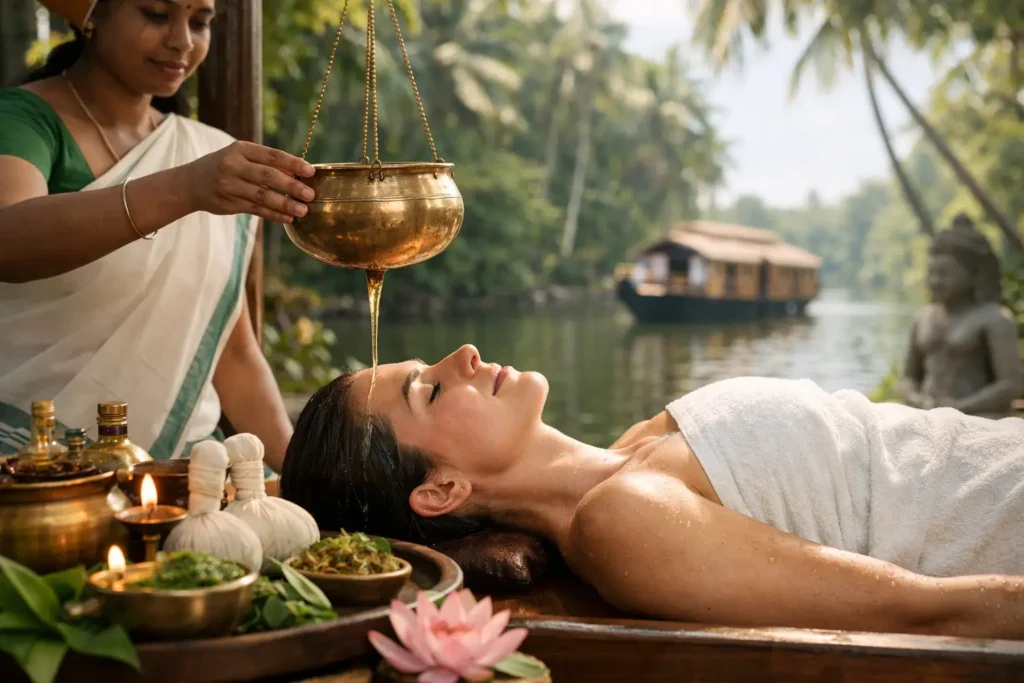
Stress rarely arrives as just stress. It shows up as shallow sleep, irritability, fatigue that coffee cannot fix, a nervous system that never fully powers down, and the quiet feeling that your body is asking for a different pace. An ayurveda retreat for stress relief is designed for exactly that moment – when rest alone is not enough, and you need a more complete way to reset.
In Kerala, where Ayurveda is part of the region’s living heritage, stress relief is approached as a whole-body process rather than a quick escape. The goal is not simply to feel relaxed for a few days. It is to help the body regulate, the mind settle, digestion improve, sleep deepen, and energy return in a steadier way. For many travelers, that difference is what makes the experience meaningful.
Why an ayurveda retreat for stress relief works differently
Most stress management options focus on one layer of the problem. A massage may help the muscles. A meditation app may calm the mind for a short time. A beach vacation may provide temporary distance from work. Ayurveda looks at stress through a wider lens.
From an Ayurvedic perspective, chronic stress can disturb the balance of the doshas, especially Vata, which is associated with movement, the nervous system, and mental activity. When Vata is aggravated, people often feel scattered, anxious, overstimulated, dry, restless, and exhausted at the same time. Others may experience Pitta-driven stress, where the signs are more tied to intensity, frustration, inflammation, and overwork. That distinction matters because the right care depends on the pattern.
At a well-structured retreat, this is not handled with a generic wellness schedule. It begins with assessment. Certified Ayurvedic doctors review your symptoms, sleep patterns, digestion, energy, and stress history. Your treatments, meals, herbs, yoga practices, and pace of the program are then adjusted to suit your constitution and current imbalance.
That personalization is one of the biggest reasons guests often feel a deeper shift. Stress is highly individual. The person dealing with corporate burnout, the parent carrying emotional overload, and the frequent traveler with poor sleep may all say they are stressed, but they do not need the same therapeutic response.
What happens at an Ayurveda stress relief retreat
A genuine retreat experience is usually quieter and more intentional than many first-time guests expect. The luxury is not excess. It is the feeling of being professionally cared for, without having to make decisions all day.
Most programs begin with a doctor consultation, followed by a treatment plan that may include Abhyanga, Shirodhara, herbal steam, therapeutic massage, medicated oils, and other Ayurvedic therapies chosen according to your condition. These treatments are not random add-ons. They are sequenced to calm the nervous system, improve circulation, support detoxification where appropriate, and encourage the body to move from hypervigilance into repair.
Shirodhara is often associated with stress relief because the steady flow of warm oil over the forehead can be profoundly settling. But it is not a cure-all, and it is not right in every case. Some guests benefit more from grounding oil therapies, digestive support, or gentler bodywork before deeper treatments are introduced. This is where medical oversight matters.
Daily yoga and meditation are usually included, but the strongest programs do not treat them as performance sessions. If you are depleted, the practice should meet you there. Slower movement, breathwork, guided relaxation, and restorative postures are often more valuable than physically demanding classes when the goal is nervous system recovery.
Food is another major part of the process. In Ayurveda, digestion is closely tied to resilience and mental steadiness. Fresh, customized meals prepared according to your needs can help reduce heaviness, bloating, irregular appetite, and the unstable energy that often accompanies stress. For some guests, that alone becomes one of the first visible signs of healing.
Why Kerala is a trusted destination for healing
Not every retreat destination offers the same depth of Ayurvedic practice. Kerala holds a special place because Ayurveda here is not a borrowed wellness trend. It is a long-established healing system supported by trained physicians, experienced therapists, specialized retreat centers, and a cultural environment that understands the discipline.
That matters for international travelers, especially those coming from the US, where wellness can sometimes feel fragmented or overly commercial. In Kerala, it is possible to access retreats connected to government-recognized standards, professionally trained practitioners, and traditional therapies delivered in a more authentic clinical setting.
The environment also supports the healing process. Lush landscapes, tropical warmth, slower rhythms, and retreat properties designed for rest all create conditions that make it easier to let go of overstimulation. You are not trying to recover while staying plugged into the same pace that wore you down.
Still, the setting alone is not enough. The quality of the retreat depends on who is guiding it. Handpicked properties, accredited doctors, well-trained therapists, and thoughtful travel coordination make a major difference, especially for guests who want both authenticity and reassurance.
What to look for in an ayurveda retreat for stress relief
If you are comparing options, credibility should matter as much as ambiance. Beautiful photos can be persuasive, but stress recovery is too important to leave to aesthetics alone.
Look for a retreat that offers doctor-led consultations, individualized treatment plans, qualified therapists, and clear information about what is included. If Panchakarma or detox is mentioned, ask whether it is actually appropriate for stress relief in your case. Intensive cleansing can be beneficial for some people, but for others, especially those who are deeply depleted, a gentler restorative program may be the wiser choice.
It is also worth paying attention to logistics. Long-haul wellness travel can feel draining if the experience is poorly organized. Airport transfers, on-ground support, help with program planning, and a retreat schedule that feels structured but not rigid all contribute to the sense of safety that allows real healing to begin.
This is one reason curated retreat models are so valuable. Companies such as AYUR YOGA focus on matching guests with certified Ayurvedic properties and tailoring the stay around health goals, time frame, travel needs, and budget. For many travelers, especially first-time visitors to India, that level of guidance removes uncertainty and makes the retreat more restorative from the start.
How long should you stay?
There is no single ideal answer. It depends on your stress level, symptoms, travel distance, and what you want from the experience.
A shorter stay of five to seven days can be helpful if your main goal is to rest, receive grounding treatments, and interrupt a cycle of overwork. It can improve sleep, reduce mental agitation, and give you a felt sense of what your body has been missing. For guests with deeper burnout, longer-standing anxiety, digestive disruption, or emotional exhaustion, a stay of 10 to 21 days is often more effective.
Longer retreats allow the body time to settle into treatment, adapt to a healthier rhythm, and build more stable results. That does not mean everyone needs a three-week program. It means the best retreat length is the one that matches your condition realistically, rather than promising a total reset in too little time.
What results can you realistically expect?
A good retreat should be hopeful, but honest. Stress relief is not a magic switch, and no ethical provider should present it that way.
Many guests notice better sleep, lower anxiety, improved digestion, reduced muscle tension, clearer thinking, and a more even mood during their stay. Some also describe a return of emotional spaciousness – the sense that they can respond to life rather than brace against it. These changes can feel significant, especially if stress has been running the show for months or years.
The longer-term outcome depends on integration. If you return home and immediately resume the same schedule, eating habits, and screen-driven overload, some of the benefits may fade. The best retreats prepare you for life after the retreat as well, with practical guidance on daily routine, food, yoga, breathwork, and sustainable self-care.
That is where Ayurveda is especially powerful. It does not ask you to become someone new. It teaches you how to support your system in a way that is more aligned, more observant, and more compassionate.
Sometimes the most healing choice is not another productivity tool or another weekend away. It is stepping into a setting where your body is finally given expert attention, your mind is allowed to soften, and your recovery is treated with the seriousness it deserves. If stress has become your baseline, Kerala may offer something rarer than escape – a real chance to rebalance and begin again.
Pingback: Ayurveda Detox Retreat Kerala: What to Expect – AYUR YOGA
Pingback: How to Book a Healing Retreat in Kerala – AYUR YOGA
Pingback: Group Retreat Planning Guide for Kerala Wellness – AYUR YOGA