
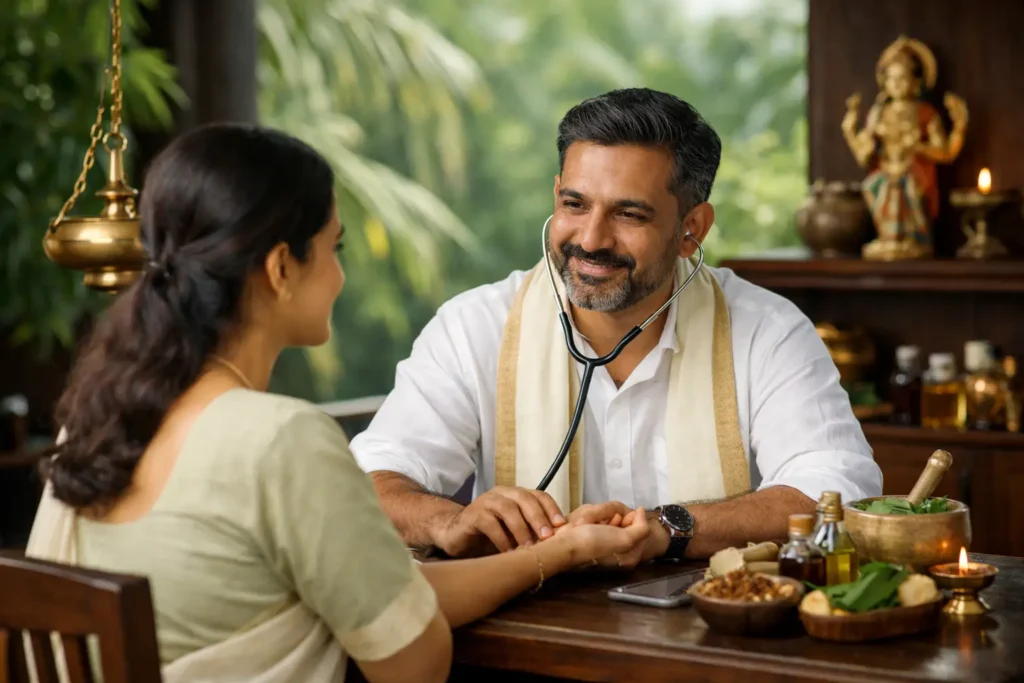
A restorative Ayurveda retreat should never begin with a treatment menu. It should begin with a conversation with a qualified physician who understands your health history, current concerns, constitution, and goals. For travelers searching for certified ayurvedic doctors Kerala offers, this distinction matters: the right doctor does not simply prescribe a familiar detox program. They create a thoughtful path toward balance, comfort, and sustainable wellbeing.
Kerala is widely respected as one of Ayurveda’s living homes, where generations of clinical knowledge meet the daily rhythms of yoga, nourishing food, and healing therapies. Yet quality varies between centers. A beautiful setting, an extensive spa menu, or the word “Ayurvedic” alone does not guarantee physician-led care. Knowing what to look for helps you choose a retreat with confidence and arrive ready to heal, rebalance, and renew.
What “Certified” Should Mean in Ayurvedic Care
In India, an Ayurvedic doctor is generally a physician who has completed a Bachelor of Ayurvedic Medicine and Surgery, known as BAMS, through a recognized institution. This is a formal medical degree in Ayurveda, covering classical principles alongside anatomy, physiology, diagnostics, pharmacology, and clinical practice. Doctors may also pursue postgraduate study and focused experience in areas such as Panchakarma, lifestyle care, women’s wellness, or musculoskeletal concerns.
A qualified practitioner should hold current registration with the relevant state medical authority and practice within India’s professional standards for Ayurveda. The National Commission for Indian System of Medicine oversees educational and professional frameworks for Indian systems of medicine, including Ayurveda.
For international guests, credentials are not merely a reassuring detail. They shape the entire retreat experience. A trained doctor can assess whether intensive cleansing therapies are appropriate, modify plans when your energy is low, consider medications or existing conditions, and recognize when a concern requires conventional medical evaluation. Ayurveda can be deeply supportive, but responsible care means respecting its boundaries as well.
It is also helpful to understand the difference between an Ayurvedic physician and a wellness therapist. Skilled therapists are central to the experience of traditional treatments such as Abhyanga, Shirodhara, and herbal applications. However, they should work under a doctor’s direction, not replace the consultation, diagnosis, or treatment planning that a physician provides.
How Certified Ayurvedic Doctors in Kerala Personalize Care
A meaningful initial consultation is unhurried. Your doctor may ask about sleep, digestion, appetite, stress, work patterns, movement, skin, energy, emotional state, and previous health history. They may use traditional assessment methods, including pulse examination, tongue observation, and questions designed to understand your doshic tendencies and present imbalance.
This is not a one-size-fits-all checklist. Two guests may arrive with fatigue and poor sleep, yet require very different approaches. One may benefit from grounding oil therapies, gentle yoga, regular warm meals, and rest. Another may need a lighter routine, digestive support, breathing practices, or a more gradual treatment schedule. The quality lies in the doctor’s ability to listen, observe, and adjust.
A good plan also changes when needed. Travel fatigue, heat, a headache, menstrual cycles, emotional release, or a simple lack of sleep can affect how a guest responds. Rather than pushing through a fixed schedule, the doctor should review your progress and refine treatments accordingly. This measured approach often creates a more comfortable and more meaningful result than chasing the most intensive program.
For guests seeking Panchakarma, physician oversight is especially essential. Panchakarma is not a generic spa cleanse. In its traditional form, it involves preparation, carefully selected therapeutic procedures, dietary support, rest, and recovery. It may not be suitable for everyone, particularly during acute illness, pregnancy, certain chronic conditions, or periods of significant physical depletion. An ethical doctor will explain this clearly and may recommend a gentler rejuvenation program when that better serves your needs.
Questions Worth Asking Before You Book
A reputable retreat will welcome clear questions about its clinical team and care process. Ask whether consultations are conducted by BAMS-qualified doctors, how often doctors review guests during the program, and whether treatment plans are customized after arrival. You can also ask who supervises the therapists, how dietary recommendations are coordinated with the kitchen, and what support is available if you become unwell.
If you take prescription medication, have a diagnosed condition, are recovering from surgery, or have a complex medical history, share this information before confirming your stay. A responsible retreat provider will not promise to cure a condition or suggest stopping prescribed medication. Instead, it will advise whether the program is suitable, what documentation may be useful, and how the care team will work within safe limits.
For many travelers, language is another practical consideration. You should be able to communicate your concerns comfortably and understand your plan, whether through an English-speaking doctor or a well-organized interpretation process. Clear communication is part of good care, especially when discussing diet, herbs, medications, allergies, and treatment preferences.
Signs of a Well-Managed Ayurveda Retreat
The setting should feel peaceful, but the operations behind it should be precise. Look for a retreat where doctors, therapists, yoga teachers, kitchen staff, and guest relations teams work as one coordinated team. Your wellness plan should inform your meals, daily rhythm, therapies, and movement practices rather than exist as a separate appointment on the first day.
Hygiene and transparency matter just as much as tradition. Treatment rooms should be clean and private, oils and herbal preparations handled carefully, and therapists trained in appropriate technique and guest comfort. A professionally managed center should explain what each therapy involves, seek consent, and make space for you to ask questions. You should never feel pressured into a treatment that has not been properly explained.
The best retreats also honor the value of rest. An Ayurveda program can include yoga, meditation, nature walks, cultural experiences, and quiet time, but an overfilled itinerary can work against recovery. For a guest arriving from New York, London, Toronto, or Berlin, the first days may need to accommodate jet lag and the transition into Kerala’s climate. A caring program leaves room for the body to settle.
Beyond Credentials: The Human Quality of Care
Formal qualifications are essential, but they are only the foundation. Guests often remember the doctor who noticed they were anxious before a treatment, the therapist who adjusted pressure without being asked, or the coordinator who made dietary needs feel simple rather than inconvenient. Healing is personal, and thoughtful hospitality gives clinical care the space to work.
This is particularly valuable for first-time Ayurveda travelers. You may be curious about oil treatments, skeptical about unfamiliar routines, or unsure how much of the program to embrace. A compassionate physician does not demand perfection. They explain the purpose behind each recommendation and help you participate at a pace that feels realistic.
For retreat leaders and wellness professionals bringing a group to Kerala, medical quality also supports trust with participants. The group may share yoga sessions and excursions, but individual Ayurvedic consultations must remain private and personalized. Strong local coordination ensures that each guest receives appropriate care without losing the warmth and connection of a shared retreat experience.
AyurYoga Retreats works with carefully selected Ayurveda and yoga partners because the doctor-led element of a program cannot be treated as an afterthought. Venue, accommodations, travel logistics, and Kerala experiences all matter, yet the integrity of the wellness journey rests on the quality of the clinical team and the care surrounding each guest.
Choose Care That Feels Both Traditional and Clear
Authentic Ayurveda does not require you to accept vague promises or endure an uncomfortable program to prove your commitment. It should feel grounded in Kerala’s tradition while remaining clear, respectful, and responsive to your individual needs. Ask about qualifications. Expect a real consultation. Pay attention to how a provider responds when you mention a health concern or request more information.
The right physician will see more than a booking or a list of symptoms. They will meet you where you are, then help create the conditions for deeper rest, steadier energy, and a more connected return home. That is the quiet value of choosing care with discernment: your time in Kerala becomes not simply a break from routine, but a considered beginning to living with greater balance.