
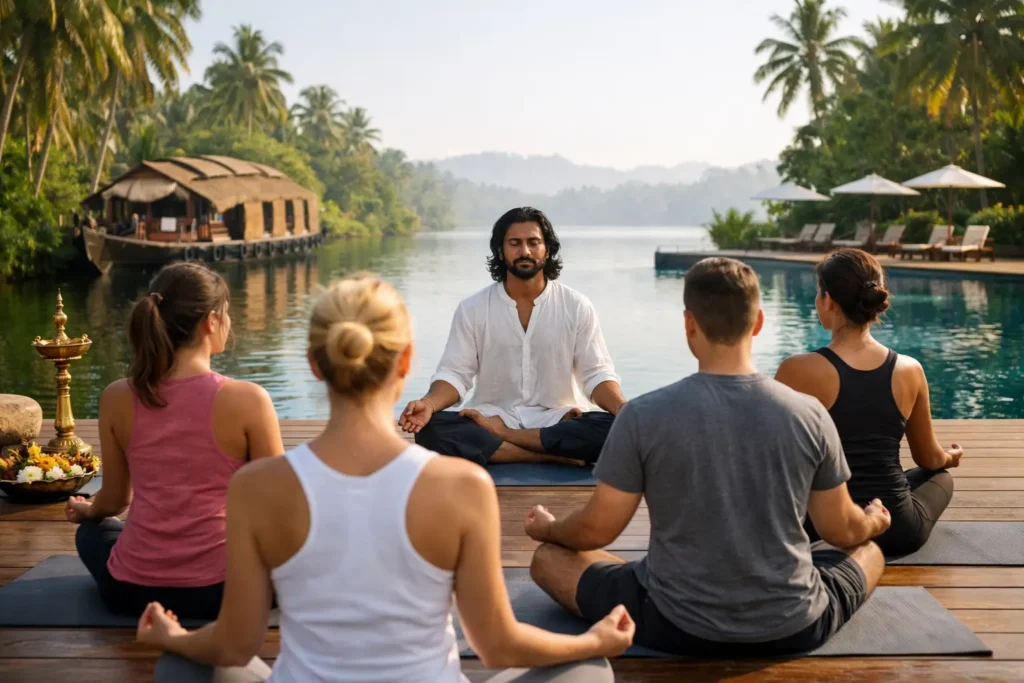
A group retreat can be one of the most nourishing ways to travel, provided the experience has room for both connection and quiet. This group yoga retreat guide is designed for travelers and retreat leaders who want more than a beautiful setting: they want a well-held journey that supports real rest, personal practice, and meaningful renewal in Kerala.
When the logistics are considered with care, a shared retreat creates a rare kind of ease. Your days have a gentle rhythm, meals are prepared with wellbeing in mind, and the group provides encouragement without requiring anyone to perform or keep pace with someone else. The result is not simply time away. It is an opportunity to Heal, Rebalance & Renew.
Begin With the Purpose of Your Retreat
The best group yoga retreats begin with a clear intention. A week designed for stress recovery will look different from a retreat centered on yoga education, leadership development, or a celebration among close friends. Defining the purpose early helps shape every later decision, from the venue and length of stay to the style of yoga and amount of free time.
For many international guests, the most restorative format combines daily yoga and meditation with Ayurveda, wholesome regional food, and unhurried time in nature. Kerala is particularly suited to this approach. Its tropical landscape, long Ayurvedic heritage, and carefully established wellness facilities make it possible to create programs that feel both deeply rooted and comfortable for international travelers.
A group does not need to be large to benefit from thoughtful planning. Small groups often allow for more personal attention, easier scheduling, and a stronger sense of trust. Larger groups can bring wonderful energy and shared learning, but they require more structure, clear communication, and sufficient staff support. Neither is inherently better. The right choice depends on the group’s expectations and the depth of personalization desired.
Choose a Kerala Setting That Supports the Program
A retreat venue should do more than look appealing in photographs. It needs to support the actual rhythm of your days. Consider the quality and size of the yoga shala, the privacy of guest rooms, food service for varied dietary needs, quiet spaces for reflection, and access to qualified Ayurvedic practitioners.
A beachfront property may suit a group seeking spaciousness, gentle movement, and time by the water. A retreat in the hills or near the backwaters can feel more secluded and contemplative. For Ayurveda-focused programs, proximity is less important than the standard of clinical consultation, treatment rooms, therapist experience, and the ability to tailor therapies responsibly.
Ask practical questions before confirming a venue. Can all participants practice together comfortably? Is there a covered alternative during rain? Are rooms consistent in quality, or should pricing reflect different categories? Can the kitchen accommodate vegetarian, vegan, gluten-sensitive, and medically necessary diets without turning every meal into a complication? These details protect the sense of calm that guests have traveled far to find.
Create a Rhythm, Not an Overloaded Schedule
It is tempting to fill every day with yoga classes, workshops, treatments, cultural visits, and wellness talks. Yet an overly ambitious itinerary can leave participants feeling more tired than when they arrived. Integration is part of the healing process.
A balanced day may begin with a gentle meditation or breathwork practice, followed by yoga suited to the group’s experience. After breakfast, guests might have Ayurvedic consultations, individual treatments, or time to rest. An afternoon session can offer a more reflective practice, philosophy discussion, or guided relaxation, while evenings remain simple: a nourishing dinner, a quiet walk, or a short satsang.
Build in open space deliberately. Some guests will want to journal, swim, read, or simply nap after a massage. Others may prefer a nature walk or a conversation with new friends. Freedom within a well-designed structure is one of the greatest gifts a group retreat can offer.
Match Yoga to Real Bodies and Energy Levels
A mixed group rarely has one uniform level of fitness, flexibility, or familiarity with yoga. An inclusive retreat does not ask beginners to push through discomfort or leave experienced practitioners underchallenged. It offers intelligent variations, prop support, and teaching that honors individual capacity.
The same is true of yoga style. Dynamic morning practices can be energizing, while restorative, yin, therapeutic, or yoga nidra sessions may be more appropriate later in the day. If the retreat includes Ayurveda, the yoga program can be adjusted in response to the group’s energy, climate, and treatment schedule. This is especially valuable for guests arriving with fatigue, poor sleep, stress, or recovery needs.
Include Ayurveda With Care and Professional Guidance
Ayurveda can add exceptional depth to a group yoga retreat, but it should never be treated as a decorative add-on. Authentic Ayurvedic care begins with individual assessment by a qualified practitioner. Guests may receive different recommendations based on their constitution, present imbalances, health history, and goals.
One person may benefit from a calming oil therapy and slower practices, while another may be guided toward a more invigorating treatment plan. This personalized approach is precisely why Ayurveda complements group travel so well: participants share a common setting and intention while receiving care that recognizes their individual needs.
Be transparent about what is included. A wellness massage, an Ayurvedic consultation, and a structured detoxification program are not the same experience. More intensive programs may require a longer stay, dietary discipline, medical screening, and time without demanding excursions. For a seven-night retreat, a gentler wellness-focused Ayurveda plan is often more realistic than promising a complete therapeutic reset.
Plan the Journey Before Guests Arrive
For travelers coming from the United States, Europe, or elsewhere, the retreat experience begins long before the first yoga class. Clear pre-arrival support reduces anxiety and allows guests to arrive in a more receptive state.
Provide practical guidance on the nearest airport, recommended arrival windows, transfer arrangements, visa requirements, weather, appropriate clothing, and any health information needed before treatments. Guests should know whether they need to bring yoga mats, whether filtered water is available, and how much free time is built into the program. Honest expectations build trust.
It also helps to address the realities of long-haul travel. Jet lag, heat, humidity, and a new cuisine can affect energy during the first few days. A welcoming opening evening, light movement, and an early restful night are usually more beneficial than an intensive first session. A thoughtful program meets people where they are, rather than expecting them to arrive fully energized.
Make Group Connection Feel Natural
The intimacy of a retreat can be transformative, but group dynamics need gentle stewardship. A warm welcome circle, shared meals, and optional reflection sessions can create connection without making anyone feel exposed. Not every guest wants to share personal experiences publicly, and that preference deserves respect.
Retreat leaders can set the tone by making participation invitational rather than compulsory. Encourage phones to be used thoughtfully, create agreements around punctuality and shared spaces, and remind guests that silence is welcome. The strongest groups are not those that are busy together every hour. They are those where people feel safe enough to be themselves.
For hosted retreats, reliable local coordination is equally essential. AyurYoga Retreats can support retreat leaders with carefully selected Kerala venues, Ayurvedic services, transportation, cultural experiences, and on-the-ground program management, allowing the leader to stay present with their guests rather than managing daily operations.
Leave Room for Kerala Beyond the Yoga Shala
A retreat in Kerala should honor the place, not isolate guests from it. A well-chosen cultural experience can deepen the journey: a quiet backwater cruise, a visit to a local temple or spice garden, a traditional music performance, or time in a coastal village. These moments offer texture and perspective, particularly for guests who value authentic travel alongside personal wellbeing.
The key is restraint. One or two meaningful excursions are often enough for a week-long retreat. Too much sightseeing changes the pace from restorative to tour-like. Let the destination enrich the wellness experience rather than compete with it.
A thoughtfully planned group retreat gives each guest something increasingly rare: permission to slow down without withdrawing from life. In Kerala, guided by authentic yoga, compassionate Ayurvedic care, and a rhythm that respects rest, that permission can become the beginning of a more sustainable way of living.