
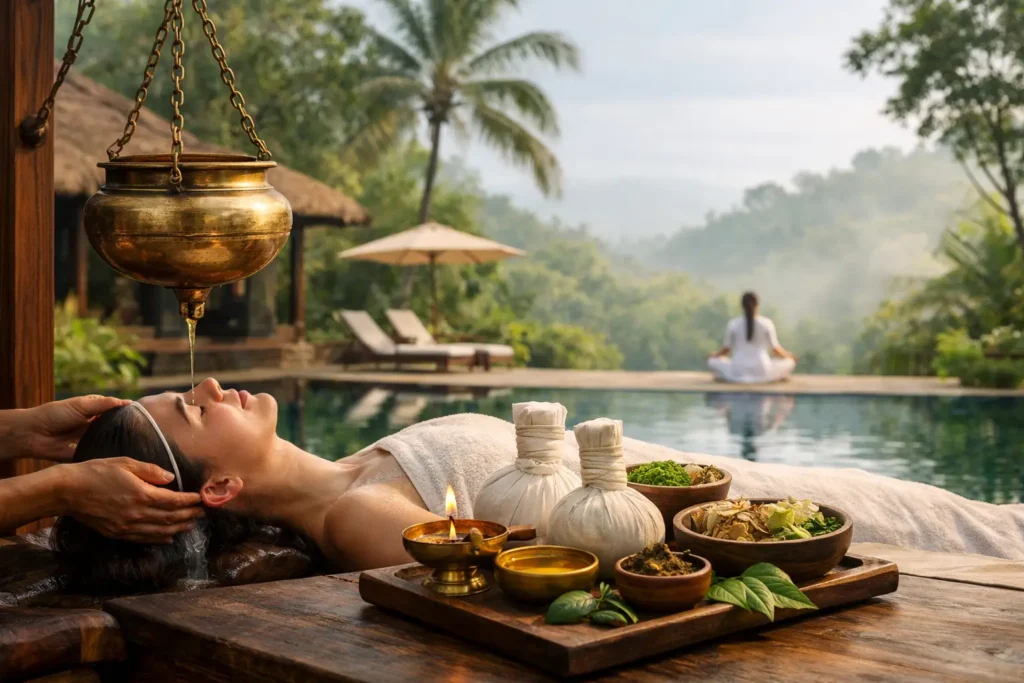
If you are traveling to India for healing, not just a vacation, the phrase government certified ayurveda retreat matters more than the view from your room or the size of the pool. In Kerala, where Ayurveda is part of living tradition, certification is one of the clearest ways to separate a thoughtfully managed healing stay from a retreat that only borrows the language of wellness.
For many guests coming from the US, that distinction brings real peace of mind. You may be dealing with burnout, hormonal imbalance, digestive issues, chronic stress, poor sleep, or the lingering feeling that your body has been running on reserve for too long. When you are investing time, money, and trust in an Ayurvedic program, you want more than beautiful marketing. You want qualified care, reliable standards, and a retreat environment that supports true recovery.
What a government certified ayurveda retreat actually means
A government certified ayurveda retreat is generally a property or wellness center that meets defined standards set by relevant tourism or Ayurvedic authorities in India or Kerala. Depending on the certification, this can involve requirements around qualified doctors, treatment facilities, hygiene, therapy rooms, documentation, and operational standards.
That does not mean every certified retreat is identical, and it does not guarantee that every program will be the right fit for your health goals. But it does create a baseline of credibility. In a field where terms like authentic, traditional, and healing are used very freely, certification is one of the few signals that can be independently verified.
For international guests, this matters because Ayurveda is not simply a spa menu with herbal oils. Proper Ayurvedic care begins with assessment. It considers constitution, imbalances, medical history, digestion, stress patterns, sleep, and lifestyle. A retreat that operates under recognized standards is far more likely to treat Ayurveda as a medical and therapeutic system rather than a decorative add-on.
Why certification matters in Kerala
Kerala has earned its global reputation as the home of classical Ayurveda for good reason. The lineage is deep, the climate supports therapies well, and many doctors and therapists are trained within a culture where Ayurveda remains part of everyday health practice. Still, Kerala is also a major wellness destination, and popularity brings variation.
Some properties are deeply rooted in clinical Ayurvedic practice. Others lean more heavily toward leisure hospitality. Neither approach is automatically wrong. It depends on why you are traveling. If your priority is structured healing, Panchakarma, or a medically guided reset, certification becomes especially relevant because it helps identify places with the infrastructure and professional oversight to support that kind of work.
A guest seeking stress relief through gentle treatments, yoga, and rest may feel comfortable with a softer wellness format. A guest managing inflammation, digestive concerns, fatigue, or long-standing imbalance usually needs more clinical depth. This is where a curated retreat partner can be helpful – not because every retreat needs to feel medical, but because the right level of care should match the reason you are coming.
How to evaluate a government certified ayurveda retreat
The first question to ask is simple: certified by whom? Reputable retreats should be clear about the nature of their certification and should not hide behind vague claims. If a property says it is approved, accredited, or recognized, there should be a specific authority or standard behind those words.
The next layer is clinical credibility. Look for qualified Ayurvedic doctors who conduct consultations and shape the treatment plan. A real program should not feel prepackaged from the moment you arrive. Even within a 7-day or 14-day structure, treatments, meals, herbs, and pacing may be adjusted based on your condition and response.
Therapist quality also matters. Ayurveda treatments are highly technique-based. The timing, pressure, sequencing, and purpose of each therapy all influence the outcome. Warm oil alone does not make a treatment therapeutic. Skilled hands, proper supervision, and consistency do.
Then consider whether the retreat can support your practical needs. International travelers often overlook this part, but it has a direct effect on healing. Airport transfers, clear pre-arrival guidance, language comfort, dietary planning, and on-ground support reduce friction. When the nervous system has fewer logistics to manage, the body is more receptive to treatment, rest, and change.
Signs of quality beyond the certificate
A certificate is a strong starting point, not the whole story. The best retreats combine standards with personalization.
That means the property itself should support the treatment journey. Rooms should be clean, quiet, and restorative. Food should be tailored to your program rather than designed only for general resort appeal. The daily schedule should allow for therapies, yoga, rest, and integration instead of filling every hour.
Ask how the retreat handles different guest profiles. A first-time wellness traveler has different needs than someone arriving specifically for Panchakarma. A solo traveler may want more guidance and reassurance. A couple or small group may need a retreat plan that balances shared time with individual consultations. Strong retreat design accounts for these differences.
This is also where curation matters. Some guests assume more luxury always means better healing, but that is not necessarily true. A lavish property with limited Ayurvedic depth can be less effective than a quieter retreat with excellent doctors and therapists. At the same time, clinical rigor does not require discomfort. The ideal experience is both grounded and nurturing – a setting where you feel cared for, not processed.
Government certified ayurveda retreat vs. spa retreat
This is one of the most useful distinctions to understand before booking. A spa retreat is usually built around relaxation. You may receive massages, enjoy fresh meals, attend yoga classes, and leave feeling lighter. That can be valuable, especially if your goal is rest.
A government certified ayurveda retreat, when properly structured, is different in intention. It is designed around assessment and treatment. The therapies are chosen for a reason. Meals often support digestive correction or dosha balance. Daily routines may be simplified to help the body settle into a healing rhythm. In deeper programs, especially Panchakarma-based retreats, there is often a level of discipline that some guests do not expect.
This is not about one being better than the other. It is about fit. If you want a gentle reset with some Ayurvedic elements, a spa-oriented stay may be enough. If you want meaningful therapeutic support, choose a retreat with certified standards and medical oversight.
What kind of results should you expect?
The honest answer is that it depends on your starting point, the length of stay, and how closely the program matches your needs. A shorter retreat can still bring very real benefits – better sleep, calmer digestion, reduced tension, improved mood, and a felt sense of spaciousness in the body.
Longer stays tend to be more effective for chronic stress, fatigue, inflammation, metabolic imbalance, and deeper detoxification work. But expectations should stay realistic. Ayurveda is not a quick fix. It often works by reducing load, restoring rhythm, and helping the body remember how to regulate itself.
That process can feel subtle at first. Guests sometimes expect dramatic transformation during the retreat itself, when in fact the most meaningful changes continue in the weeks after they return home. A good retreat prepares you for that by offering practical continuity – food guidance, routine suggestions, and a plan that translates into real life.
Why customized retreat planning matters
No two guests arrive in the same condition. One person may need nervous system recovery after years of overwork. Another may need help with digestion, menopause support, emotional depletion, or simply a safe place to pause and reset. The best retreat experiences are designed around that difference.
This is where a company like AYUR YOGA can add value for international travelers. Instead of asking guests to sort through dozens of retreat options on their own, a curated model can match health goals, budget, schedule, and comfort level with properties that meet genuine Ayurvedic and hospitality standards.
That kind of guidance is especially useful if you are new to Ayurveda. Choosing the right retreat should not feel like guesswork. It should feel like entering a space where the details have been thought through, the care is credible, and your healing has a clear structure.
When you choose a retreat in Kerala, choose the one that gives your body a reason to trust the process. That is often where healing begins.
Pingback: Kerala Heilreise sinnvoll organisieren – AYUR YOGA
Pingback: What Happens at a Nervous System Reset Retreat? – AYUR YOGA
Pingback: Why an Ayurveda Consultation Before a Retreat Matters – AYUR YOGA