
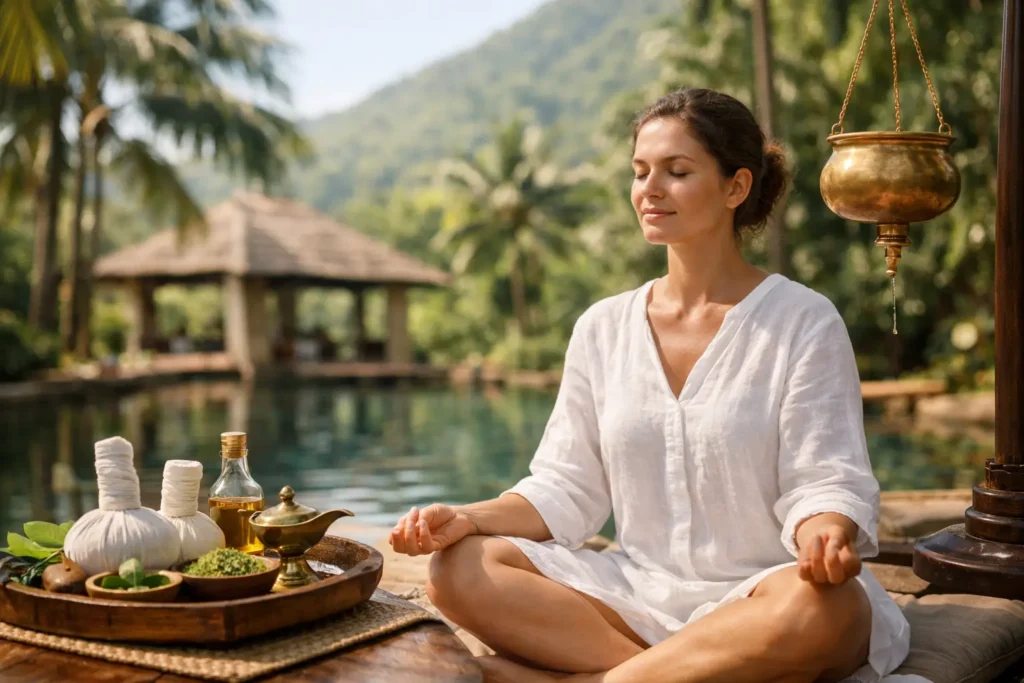
Burnout rarely arrives all at once. For many people, it builds quietly through restless sleep, mental fog, low patience, adrenal fatigue, and the strange feeling of being tired but unable to truly rest. An ayurveda retreat for burnout recovery offers a different path than a standard vacation because it is designed to treat depletion at its root, not simply distract you from it for a few days.
When stress becomes chronic, the body stops responding in a balanced way. Digestion weakens, sleep becomes irregular, inflammation may rise, and the nervous system stays on alert. You may still be functioning at work and home, but your reserves are low. This is where Ayurveda can be especially powerful. It looks at burnout not as a single symptom, but as a whole-body imbalance that needs restoration, rhythm, and therapeutic care.
Why an ayurveda retreat for burnout recovery works differently
A beach holiday can feel pleasant. A luxury spa can help you relax. But burnout recovery usually needs more than comfort. It often requires structure, assessment, and treatments that work together over time.
Ayurveda approaches recovery through your unique constitution, your current imbalances, and the strength of your digestion, sleep, immunity, and mental state. At a properly designed retreat, your program is not generic. It is guided by an Ayurvedic doctor who evaluates how stress is affecting your system and then prescribes therapies, meals, herbal support, yoga, and rest accordingly.
That personalization matters. Two people can both feel burned out and still need very different care. One may be anxious, depleted, and unable to switch off. Another may feel heavy, unmotivated, and mentally dull. In Ayurvedic terms, those patterns are not treated the same way. Real recovery depends on knowing the difference.
This is also why Kerala holds such a strong reputation. Ayurveda here is not presented as a passing wellness trend. It is part of a living medical and cultural tradition, supported by trained doctors, experienced therapists, and retreat settings built around authentic treatment protocols.
What burnout looks like through an Ayurvedic lens
Ayurveda often sees burnout as a disturbance in the nervous system, digestive fire, and the body’s deeper vitality. Long periods of pressure, overwork, travel, screen exposure, emotional strain, and poor routines can push the body out of balance. Over time, this can affect both mind and tissues.
In practical terms, that may show up as insomnia, irritability, headaches, anxiety, hormonal shifts, poor digestion, reduced resilience, and a lingering sense of emotional flatness. Some guests arrive saying they feel wired. Others say they feel emptied out. Both are forms of imbalance, but the retreat plan may differ significantly.
This is one reason serious burnout should not be treated with a one-size-fits-all wellness package. If a person is deeply exhausted, intense detox may not be the right first step. If the body is burdened by sluggish metabolism and inflammatory symptoms, gentle rejuvenation alone may not be enough. The best retreat programs respect that timing matters.
What to expect at a retreat in Kerala
A well-curated retreat experience in Kerala usually begins with consultation and assessment. From there, daily care is arranged around your health goals, energy level, and recommended length of stay. The environment itself plays a role. Lush landscapes, tropical warmth, quieter rhythms, and time away from constant input can help the body begin to settle faster than it often does at home.
Your days are likely to include Ayurvedic treatments, doctor check-ins, therapeutic meals, gentle yoga, breathing practices, meditation, and protected rest. The pace is intentional. That may feel unfamiliar at first, especially for high-performing professionals who are used to filling every hour. But that slowing down is often part of the medicine.
Treatments may include synchronized oil massage, stress-relieving head therapies, medicated steam, herbal applications, and bodywork tailored to the condition being treated. In some cases, Panchakarma-based protocols may be recommended, especially where deeper cleansing and systemic reset are appropriate. However, this should be guided carefully. Not every guest needs a full detox process, and burnout recovery is often best supported by balancing cleansing with nourishment.
Food is another major part of healing. Ayurvedic meals are not simply healthy by modern standards. They are prepared to support digestion, reduce aggravation, and rebuild internal stability. For many burned-out guests, regular warm meals and digestive support create noticeable improvements in energy and sleep within days.
The role of yoga and meditation in recovery
At a strong retreat, yoga is not treated as a fitness challenge. For burnout, the goal is regulation, not performance. Gentle asana, breathwork, and meditation help move the body out of constant reactivity and back toward steadiness.
This matters because burnout is not only physical. It affects attention, mood, emotional bandwidth, and the ability to feel present. Meditation and breath-based practices can help calm overactivation, while restorative movement supports circulation, sleep, and embodied awareness.
That said, more is not always better. Someone in a fragile state may need softer sessions and more rest. Someone farther along in recovery may benefit from a fuller daily practice. The quality of the retreat lies in adjusting the program to the person, rather than forcing everyone into the same schedule.
How long should you stay?
For mild to moderate burnout, a week can create meaningful relief. You may sleep more deeply, feel calmer, and return home with a stronger routine. But if burnout has been building for months or years, a longer stay is usually more effective.
Ten to fourteen days often allows enough time for the body to settle, respond to treatment, and begin more durable repair. For deeper exhaustion, some guests choose two to three weeks, especially if they are combining medical consultation, daily therapies, and Panchakarma-based care.
This is where expectations need to stay realistic. A retreat can begin profound healing, but it is not magic. If you have been overextending yourself for years, one short stay may not fully restore your system. What it can do is interrupt the cycle, reduce the load on your body, and give you a clinically grounded plan for what comes next.
Choosing the right ayurveda retreat for burnout recovery
Not every retreat advertised as Ayurvedic offers the same level of integrity. If you are traveling internationally for care, especially from the US, details matter.
Look for government-recognized or certified Ayurvedic centers, qualified doctors, experienced therapists, and a retreat model that includes medical consultation rather than just spa treatments. The property should support quiet recovery, but comfort alone is not enough. Clinical credibility and personalization are what turn a beautiful stay into a therapeutic one.
Travel coordination also matters more than many people expect. Burned-out travelers often do best when transfers, scheduling, accommodations, and on-ground support are managed smoothly. Friction during travel can drain the very energy you are trying to restore. This is where a curated retreat company such as AYUR YOGA can make the experience feel both authentic and well held from arrival onward.
It is also wise to ask how flexible the program is. A strong provider should be able to adapt around solo travelers, couples, friend groups, or small corporate teams, while still protecting the integrity of each person’s treatment plan.
Who benefits most from this kind of retreat?
An Ayurvedic retreat can be especially valuable for professionals, caregivers, founders, healthcare workers, and anyone who has spent too long in sustained output mode. It can also serve people who are not in crisis, but can feel themselves heading there.
You do not need to wait until your body forces a shutdown. Early signs such as poor sleep, mental fatigue, irritability, digestive discomfort, and emotional numbness are enough reason to seek recovery support. Preventive care is one of Ayurveda’s greatest strengths.
At the same time, severe burnout, major depression, or complex medical conditions may need integrated care beyond a retreat setting. Ayurveda can be deeply supportive, but the right program should respect those boundaries and work responsibly within them.
Healing from burnout is rarely about doing more. It is about receiving the right care, in the right setting, for long enough that your body remembers how to rest again. A well-designed retreat in Kerala offers more than relief. It gives you a chance to feel steady, clear, and fully resourced before you return to the life waiting for you.
Pingback: Solo Retreat or Group Retreat: Which Fits? – AYUR YOGA
Pingback: Ayurveda Urlaub individuell gestalten – AYUR YOGA
Pingback: What Happens at a Nervous System Reset Retreat? – AYUR YOGA
Pingback: What Happens During Panchakarma Retreat? – AYUR YOGA
Pingback: Can Yoga Retreats Reduce Stress? – AYUR YOGA