
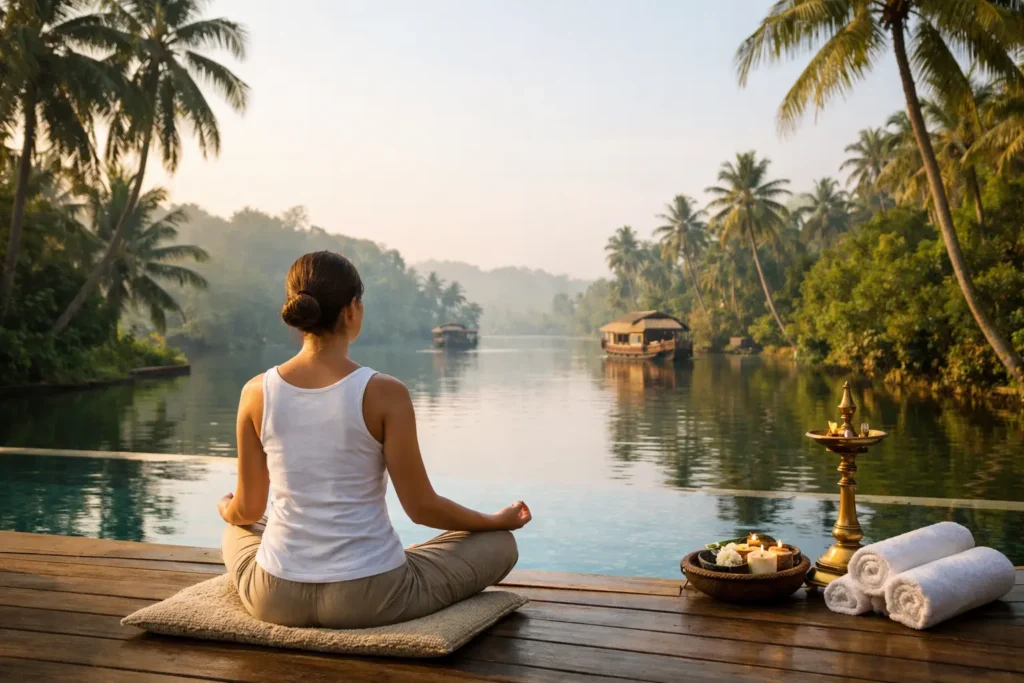
Traveling alone for wellness is a different decision than booking a regular vacation. When you choose a solo wellness retreat in Kerala, you are often arriving with something specific in mind – burnout that has lingered too long, a body asking for rest, a nervous system stuck in overdrive, or simply the feeling that life has become too loud. Kerala meets that need well because its healing traditions are not an add-on to tourism. Ayurveda and yoga are part of the region’s living culture, and that changes the quality of the experience.
For solo travelers, that distinction matters. You are not looking for distraction. You are looking for care, structure, and enough quiet to actually hear yourself again.
Why Kerala works so well for solo healing travel
Not every wellness destination is equally suited to solo guests. Some places are beautiful but socially oriented, built around group energy, packed schedules, and surface-level treatments. Kerala tends to support a more inward kind of retreat. The climate, the slower rhythm, the greenery, the backwaters, and the deeply rooted Ayurvedic framework all create conditions that help people settle.
That is especially valuable if you are traveling alone for the first time. A strong retreat in Kerala usually provides more than a room and a few classes. It offers a therapeutic structure – doctor consultations, personalized treatments, yoga matched to your condition, therapeutic meals, and staff who understand that healing is rarely one-size-fits-all.
There is also a practical advantage. Kerala has long-standing Ayurvedic institutions, trained therapists, and government-recognized standards that can make it easier to find credible care. For international travelers, that credibility reduces one of the biggest concerns: how to tell the difference between a beautiful wellness property and a retreat that is genuinely equipped to support health goals.
What a solo wellness retreat in Kerala should include
The best solo retreats do not overwhelm you with options. They create a clear therapeutic path while leaving room for rest.
A meaningful Ayurvedic retreat begins with assessment. That usually includes a consultation with a qualified Ayurvedic doctor who reviews your health history, current symptoms, sleep, digestion, stress patterns, and long-term goals. From there, treatments are selected with intention. That could mean Abhyanga for nervous system support, Shirodhara for deep mental quiet, detox-focused therapies, or a more structured Panchakarma program when clinically appropriate.
Yoga also matters, but not in the performative sense. On a well-designed retreat, yoga is not about intensity or achievement. It supports the treatment plan. If you are depleted, classes should help regulate energy rather than drain it. If you are carrying tension, breathwork and slower practices may be more useful than advanced flows. Meditation, when guided well, becomes a stabilizing part of the day rather than another item to complete.
Meals are another quiet but essential part of the experience. Personalized Ayurvedic food can support digestion, reduce inflammation, and help the body respond more effectively to treatment. This is one reason a proper retreat often feels different from a luxury hotel spa. The healing happens across the full environment, not only during treatment hours.
The solo experience – private, but not isolating
Many people want to travel alone but do not want to feel stranded. That tension is normal. The strongest retreat experiences create privacy without disconnection.
In practice, that means you may spend much of the day in your own rhythm – treatments, meals, yoga, reading, journaling, rest – while still having access to staff, therapists, and gentle community spaces. You can speak when you want to, retreat when you need to, and avoid the pressure of constant group interaction. For many solo guests, that balance is where the real exhale begins.
This is also why travel coordination matters more than it first appears. Airport pickup, check-in support, help with local logistics, and a clear program schedule reduce decision fatigue. If your goal is recovery, small frictions matter. A retreat should hold the practical side of the journey so your energy can go toward healing.
How to tell if a retreat is truly authentic
The word authentic gets used too easily in wellness travel. In Kerala, authenticity is not décor, traditional fabrics, or an Ayurvedic oil on the spa menu. It is the presence of trained doctors, qualified therapists, proper consultation, individualized treatment planning, and a setting designed around healing rather than image.
Ask a few direct questions. Is the program supervised by certified Ayurvedic doctors? Are treatments personalized or fixed for every guest? Is yoga adapted to your needs? Are meals part of the therapeutic plan? Is the property experienced in hosting international solo travelers? The answers will tell you much more than polished photos.
A luxury setting can absolutely belong in an authentic retreat. Comfort, beauty, and high service standards are not in conflict with traditional care. In fact, for many guests, they help the body soften enough to receive treatment. The important point is that comfort should support healing, not replace it.
Choosing the right program length
Length changes the outcome of a retreat more than many travelers expect. A short stay can be valuable for rest and reset, but deeper healing usually needs time.
If you are mainly seeking decompression, a five- to seven-night retreat may be enough to improve sleep, reduce stress, and restore a sense of internal space. If you are dealing with chronic fatigue, digestive imbalance, persistent anxiety, or are considering Panchakarma, a longer stay is often wiser. The body rarely unwinds on command, especially after months or years of stress.
This is one of those areas where honest guidance matters. A good retreat provider will not push a longer program simply because it is more expensive. They will match the stay to your condition, goals, schedule, and budget. That tailored approach is often the difference between a trip that feels pleasant and one that feels genuinely restorative.
Safety, trust, and traveling alone in Kerala
For solo travelers, safety is not just about destination reputation. It is about being cared for from arrival to departure.
Kerala is widely regarded as one of India’s more welcoming and accessible regions for wellness travel, especially when your retreat is professionally managed. Still, the quality of on-ground support matters. Reliable airport transfers, responsive staff, transparent scheduling, and retreat teams familiar with international expectations all create a stronger sense of ease.
Women traveling alone often ask whether they will feel comfortable. In a well-run retreat environment, the answer is usually yes, particularly when accommodations are established, treatment teams are professional, and the guest journey is coordinated in advance. Solo male travelers, too, often benefit from the structure and emotional spaciousness that retreat environments offer. Wellness travel is not only for the visibly spiritual or experienced yoga crowd. It is often for people who have simply reached a point where continuing as usual no longer feels sustainable.
What transformation actually looks like
The results of a solo retreat are not always dramatic in the way marketing language suggests. Sometimes the most meaningful changes are subtle at first. You sleep through the night. Your shoulders drop. Digestion improves. Mental chatter slows. You notice hunger cues again. You feel less reactive, more present, and more capable of making decisions from clarity rather than depletion.
That kind of change deserves respect. It is not small. It is often the foundation for everything else.
For some guests, the retreat becomes a turning point in how they care for themselves afterward. They return home with a simpler morning routine, a different relationship with food, a renewed meditation practice, or a better understanding of how stress appears in the body. A retreat should not create dependence on the setting. It should help you re-enter your life with more steadiness.
Why personalized planning matters most
The phrase solo retreat can sound simple, but the right experience depends on details. Your age, health history, previous experience with yoga or Ayurveda, desired level of comfort, and emotional state all shape what will feel supportive. Someone recovering from executive burnout may need a very different rhythm than someone coming for detox, grief support, or a spiritual reset.
That is where curated retreat planning becomes valuable. Companies such as AYUR YOGA focus on matching guests with accredited Kerala retreats, qualified practitioners, and programs designed around real health goals rather than generic wellness packaging. For solo travelers especially, that tailored support can remove uncertainty and replace it with trust.
A solo wellness retreat in Kerala is not about escaping your life. At its best, it helps you return to it with more vitality, better regulation, and a quieter mind. If you choose carefully, traveling alone may be the very reason the healing goes deeper.