
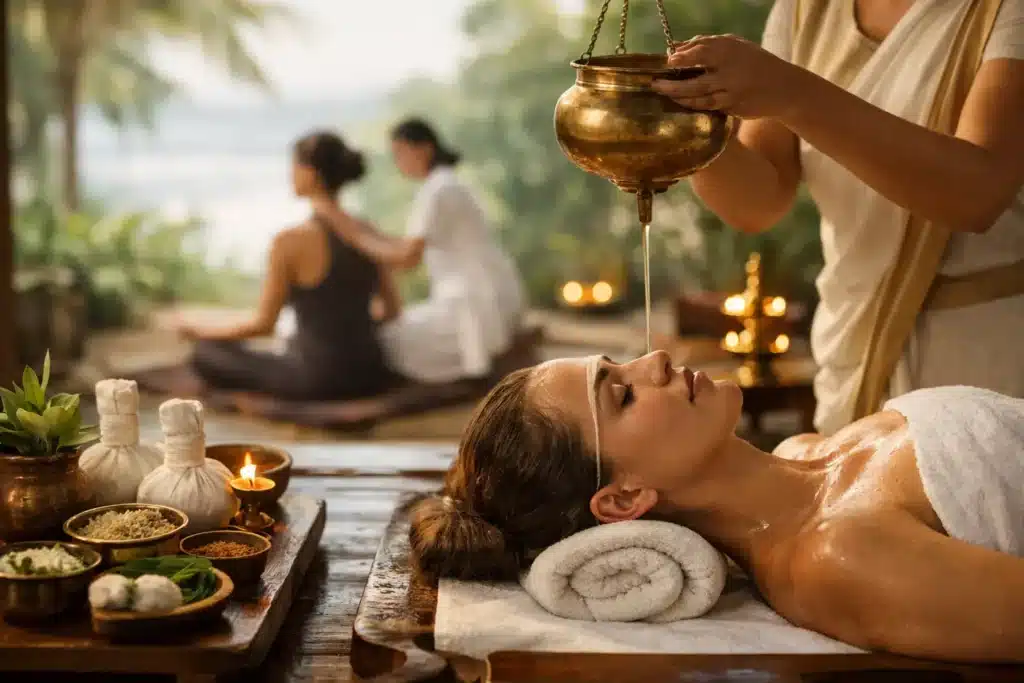
If you are wondering what happens during panchakarma retreat, the honest answer is this: far more listening, rest, and guided detoxification than most first-time guests expect. A true Panchakarma program is not a spa schedule packed with treatments from morning to night. It is a carefully supervised Ayurvedic process that begins with understanding your body and gradually guiding it back toward balance.
For many international guests, the first surprise is how personal the experience feels. Two people may stay at the same retreat, eat in the same dining space, and practice yoga in the same shala, yet receive different oils, different therapies, different meal plans, and even different levels of activity. That is because Panchakarma is not a one-size-fits-all cleanse. It is a classical Ayurvedic approach designed around your constitution, current imbalances, digestion, energy, sleep, stress load, and medical history.
What happens during panchakarma retreat in the first days
The opening phase usually feels gentler than people imagine. On arrival, you meet with an Ayurvedic doctor for an in-depth consultation. This often includes pulse reading, questions about appetite, elimination, sleep, stress, past illness, pain patterns, emotional state, and lifestyle habits. The purpose is not simply to assign treatments. It is to understand what your system can handle safely and what kind of detoxification is actually appropriate.
This matters because Panchakarma should never be rushed. If the body is tired, depleted, anxious, or burdened by weak digestion, strong cleansing methods may do more harm than good. In those cases, the doctor may begin with restorative therapies, digestive support, and a simpler routine before moving into deeper purification. For a guest expecting immediate intensive detox, this can seem slow. In practice, it is often a sign of good clinical judgment.
During these first days, your schedule starts to settle. Mornings may begin early with warm water, herbal support, gentle yoga, or breathwork. Meals become lighter, more regulated, and easier to digest. Treatments often focus on oleation and preparation – using medicated oils internally or externally to loosen accumulated toxins and bring imbalances toward the digestive tract, where they can be eliminated more effectively.
The preparation phase is a major part of the healing
One reason people misunderstand Panchakarma is that they focus only on the cleansing procedures themselves. In reality, the preparation phase is central to the outcome. This stage may include abhyanga, the traditional warm oil massage, synchronized therapies from trained practitioners, herbal steam, localized treatments for the spine or joints, and specific internal medicines prescribed by the doctor.
This phase has a distinct purpose. Ayurveda aims to soften, mobilize, and dislodge what has built up in the body over time – excess doshas, metabolic waste, congestion, and patterns of stagnation. Guests often notice practical changes before any major detox procedure begins. Digestion may become more regular. Sleep may deepen. The mind may feel quieter. Some also feel temporarily emotional, foggy, or physically heavy as the system starts shifting.
That range is normal, and it is one reason professional supervision matters. Panchakarma is not only physical. When the routine becomes quiet and the body receives consistent care, old fatigue and held stress can surface. A well-run retreat makes space for that process with skilled monitoring, a calm environment, and enough rest between therapies.
What the core Panchakarma treatments may involve
When people ask what happens during panchakarma retreat, they are often asking about the detox procedures themselves. These vary based on the individual and may not include every classical therapy. In authentic practice, the doctor selects only what is needed.
Depending on your condition, the program may include therapeutic purgation, medicated enemas, nasal cleansing, or other classical interventions used to eliminate aggravated doshas from their primary sites in the body. Some guests require stronger cleansing. Others benefit more from a mild, measured approach. Age, strength, stress level, digestive capacity, and health goals all shape that decision.
This is where expectations need to be realistic. Panchakarma is not glamorous every day. There may be days centered on elimination, reduced appetite, more rest, or limited activity. Some treatments feel deeply soothing. Others are more clinical in nature. If you arrive expecting a luxury spa rhythm at every moment, the experience can feel surprising. If you arrive ready for a healing process supported by comfort, expertise, and beautiful surroundings, it makes much more sense.
In Kerala, where Ayurveda has deep roots and generations of clinical knowledge behind it, this balance is often handled especially well. The setting may feel serene and refined, yet the treatment logic remains grounded in tradition, discipline, and individualized care.
Daily life during a Panchakarma retreat
A typical day is structured, but not rigid for its own sake. Structure is part of the medicine. Regular waking times, warm freshly prepared meals, treatment appointments, herbal medicines, yoga, meditation, and early evenings all help reduce overload on the nervous system.
Food is one of the most important parts of the retreat. Meals are usually simple, warm, freshly cooked, and tailored to support digestion rather than stimulate cravings. You may eat kichari, vegetable stews, lightly spiced dishes, herbal teas, and foods chosen for ease of assimilation. Caffeine, alcohol, processed foods, cold drinks, and heavy desserts are generally removed. For some guests, this dietary simplicity feels relieving almost immediately. For others, especially those used to strong coffee, sugar, or irregular eating, the adjustment takes a few days.
Yoga and meditation are usually supportive rather than performance-focused. During a true Panchakarma program, classes are often gentle and therapeutic. The aim is to steady the breath, improve circulation, calm the mind, and support elimination – not to push the body into strain. Some days you may feel open and energized. On other days, your doctor may advise more rest and less movement.
That is one of the deeper lessons of the retreat. Healing is not always about doing more. Sometimes it is about removing noise, reducing effort, and allowing the body to redirect energy toward repair.
What you may feel physically and emotionally
Panchakarma can feel deeply nourishing, but it is not always linear. Many guests experience a mix of relief and challenge as the body shifts. You may feel lighter, clearer, and more rested. You may also pass through moments of fatigue, irritability, emotional sensitivity, temporary detox symptoms, or unusual quietness.
None of this should be dramatized, but it should be respected. The body is adapting to a different rhythm. Digestion is changing. Sleep debt may be catching up with you. The nervous system is no longer buffered by constant stimulation. In a professionally managed retreat, these responses are observed carefully, and your plan is adjusted if needed.
This is also why retreat length matters. A very short stay can be relaxing, but deeper Panchakarma work usually needs time. A week may introduce the process. Two to three weeks often allows more meaningful cleansing and recovery. For chronic stress, burnout, inflammatory issues, or long-standing imbalance, the best timeline depends on both your goals and your strength.
The integration phase matters as much as the detox
A common mistake is thinking the retreat ends when the major therapies are over. In Ayurveda, the post-cleansing phase is essential. After detoxification, digestion is delicate, energy may still be rebuilding, and the body is especially responsive. This is the period for gradual reintroduction – of food, activity, work pace, and daily habits.
Your doctor may advise a specific diet progression, herbal support, self-massage, sleep routine, breathing practices, and restrictions for a period after departure. Following these recommendations often makes the difference between a short-lived feel-good experience and a retreat that creates lasting change.
Guests who benefit most tend to see Panchakarma not as a dramatic reset but as a turning point. The retreat creates conditions for the body to remember balance. What comes next is the art of protecting that balance once you return home.
At AyurYoga Retreats, this is why authentic Panchakarma is approached with both traditional integrity and thoughtful hospitality. Guests need skilled doctors and therapists, but they also need reassurance, comfort, and a setting that allows the process to unfold without unnecessary stress.
If you are considering a Panchakarma retreat, the best mindset is simple: come willing to slow down, be guided, and let the program meet your actual needs rather than your assumptions. That is often where the real healing begins.