
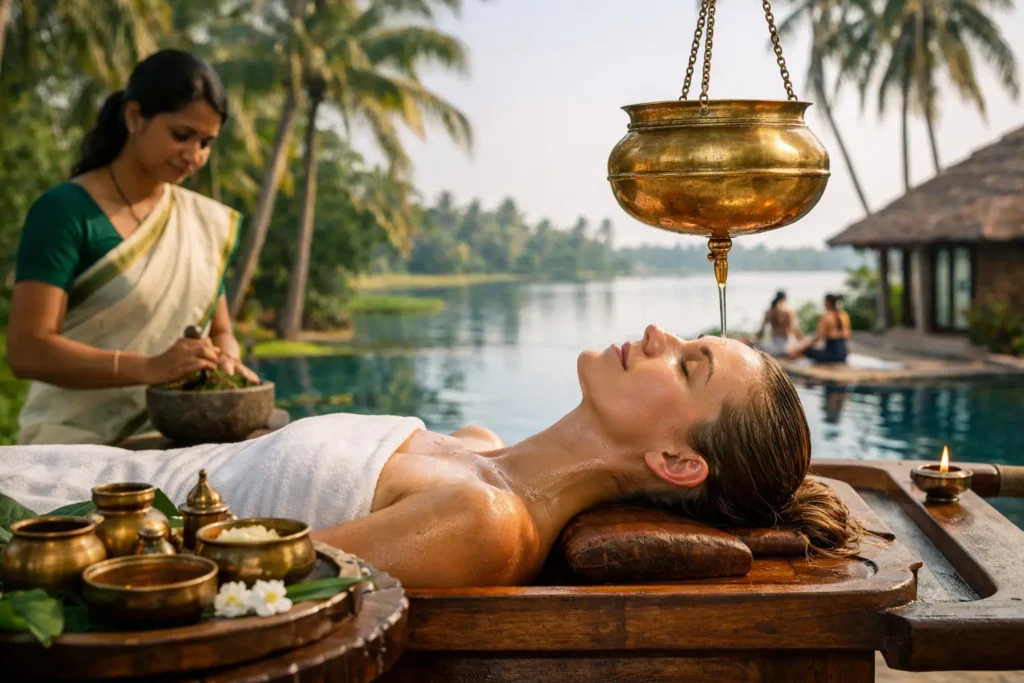
You can feel the difference between a retreat that looks peaceful online and one that is actually built to help your body settle. In Kerala, that difference often comes down to medical integrity, skilled therapists, a setting that supports rest, and a program that matches your needs rather than forcing you into a fixed schedule. This Kerala wellness retreat guide is designed for travelers who want more than a beautiful resort – they want authentic healing, thoughtful structure, and confidence in what they are booking.
Kerala has earned its place as one of the world’s most trusted wellness destinations for a reason. Ayurveda is not an added spa menu here. It is a living medical tradition with deep cultural roots, experienced physicians, specialized therapies, and retreat environments designed around restoration. Add yoga, meditation, therapeutic food, tropical landscapes, and a slower pace of life, and Kerala becomes especially appealing for anyone navigating burnout, nervous system overload, chronic fatigue, or the feeling that health has become too fragmented.
Why Kerala stands apart
Many wellness destinations offer relaxation. Kerala offers a more complete healing framework. The strongest retreats are not built around trend-driven treatments or generic detox language. They begin with assessment. An Ayurvedic doctor reviews your health history, digestion, sleep, stress levels, body constitution, and current imbalances. From there, treatments, meals, herbal support, and daily rhythm are adjusted to your actual condition.
That is a meaningful distinction, especially for international travelers who want both authenticity and safety. When a retreat is led by certified Ayurvedic professionals and supported by trained therapists, the experience tends to feel more grounded. You are not guessing whether a treatment is appropriate for you. You are being guided.
Kerala also brings a rare environmental advantage. The climate, fresh seasonal food, coconut groves, backwaters, and quieter natural settings all support recovery in a practical way. For guests coming from fast, high-pressure routines in the US, this shift is often part of the healing itself.
A Kerala wellness retreat guide to choosing the right program
The best retreat for you depends less on luxury alone and more on alignment. A property can be visually stunning and still be the wrong fit if the program does not reflect your health goals, comfort level, or travel reality.
Start with your primary reason for going. If your focus is deep cleansing, metabolic reset, inflammation, or chronic imbalance, an Ayurvedic program with physician supervision and Panchakarma-based therapies may be appropriate. If your needs are milder – stress relief, better sleep, emotional reset, and movement – a yoga and Ayurveda retreat with daily treatments may be enough. Neither option is better in every case. It depends on how intensive you want the experience to be and what your body is ready for.
Length matters more than many travelers expect. A five- to seven-day stay can be wonderful for rest, gentle treatment, and mental reset. But if you are considering a true Panchakarma process, longer stays often produce better results because the body needs time to prepare, release, and stabilize. Short retreats can still be valuable, but they should not be marketed as deep transformation if the timeframe does not support it.
Your tolerance for structure matters too. Some guests want a highly scheduled day with morning yoga, doctor consultations, timed therapies, herbal medicines, and regulated meals. Others want a softer retreat rhythm with space to journal, walk, and rest. A good retreat planner will help you choose a program that feels supportive rather than overwhelming.
What to look for before you book
Credentials should be one of the first filters, not an afterthought. Look for retreats that work with qualified Ayurvedic doctors, trained therapists, and recognized standards. Government-approved or certified centers generally offer a higher level of assurance, especially if you are unfamiliar with Ayurveda and want to avoid wellness marketing that overpromises.
It is also worth asking how personalized the retreat really is. Some programs use the language of customization but deliver nearly the same routine to every guest. A stronger retreat model includes physician-led assessment, treatment adjustments over time, meal planning based on your condition, and flexibility around energy levels and travel needs.
The property itself matters, but not only for aesthetic reasons. Quiet surroundings, clean rooms, quality treatment spaces, and a calm dining environment all influence how deeply you rest. If you are traveling a long distance, details like airport transfers, local support, and clear communication before arrival can make a major difference. Wellness begins long before the first treatment.
Food is another key marker of quality. In authentic Ayurvedic retreats, meals are not random healthy dishes or restrictive cleanse plates. They are designed to support digestion, treatment goals, and doshic balance. For many guests, this becomes one of the most restorative parts of the retreat because it brings nourishment back into rhythm with healing.
What a typical day may include
A well-run Kerala retreat usually balances structure with space. Mornings often begin quietly, with yoga, breathwork, or meditation before breakfast. Treatments may follow later in the morning or afternoon, depending on your physician’s recommendation. These can include Abhyanga, Shirodhara, herbal therapies, steam treatments, or more targeted protocols based on your condition.
Doctor consultations are usually built into the program, especially in more therapeutic stays. This is where your progress is reviewed and adjusted. Some guests arrive expecting a passive spa experience and are surprised to find that the retreat asks for participation – regular meals, rest times, herbal support, digital reduction, and attention to daily routine. That active participation is often what makes the healing more lasting.
Yoga in Kerala retreats can vary widely. In some settings, it is gentle and recovery-oriented. In others, it is more traditional and structured. If you are new to yoga or dealing with pain, injury, fatigue, or anxiety, look for retreats that adapt the practice to your condition rather than pushing a one-size-fits-all approach.
Luxury, authenticity, and the trade-offs to understand
Many travelers want both refined comfort and traditional healing, and in Kerala, that combination is possible. Still, it helps to understand the balance. Some highly luxurious properties soften the clinical side of Ayurveda to appeal to leisure travelers. Some deeply traditional centers prioritize treatment outcomes over polished design. The right choice depends on what will help you feel safe, cared for, and committed to the process.
For some guests, serene design, private accommodations, and elevated hospitality are not extras. They are part of what allows the nervous system to relax. For others, physician depth and treatment intensity matter most. A curated retreat company such as AYUR YOGA can be valuable here because matching the guest to the right setting is often more important than choosing the most expensive one.
Common mistakes travelers make
One of the most common mistakes is booking based only on scenery. Kerala is beautiful, but landscape does not guarantee therapeutic quality. Another is choosing the shortest possible program and expecting major health change. Retreats can open the door to transformation, but the depth of change usually reflects the depth of commitment.
Some travelers also underestimate the importance of preparation. If you arrive exhausted, overstimulated, and unsure what the retreat is for, it may take days just to settle. Clear intentions help. So does realistic planning around your schedule, energy, and aftercare once you return home.
Price can be another point of confusion. Lower-cost options may look appealing, but they sometimes reduce physician involvement, therapist quality, accommodation standards, or travel support. Premium pricing should come with visible value – accredited care, tailored programming, trusted properties, and end-to-end coordination.
How to know a retreat is right for you
The right retreat usually feels clear, not confusing. You understand who will oversee your care, what kind of treatments are included, how the meals are planned, what support is offered on arrival, and whether the daily schedule suits your pace. You are not being sold a fantasy. You are being offered a healing environment with real structure behind it.
That clarity is especially important if this is your first Ayurveda retreat or your first trip to India. The best experiences combine warm hospitality with practical guidance. You should feel that someone has thought through the details – from airport pickup to dietary needs to how your treatments will evolve during the stay.
A Kerala retreat can be many things: a reset after burnout, a structured healing period, a return to the body, or the beginning of a more sustainable way of living. Choose the one that meets you where you are, and the experience is far more likely to leave you not just relaxed, but genuinely rebalanced and renewed.
If you are taking this trip because something in you is asking for care, trust that instinct – then choose the retreat with the same care you hope to receive.
Pingback: Médecine ayurvédique ou spa médical: A clear choice – AYUR YOGA
Pingback: Beste Yoga Auszeit für Berufstätige finden – AYUR YOGA