
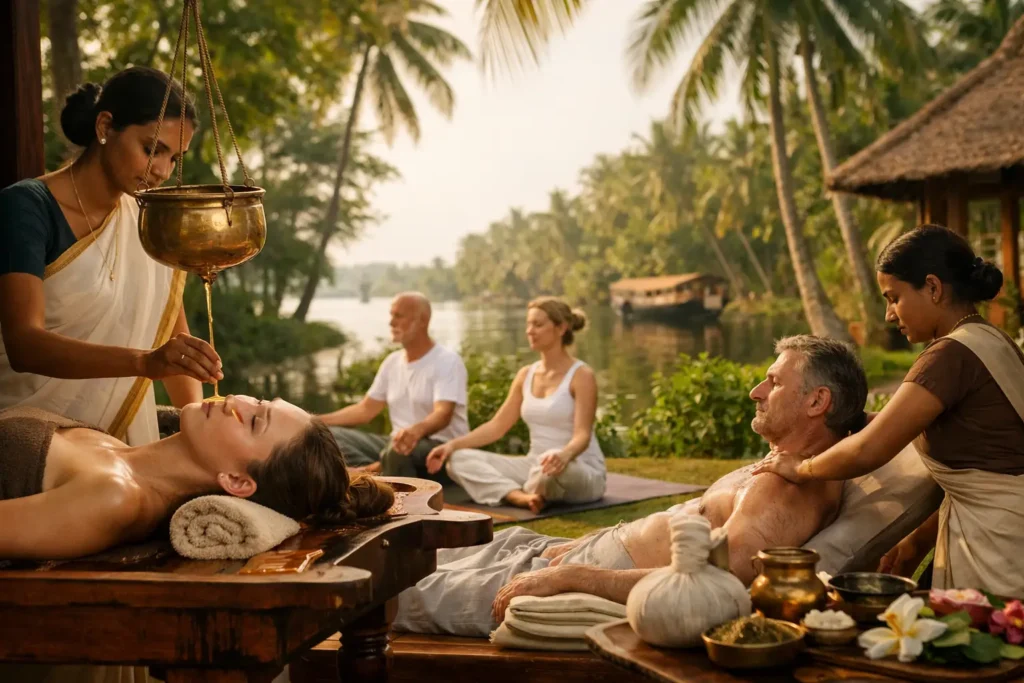
For many wellness travelers, the top reasons to choose Panchakarma are not about following a trend. They are about stepping away from relentless schedules, persistent stress, irregular sleep, and habits that no longer feel supportive. In Kerala, Panchakarma can offer a thoughtfully structured pause: time to be assessed as an individual, cared for with traditional Ayurvedic methods, and gently guided toward steadier routines.
Panchakarma is often described as an Ayurvedic cleansing and rejuvenation program, but that description only tells part of the story. At its best, it is a personalized process that may combine consultation, preparatory therapies, prescribed treatments, nourishing food, rest, yoga, and lifestyle guidance. It is not a one-size-fits-all spa package, and it should never be approached as a quick fix.
What Makes Panchakarma Different?
In classical Ayurveda, Panchakarma refers to five primary cleansing approaches. A qualified Ayurvedic doctor determines whether any of these are appropriate, and which preparatory and restorative therapies are needed. Many guests will not receive all five therapies. Their program may instead focus on gentler body treatments, oil therapies, herbal applications, diet, rest, and routines aligned with their current needs.
That individualized approach is central to authentic Panchakarma. Rather than choosing treatments from a menu based on what sounds appealing, guests begin with an Ayurvedic consultation. The practitioner considers factors such as constitution, current concerns, digestion, energy, sleep patterns, medical history, travel fatigue, and the season before developing a plan.
For international travelers, this distinction matters. A meaningful program has enough time for preparation and recovery, not simply a concentrated schedule of massages. It should also be delivered in a calm, hygienic setting with experienced practitioners, clear communication, and medical oversight where appropriate.
Top Reasons to Choose Panchakarma for Renewal
1. It begins with personalized Ayurvedic care
The strongest reason to consider Panchakarma is its respect for individual differences. Two people may arrive with the same goal – perhaps to feel rested, lighter, or more centered – yet require very different approaches. One may benefit from a deeply restorative rhythm and warm oil therapies, while another may be guided toward treatments and meals that support a sense of clarity and regularity.
This is why a proper consultation is more than an administrative first step. It shapes the pace, therapies, food recommendations, and daily schedule of the retreat. Personalized care can feel especially reassuring for first-time Ayurveda guests, who may be unfamiliar with Ayurvedic terminology but still want a program grounded in professional guidance.
2. It creates space for real rest, not just distraction
A wellness vacation can be busy in disguise. When every day is filled with sightseeing, workouts, appointments, and social plans, the nervous system may never have the opportunity to settle. Panchakarma retreats are designed around a slower, more intentional rhythm.
Treatments are often balanced with quiet time, gentle movement, yoga, meditation, and simple meals. This rhythm gives guests room to notice how they feel without constantly reacting to external demands. For people accustomed to working across time zones, caring for others, or living with full calendars, that protected space can be one of the most valuable parts of the experience.
Rest does not need to be passive. It can be a deliberate practice of allowing the body and mind to recover their natural pace.
3. It brings Ayurveda into daily life
A treatment may feel wonderful in the moment, but lasting value often comes from the routines guests take home. Panchakarma programs commonly include practical Ayurvedic principles around meal timing, sleep, self-care, movement, and stress management. The aim is not to impose a rigid lifestyle, but to help each guest recognize supportive patterns they can maintain after the retreat.
For example, a guest may leave with a calmer morning routine, a more regular relationship with meals, or a renewed commitment to making time for gentle yoga and breathwork. These changes are simple, but their consistency can matter more than ambitious wellness plans that disappear after a week.
The best guidance is realistic. Your practitioner should account for your home life, work demands, climate, and travel schedule rather than offering advice that only works within the retreat environment.
4. Kerala offers a deeply rooted setting for Ayurveda
Kerala is widely associated with living Ayurvedic traditions, skilled therapists, and a climate that naturally suits restorative wellness stays. Here, Ayurveda is not simply an add-on to a hotel experience. It is part of a broader cultural heritage shaped by generations of practice, herbal knowledge, nourishing cuisine, and mindful daily rhythms.
Choosing a well-managed Panchakarma retreat in Kerala also makes the journey easier for overseas guests. The right program can coordinate the details that often feel daunting from afar, including appropriate accommodations, dietary preferences, airport transfers, treatment scheduling, and room for restful exploration when suitable.
A serene setting matters, but authenticity and standards matter just as much. Look for a retreat that works with qualified Ayurvedic doctors and trained therapists, maintains clear hygiene practices, and explains your plan in language you understand.
5. Yoga and meditation can support the treatment journey
Panchakarma is not only about what happens in the treatment room. Gentle yoga, meditation, and breath-focused practices can complement a retreat by encouraging awareness, mobility, and emotional ease. They also create a bridge between Ayurvedic care and the daily habits guests hope to continue at home.
For beginners, these sessions should feel accessible rather than intimidating. For experienced practitioners, the quieter retreat setting can offer an opportunity to refine a personal practice without performance or pressure. The emphasis is usually on balance and presence, not intensity.
When yoga, meditation, meals, and treatments are coordinated thoughtfully, the day feels coherent. Each element supports the same intention: to slow down, listen more carefully, and restore a sense of internal balance.
6. It offers a more intentional alternative to a standard holiday
There is nothing wrong with a conventional vacation, but many travelers return home needing another break. A Panchakarma retreat asks a different question: what if your time away could leave you feeling more connected to your body, your needs, and your own capacity for care?
That does involve trade-offs. Panchakarma is not ideal for guests who want packed itineraries, late nights, or daily restaurant hopping. Treatment schedules and dietary recommendations may require commitment, and some parts of the process can feel quieter or more inward-looking than expected. The rewards tend to be greatest when guests arrive willing to slow down and follow the guidance of their care team.
For couples, friends, and small groups, this can still be a shared experience. Each person can have an individualized plan while enjoying peaceful meals, yoga sessions, and Kerala’s natural beauty together.
Choosing the Right Panchakarma Retreat
Not every program labeled Panchakarma provides the same level of care. Before booking, ask who conducts the initial consultation, how treatment plans are personalized, and whether a qualified Ayurvedic doctor is available throughout your stay. Ask how the retreat accommodates dietary requirements, mobility needs, medications, and follow-up questions after treatment.
Duration matters too. A short wellness stay can be restorative, especially when it includes consultations and gentle therapies, but a more comprehensive Panchakarma plan may need additional days for preparation, treatment, and transition. A reputable provider will be honest about what is realistic within your available time rather than promising dramatic outcomes.
At AyurYoga Retreats, carefully selected Kerala retreat partners and personalized travel support help guests focus on the experience itself. From arrival planning to accommodations and wellness scheduling, thoughtful coordination allows the healing atmosphere to begin before the first treatment.
Panchakarma is best approached as an invitation to participate in your own well-being, with patience and professional guidance. Give yourself enough time, choose an authentic setting, and let the quieter moments be part of the purpose. Renewal often begins not with doing more, but with finally making room to be cared for.