
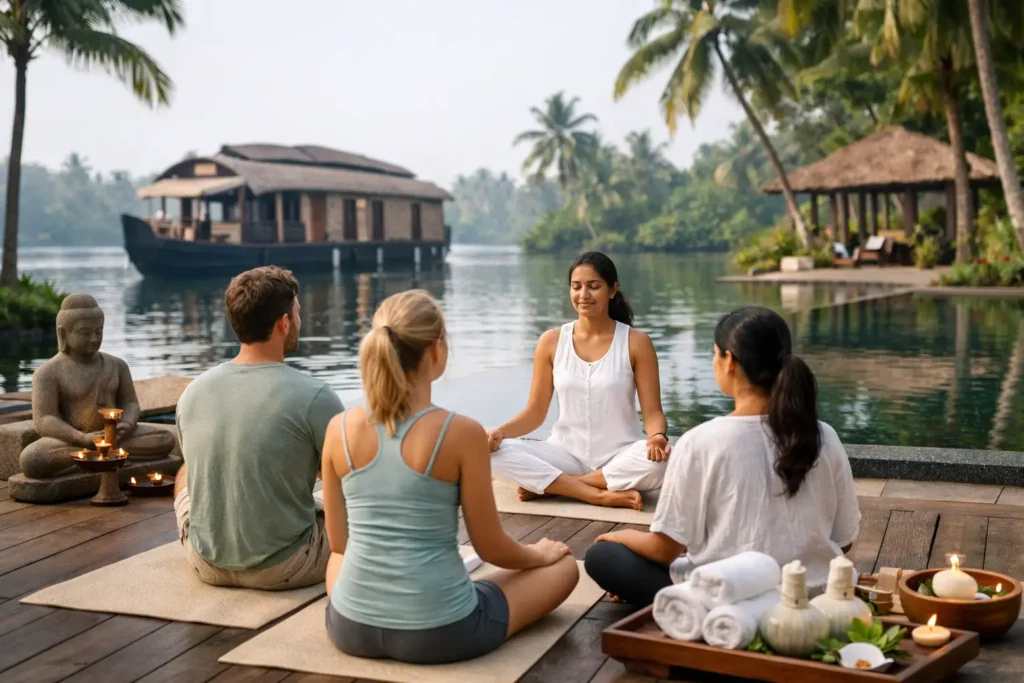
A memorable retreat is not created by filling every hour with yoga, treatments, and sightseeing. It is created when guests feel safe enough to slow down, supported enough to participate fully, and free enough to experience Kerala at their own pace. This group retreat planning guide is designed for yoga teachers, wellness coaches, corporate leaders, and hosts who want to bring a group to Kerala for genuine healing, connection, and renewal.
A well-managed retreat should feel effortless to guests, even though it requires careful decisions behind the scenes. The best plans honor both the purpose of the group and the individual needs each traveler brings with them.
Group Retreat Planning Guide: Begin With the Outcome
Before comparing retreat venues or choosing travel dates, define what you want participants to carry home. A group retreat can support stress recovery, deeper yoga practice, better sleep, leadership wellbeing, community connection, or a meaningful reset after a demanding season. These outcomes shape every practical choice that follows.
For example, a retreat for burned-out executives may need a quieter setting, private consultation time, restorative yoga, and ample unstructured space. A teacher-led yoga group may prefer a dedicated shala, inspiring daily movement practice, and opportunities to experience Kerala’s culture. A corporate group may require structured sessions, reliable Wi-Fi, meeting space, and a clear balance between wellbeing and team connection.
Keep the promise focused. Trying to offer a detox, advanced teacher training, cultural tour, luxury vacation, and personal transformation program all within one week can leave guests feeling rushed. A retreat with a clear intention feels more considered and delivers more meaningful results.
Choose Kerala With Care, Not Just Beautiful Images
Kerala is one of the world’s most respected destinations for traditional Ayurveda, but not every wellness property offers the same depth of care. The right venue depends on the group size, desired level of privacy, budget, mobility needs, and the clinical or restorative focus of the program.
For an Ayurveda-centered retreat, look beyond treatment menus. Ask whether consultations are conducted by qualified Ayurvedic doctors, whether therapies are recommended after an individual assessment, and whether therapists are trained in traditional practices. Authentic Ayurveda is personal by nature. Guests may arrive with different constitutions, health histories, energy levels, and goals, so a single treatment plan for everyone is rarely the right approach.
Consider the setting as part of the healing experience. A peaceful backwater location may suit a group seeking deep rest, while a coastal retreat can offer an uplifting sense of space and light. A property in the hills may appeal to guests who enjoy cooler air and nature walks. Access also matters. An extraordinary venue that requires a long, complicated transfer can be less suitable for a short retreat or for travelers arriving after international flights.
Match accommodation to group expectations
Accommodation is often where expectations become most personal. Be clear about room categories, single supplements, air conditioning, accessibility, internet access, and whether rooms are within easy walking distance of treatment and yoga spaces. International guests appreciate elegant comfort, but they also value transparency.
If guests will share rooms, establish this early and offer a thoughtful matching process. If privacy is central to the retreat promise, prioritize single occupancy wherever possible. Small details such as filtered drinking water, quality linens, quiet hours, and attentive housekeeping can strongly influence how rested participants feel.
Create a Rhythm That Supports Healing
A retreat itinerary should have a gentle pulse rather than a packed schedule. Ayurveda and yoga invite participants to become more aware of their own energy, and that is difficult when each day feels like a race between activities.
A balanced day may include morning yoga or meditation, nourishing breakfast, individual Ayurvedic consultations or treatments, lunch, free time, and an afternoon workshop or gentle practice. Evenings can be kept simple with a guided relaxation, reflection circle, or early dinner. This structure gives the group a shared experience while protecting the quiet time many guests need.
Build in arrival recovery. Travelers coming from the United States, Canada, or Europe may be managing jet lag, dehydration, and the emotional shift of leaving busy lives behind. The first day should feel welcoming and light, with time to settle into the room, meet the practitioners, and understand the week ahead.
Excursions add richness, especially when they offer a respectful connection to Kerala’s landscapes and living culture. Yet one carefully chosen outing can be more valuable than several long travel days. Consider the season, heat, road travel, and the energy of the group. Guests receiving intensive treatments may need rest more than sightseeing.
Plan Food as Part of the Wellness Program
Meals are not a side detail in an Ayurvedic retreat. They are part of how guests feel each day. A well-planned menu can support digestion, steady energy, and a deeper connection to the retreat’s purpose.
Discuss dietary needs well before arrival, including allergies, gluten-free requirements, vegan preferences, diabetes management, and food sensitivities. The goal is not to make broad medical claims or promise a universal diet. It is to ensure that every guest feels cared for and can eat with confidence.
When appropriate, invite the Ayurveda team to explain the principles behind the cuisine in clear, welcoming language. Guests often enjoy learning why meals are warm, freshly prepared, gently spiced, or adapted to the season. Education turns a meal plan into a useful practice they can bring home, without making dining feel restrictive.
Protect the Group With Clear Operations
The most restorative retreat still needs excellent operational planning. Guests should know what is included, what requires an additional payment, how airport transfers work, what to pack, and who to contact if they need help. Clear communication reduces anxiety before travel and prevents small uncertainties from distracting from the experience.
Your preparation should address four essential areas:
- Travel support: Arrange reliable airport transfers, share arrival instructions, and plan for delayed flights or staggered arrivals.
- Health information: Collect relevant wellness details confidentially, explain the consultation process, and encourage guests to seek appropriate medical advice before travel when needed.
- Financial clarity: State accommodation categories, inclusions, exclusions, cancellation terms, and payment deadlines in plain language.
- On-site leadership: Identify who handles daily questions, schedule changes, guest concerns, and communication with the venue team.
For retreat leaders, local coordination is often the difference between feeling present with participants and spending the week solving logistics. A trusted Kerala-based partner can coordinate venues, qualified practitioners, transportation, treatments, and cultural experiences while allowing the host to focus on the group relationship. AyurYoga Retreats supports this kind of end-to-end planning with carefully selected wellness providers and on-ground expertise.
Set Expectations Before Guests Board the Plane
Many first-time Ayurveda travelers arrive with enthusiasm but limited understanding of what an authentic program involves. A thoughtful pre-departure briefing helps them arrive prepared rather than surprised.
Explain that Ayurveda is not a spa menu to be selected casually. Individual consultations may lead to different recommendations, and therapies can be adapted according to each person’s needs. Let guests know that the pace may be quieter than a conventional vacation and that rest is an intentional part of the program.
It is also helpful to share practical cultural guidance. Recommend comfortable, modest clothing for yoga and treatments, advise guests about Kerala’s tropical climate, and explain any venue customs around meals, footwear, or shared spaces. Keep the guidance respectful and uncomplicated. The aim is to help guests feel at ease in a new environment, not to overwhelm them with rules.
Make Space for Individual Transformation
Group energy can be powerful, but it should never pressure people to disclose more than they wish to share. Some guests will find their breakthrough in a group circle; others will experience it quietly during a treatment, a morning meditation, or an hour by the water.
Offer optional moments of connection instead of making every activity compulsory. A welcome circle, intention-setting practice, or closing reflection can create belonging. At the same time, private downtime communicates that each guest’s wellbeing is respected.
This balance matters especially in mixed groups, where experienced yoga practitioners may travel alongside beginners or where colleagues may have different levels of comfort with personal reflection. Inclusive language, adaptable practices, and attentive facilitation help everyone feel that the retreat was designed with them in mind.
Measure What Matters After the Retreat
Feedback is more useful when it goes beyond whether guests enjoyed the food or scenery. Ask what helped them rest, what felt unclear, whether the pace was appropriate, and which elements they are likely to continue at home. These answers reveal whether the retreat delivered on its deeper promise.
A gentle follow-up message can extend the care beyond departure. Encourage guests to protect one small practice they discovered in Kerala, whether that is earlier sleep, a simple breathing practice, more mindful meals, or a regular pause in the day. The most lasting retreat memories are often not dramatic. They are the quiet changes that make daily life feel more balanced after the journey ends.