
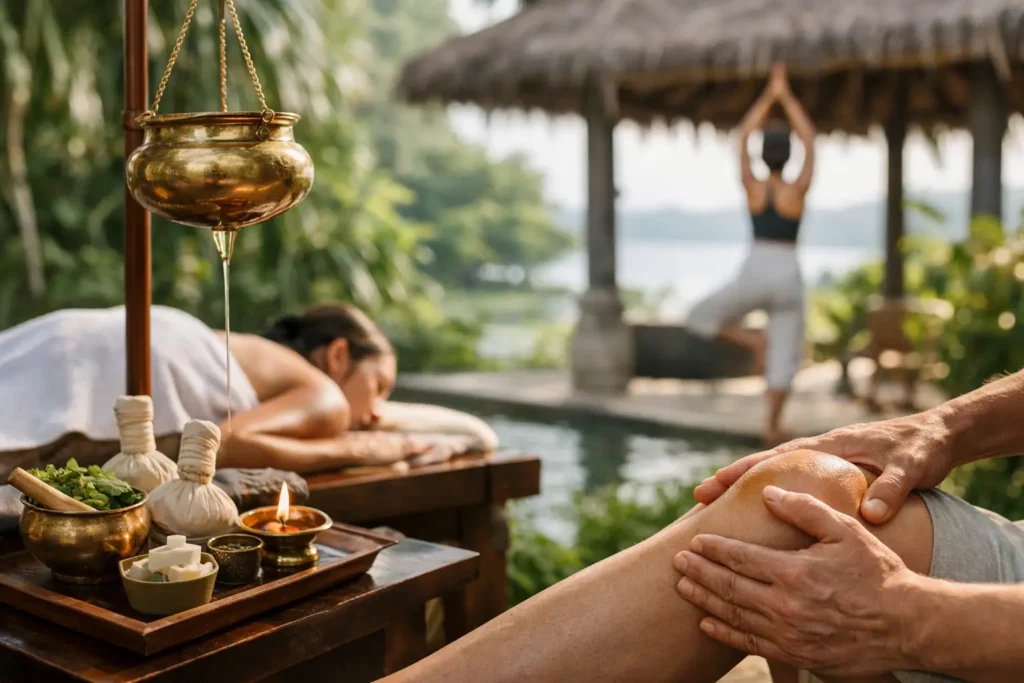
Joint pain can make even restorative time away feel complicated. You may be looking for more than a massage, a beautiful hotel, or a few quiet yoga classes. An ayurveda retreat for joint pain offers a more considered path: time away from daily strain, guided care from qualified practitioners, nourishing routines, and a treatment plan shaped around your current mobility, constitution, and comfort.
In Kerala, Ayurveda is not treated as a passing wellness trend. It is a living medical tradition practiced alongside yoga, therapeutic movement, and a food culture built around fresh, seasonal ingredients. For guests living with stiffness, recurring discomfort, reduced flexibility, or the effects of stress on the body, this setting can create the space to heal, rebalance, and renew at a sustainable pace.
What an Ayurveda Retreat for Joint Pain Can Offer
Ayurveda views joint discomfort through the whole person rather than through one symptom alone. An Ayurvedic doctor may consider your digestion, sleep, energy, stress load, daily routine, previous injuries, and the qualities of the pain itself. Dryness, cold sensitivity, stiffness, inflammation, or fatigue may each point to a different approach.
This is why a well-designed retreat begins with consultation, not a fixed menu of treatments. After an assessment, your practitioner may recommend a personalized program that combines external therapies, movement, rest, dietary guidance, and simple daily practices. The aim is to support circulation, ease muscular tension, encourage comfortable movement, and help you establish rhythms that remain useful after you return home.
For many guests, the greatest value is consistency. A single treatment can feel pleasant, but several days or weeks of carefully paced care allow the body to settle into a calmer routine. That does not make a retreat a substitute for medical diagnosis or treatment. It can, however, be a supportive complement when planned responsibly and in communication with your physician or specialist.
Your Care Begins With a Thoughtful Assessment
Authentic Ayurveda is personalized. Before treatment starts, a qualified Ayurvedic doctor should ask about your health history, medications, previous surgeries, diagnoses, pain triggers, and current ability to walk, bend, sleep, or exercise. This step matters especially for travelers with arthritis, osteoporosis, autoimmune conditions, joint replacements, diabetes, blood pressure concerns, or acute injuries.
The practitioner will then determine what is appropriate now. Some guests may benefit from gentle, warming oil therapies and restorative yoga. Others may need a quieter program focused on rest, carefully selected local applications, and diet. If a joint is acutely swollen, hot, unstable, or recently injured, vigorous massage and intensive movement may not be suitable. Good care is never about doing more treatments simply because time is available.
At AyurYoga Retreats, personalized programs are arranged through carefully selected Kerala Ayurveda and yoga partners, with support that extends from treatment planning to accommodation, transfers, and day-to-day comfort. For international guests, that continuity can make a meaningful difference: your healing time is protected from unnecessary logistics.
Treatments You May Encounter in Kerala
Your treatment schedule will depend on your consultation, but joint-focused Ayurvedic programs often include therapies intended to soothe the body and support ease of movement. Warm medicated oil massage may be used to nourish dry, tense tissues and promote relaxation. Localized oil applications, herbal poultices, and gentle heat therapies may be recommended for particular areas of stiffness or discomfort.
The experience should feel attentive rather than rushed. Therapists work under the direction of the Ayurvedic doctor, and treatments are adjusted as your response becomes clearer. You may find that the most powerful change is not dramatic. It may be waking with less stiffness, moving through a flight of stairs with more confidence, or finally sleeping without constantly searching for a comfortable position.
Some retreats also include cleansing therapies within a broader Panchakarma-inspired program. These are not automatically right for every guest or every length of stay. A responsible doctor will explain the purpose, preparation, and recovery requirements, and will not prescribe an intensive protocol merely because it is well known. If you have limited time, a gentler restorative program may be the wiser choice.
Yoga That Respects Your Body
Yoga at a joint pain retreat should not feel like a test of flexibility. The right practice uses breath, alignment, props, and slower transitions to meet you where you are. Small, regular sessions can help you reconnect with movement without the pressure to perform.
Depending on your needs, classes may emphasize joint-friendly mobility, supported postures, relaxation, pranayama, and meditation. A skilled teacher can offer chair-based options, modifications for knees or hips, and alternatives for weight-bearing poses. Let your teacher know about any diagnosis, replacement joint, pain pattern, or movement that feels unsafe.
There is a useful balance to seek. Complete inactivity can make some forms of stiffness worse, while pushing through pain can aggravate an already sensitive joint. Your retreat schedule should create room for therapeutic movement and genuine rest, with no expectation that every guest follows the same pace.
Food, Sleep, and the Conditions for Recovery
Joint comfort is influenced by far more than a treatment room. At a Kerala Ayurveda retreat, meals are often prepared according to your constitution and current needs, with warm, freshly cooked dishes that are easy to digest. Your doctor may suggest reducing foods that leave you feeling heavy, inflamed, or unsettled, while encouraging hydration and a more regular meal rhythm.
Sleep and nervous system recovery are equally central. Chronic stress can heighten the perception of pain, tighten surrounding muscles, and make restorative habits harder to maintain. A peaceful setting, unhurried mornings, meditation, and the absence of constant demands can help the body shift out of a state of vigilance.
This is where wellness travel becomes more than a vacation. Kerala’s greenery, warm climate, and slower daily cadence support the practical work of changing habits. The setting is beautiful, but its real value lies in allowing you to give care your full attention.
How Long Should You Stay?
The ideal duration depends on your health, travel plans, and goals. A seven-night stay can offer an introduction to personalized therapies, yoga, and an Ayurvedic routine. It may be particularly suitable if your goal is rest, education, and a gentle reset.
For persistent stiffness or a deeper program, 14 to 21 nights often provide more time for observation and adjustment. The doctor can see how you respond to treatments, refine the plan, and guide you through a more complete routine. Longer is not always better, though. Travelers with complex medical histories, limited mobility, or a recent flare-up should prioritize medical clearance and an appropriate pace over an ambitious schedule.
When comparing retreats, ask whether daily consultations are available, who supervises therapists, how dietary needs are handled, and whether the property can support accessibility requirements. Consider the climate and travel time as well. Kerala can be deeply restorative, but a long international journey requires sensible planning, especially if sitting for extended periods tends to worsen your symptoms.
Arriving With Realistic, Hopeful Expectations
An Ayurveda retreat is best approached as a dedicated period of support, not a promise of a cure. Some guests notice easier movement, improved sleep, lower stress, and a renewed relationship with their body. Others gain something just as valuable: clarity about the routines, foods, movements, and rest patterns that help them feel their best.
Continue prescribed medications unless your own medical clinician advises otherwise, and bring a clear list of medications and recent health information to your consultation. Seek urgent medical care for sudden severe pain, a visibly deformed joint, fever with joint swelling, inability to bear weight, or new numbness or weakness. These symptoms need prompt medical assessment, not retreat treatment.
The most meaningful retreat experience often begins with a simple decision: to stop treating discomfort as something you must merely endure. With qualified guidance, gentle consistency, and the restorative intelligence of Kerala’s Ayurvedic traditions, you can give your body the time and care it has been asking for.