
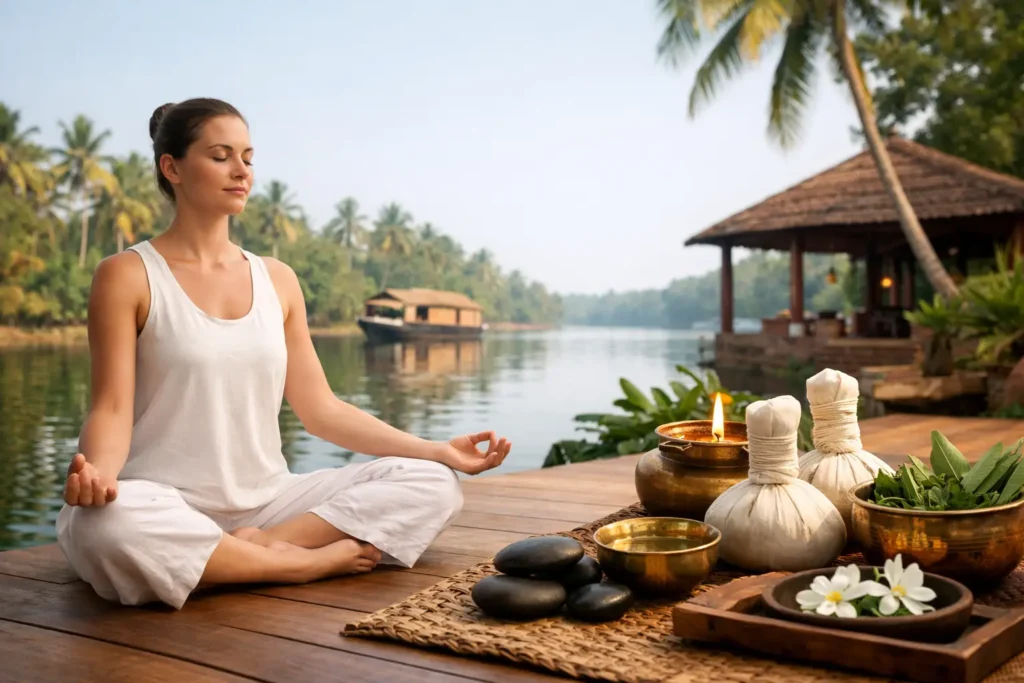
The difference is often visible by day three. Sleep gets deeper. Meals begin to feel nourishing instead of heavy. The nervous system, so used to running on alerts and deadlines, starts to soften. That is why a Kerala yoga and ayurveda retreat appeals to so many wellness travelers from the US – it offers more than a beautiful break. It creates the conditions for real healing, guided by traditions that have been practiced in Kerala for generations.
For travelers seeking stress recovery, digestive balance, emotional steadiness, or a more complete reset, Kerala stands apart. This is not simply a destination where yoga classes are added to a spa menu. It is one of the few places where Ayurvedic medicine, yoga, therapeutic food, and restorative daily rhythms can come together in a credible, professionally supervised way.
Why a Kerala yoga and ayurveda retreat feels different
Kerala has a distinct advantage in the wellness world because Ayurveda is woven into the region’s cultural and medical life. That matters. When you book a retreat here, you are far more likely to encounter certified Ayurvedic doctors, experienced therapists, and treatment protocols rooted in classical practice rather than wellness trends.
For many guests, that medical credibility changes the experience entirely. Instead of receiving generic massages and a few detox drinks, you may begin with a health consultation, dosha assessment, and a program that reflects your constitution, symptoms, travel fatigue, and goals. Yoga then supports the treatment plan rather than existing as a separate activity. This kind of integration is where Kerala truly excels.
The setting also plays a role. Lush landscapes, coastal air, backwaters, and slower village rhythms naturally support regulation and rest. But the environment alone is not enough. The best retreats combine serenity with structure – qualified care, thoughtfully paced schedules, personalized meals, and accommodations that allow you to settle in fully.
What a well-designed retreat should include
Not every retreat advertised under the same label offers the same depth. If your goal is genuine healing rather than a wellness-themed vacation, the details matter.
A strong program usually begins with an Ayurvedic consultation led by a certified doctor. This is where your retreat shifts from attractive to relevant. If you are dealing with burnout, poor sleep, inflammation, hormonal imbalance, anxiety, or digestive disruption, the plan should reflect that. Treatments may include Abhyanga, Shirodhara, herbal therapies, steam, cleansing practices, or a structured Panchakarma-based protocol, depending on your condition and length of stay.
Yoga should also be adapted, not standardized. Someone recovering from stress and adrenal depletion needs a different practice from a guest seeking strength and mobility. In a high-quality retreat, daily yoga and meditation support the body’s healing response rather than pushing performance. The best teachers understand pacing, breath, recovery, and the value of quiet practices.
Meals are another marker of quality. Ayurvedic cuisine is not about restriction for its own sake. It is about digestibility, balance, and timing. Personalized meals, herbal teas, and doctor-guided dietary recommendations help the body process treatment more effectively. Guests often discover that better energy comes not from eating less, but from eating in a way that suits their current state of health.
Then there is the travel experience itself. International guests often underestimate how much logistics affect the retreat outcome. Airport transfers, on-ground support, language ease, schedule planning, and help choosing the right property all reduce friction. When these pieces are handled well, healing starts earlier because you are not spending the first two days managing uncertainty.
Who benefits most from this kind of retreat
A Kerala yoga and ayurveda retreat is especially valuable for people who feel functional on the outside but depleted underneath. Many guests are professionals in their 30s, 40s, 50s, and 60s who have carried stress for years and are now feeling the effects in sleep, mood, digestion, immunity, or energy.
It also suits experienced yoga students who want more than a physically led retreat. Ayurveda adds diagnostic depth and therapeutic precision. For newer wellness travelers, the structure can feel reassuring. You do not need to know your dosha or understand Sanskrit terminology to benefit. You simply need a program that is guided well.
Groups can benefit too, though group travel requires careful design. Friends traveling together may share accommodations and certain activities, but individual consultations and tailored treatments remain essential. Corporate teams often seek nervous system recovery, stress regulation, and better sleep, while still wanting privacy and a premium standard of care. A customizable retreat model works well because not every participant arrives with the same needs.
How long should you stay?
This is one of the most common questions, and the honest answer is that it depends on your goals.
If you are primarily looking to rest, reset your routine, and experience authentic Ayurveda and yoga for the first time, a shorter retreat can still be meaningful. You can establish better sleep, receive daily treatments, and begin to reconnect with your body. But if you are addressing chronic stress, inflammation, digestive imbalance, or deeper fatigue, more time usually brings better results.
Panchakarma-based programs in particular require proper preparation, treatment days, and recovery. Trying to compress that process into too short a stay can reduce the benefits. A longer retreat gives the body space to respond gradually, which is often how lasting healing happens. The right provider will be honest about that rather than promising dramatic transformation on an unrealistic timeline.
Choosing the right retreat property in Kerala
Kerala offers everything from beachside resorts to quiet heritage spaces and medically focused Ayurvedic centers. The right choice depends on what you need most.
If your priority is clinical depth, look for retreats with strong doctor oversight, experienced therapy teams, and clear treatment protocols. If your goal is emotional reset and gentle renewal, the environment may matter more – peaceful grounds, privacy, calming interiors, and access to nature can be deeply supportive. Ideally, you should not have to choose between beauty and credibility.
Certification matters here. Government-recognized standards, licensed practitioners, and an established retreat infrastructure are all signs that the experience is being taken seriously. For international guests, especially those traveling a long distance, this level of oversight builds trust. It also protects the integrity of treatments that should never be delivered casually.
This is where curation becomes valuable. Companies such as AYUR YOGA help guests navigate the difference between a photogenic property and a truly healing one, matching accommodations and programs to health goals, budget, and preferred travel style.
What to expect emotionally, not just physically
One reason these retreats feel so memorable is that the changes are not only physical. As stimulation decreases and routine becomes steadier, emotions that were buried under constant activity may begin to surface. That is not a sign that something is wrong. Often, it is part of the recalibration.
A good retreat makes room for that process. The combination of bodywork, yoga, meditation, warm food, and reduced noise often helps guests feel more present than they have in months or years. Some leave with less pain and better digestion. Others leave with something quieter but equally important – mental clarity, steadier breathing, and a renewed sense of internal space.
That said, results are not identical for everyone. A retreat can open the door to healing, but lasting change often depends on what happens after you return home. The most effective programs recognize this and offer realistic guidance, not fantasy. They help you experience what balance feels like so you can begin to protect it in daily life.
How to know you are booking wisely
Trustworthy retreat planning feels transparent. You should know who the doctors are, what type of treatments are included, how the yoga is delivered, what accommodations are like, and whether the program can be personalized. If every guest receives the same schedule regardless of age, condition, or intention, that is worth questioning.
You should also feel supported before arrival. For international travelers, thoughtful coordination is part of the wellness experience. Clear communication, airport pickup, realistic packing guidance, and responsiveness to dietary or medical concerns all signal professional care.
The best retreat is not necessarily the most expensive or the most luxurious on the surface. It is the one that combines authenticity, safety, personalization, and an environment where your body can truly shift out of survival mode.
If you have been craving a reset that goes beyond a vacation, Kerala offers something rare: a place where healing traditions are still alive, and where expert support can meet you exactly where you are. Choose carefully, give yourself enough time, and let the retreat work at the pace your body has been asking for.
Pingback: Choosing a Solo Wellness Retreat in Kerala – AYUR YOGA
Pingback: A Meditation and Breathwork Retreat in Kerala – AYUR YOGA