
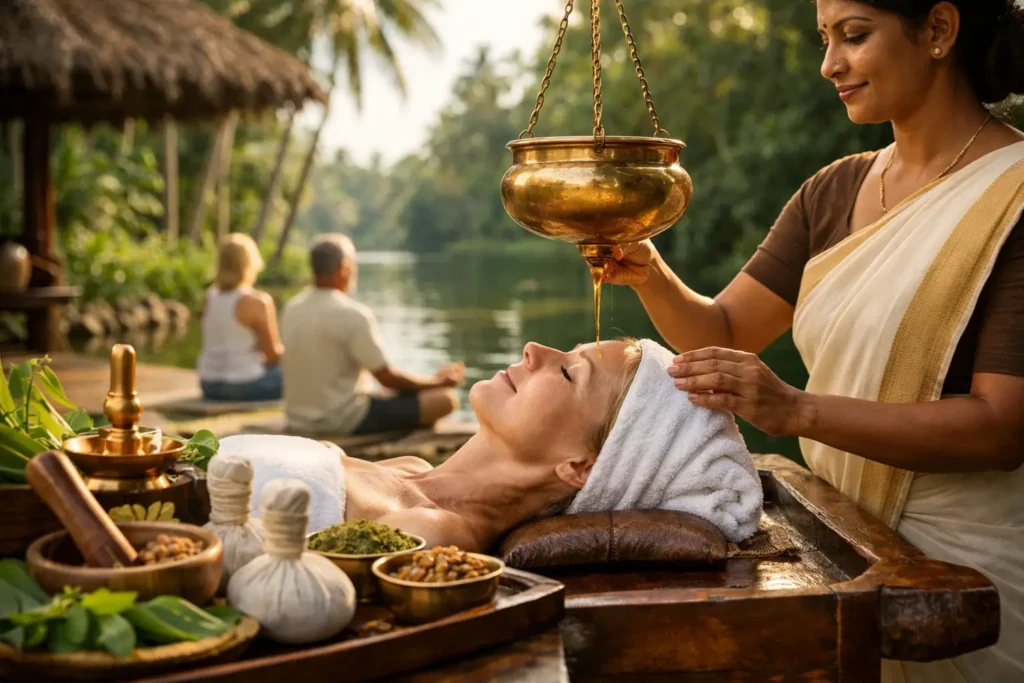
A wellness retreat should feel more considered than a menu of treatments. The most meaningful traditional ayurveda therapy benefits arise when therapies, food, movement, rest, and daily rhythm are brought together around your individual needs. For many guests, that means stepping away from an overloaded routine and entering a calmer, carefully supported environment where renewal has room to begin.
Ayurveda is a classical Indian system of wellbeing that views each person through a whole-person lens. Rather than treating relaxation as an isolated event, it considers constitution, current imbalances, digestion, sleep, energy, stress patterns, and lifestyle. In Kerala, this approach is often paired with skilled hands-on therapies, fresh regional cuisine, yoga, and a pace of life that invites you to slow down.
What Makes Traditional Ayurveda Therapy Different?
Traditional Ayurveda begins with observation and personalization. An experienced Ayurvedic doctor or practitioner may ask about your routines, appetite, sleep, energy, physical comfort, and emotional state before recommending a program. This consultation helps shape the experience, from the type and timing of treatments to meal guidance and yoga practices.
This is different from booking the same massage as every other guest. Two people may arrive seeking rest, yet one may benefit from a grounding, warming routine while another needs a lighter, cooling approach. The details matter: the oils used, the pressure of a treatment, the time of day, and even the recommendation to rest afterward can all be part of the plan.
Authentic Ayurveda also works best as a process, not a quick fix. A single therapy can be deeply relaxing, but a multi-day retreat offers more time for practitioners to observe how you respond and make thoughtful adjustments. That is why guests often choose longer rejuvenation or Panchakarma-oriented stays when their schedules allow.
Traditional Ayurveda Therapy Benefits for Mind and Body
The benefits people notice are personal, and no responsible retreat should promise a cure or replace medical care. Still, when therapies are delivered by qualified practitioners and supported by appropriate rest and lifestyle guidance, many guests experience meaningful shifts in how they feel day to day.
A calmer response to stress
Ayurvedic therapies are designed to settle the nervous system through rhythmic touch, warm herbal oils, quiet surroundings, and unhurried recovery time. Abhyanga, a full-body oil massage, is particularly valued for its soothing, nurturing quality. Combined with gentle yoga, breathing practices, and fewer digital demands, it can help guests feel less rushed and more present.
The setting matters as much as the treatment room. A retreat routine removes many small decisions that can drain energy at home: when to eat, whether to exercise, how to make time to rest. Having a supportive schedule can make calm feel practical rather than aspirational.
Better support for restorative sleep
Poor sleep is often connected to irregular routines, mental overstimulation, late meals, and accumulated tension. Ayurveda approaches these patterns gently, often through earlier dinners, calming evening practices, personalized therapies, and consistent sleep times. Guests may find that their bodies begin to recognize the signals for rest again.
Results vary, especially for longstanding sleep concerns. Yet the experience of several uninterrupted nights, without commuting or late-night obligations, can offer a useful reset and a clearer sense of which habits support deeper rest.
A renewed sense of energy and lightness
Wellness travelers commonly describe a retreat as restoring their energy, though Ayurveda does not equate vitality with constant activity. It asks whether energy is steady, whether meals feel satisfying, and whether the body has adequate time to recover.
A personalized program may include oil therapies, herbal preparations prescribed by the attending doctor, yoga suited to your capacity, and freshly prepared meals. Together, these can encourage a more comfortable daily rhythm. Some guests feel lighter and more energized; others first notice a quieter, steadier form of vitality. Both can be valuable outcomes in a culture that often mistakes exhaustion for productivity.
More mindful eating and daily habits
Ayurveda places strong emphasis on digestion and the circumstances around eating. Meals at a well-run retreat are often simple, warm, seasonal, and prepared to complement the program. Just as importantly, they are eaten at regular times and without the usual rush.
This does not mean there is one ideal diet for everyone. Food recommendations should reflect the guest, their treatment plan, preferences, and any health considerations. The lasting benefit is often awareness: noticing how timing, portion size, food choices, and stress affect your comfort and energy.
Space for emotional renewal
The mental load of work, caregiving, travel, and constant connectivity can leave little space to process what we are carrying. Ayurveda and yoga do not ask guests to force a transformation. Instead, they create conditions for reflection through stillness, bodywork, breath, nature, and compassionate professional care.
For some, that space brings clarity about boundaries or priorities. For others, it simply offers the relief of being cared for. Neither outcome needs to be dramatic to matter.
Why Kerala Is Well Suited to an Ayurveda Retreat
Kerala has a long and respected living tradition of Ayurveda, with a climate and natural landscape that support its wellness culture. The region is known for experienced Ayurvedic doctors, trained therapists, and retreat settings that integrate treatment with quiet accommodation, yoga, and nourishing cuisine.
For international travelers, choosing an established program also brings practical reassurance. A thoughtful retreat should provide a clear consultation process, qualified care teams, hygienic treatment spaces, transparent daily schedules, and support with arrival, accommodation, and local transportation. These details allow you to focus on your wellbeing rather than logistics.
The best setting depends on the kind of restoration you need. Backwater surroundings can feel deeply still, while a coastal stay may offer sea air and long walks. Hill settings can suit guests seeking cooler temperatures and a more secluded rhythm. The destination is not merely a backdrop. It can help shape the pace and quality of your rest.
Choosing the Right Type of Ayurvedic Program
Not every Ayurveda stay has the same purpose. A rejuvenation retreat is often a welcoming choice for first-time guests who want restorative therapies, yoga, healthy meals, and guidance without an intensive schedule. It can be especially suitable when your goal is to unwind, reset routines, and return home with renewed energy.
A more structured Panchakarma program may be considered when an Ayurvedic doctor recommends it following consultation. These programs can involve preparatory practices, a defined treatment sequence, dietary guidance, and significant rest. They require time, commitment, and close professional supervision, so they are not always the right choice for a short vacation or a guest with a packed sightseeing agenda.
Ask how the retreat personalizes care, who conducts consultations, and how treatment recommendations are adjusted. It is also wise to share relevant medical history, medications, allergies, pregnancy status, or mobility needs before arrival. Ayurveda can complement a wellbeing plan, but it should be practiced transparently and in coordination with appropriate medical guidance when needed.
How to Carry the Experience Home
The quiet power of a retreat often reveals itself after you leave. Rather than trying to recreate every therapy at home, choose two or three practices that feel realistic: a more consistent bedtime, a few minutes of morning breathing, slower meals, or a weekly self-care ritual. Small habits are more likely to stay with you than an ambitious routine that disappears after a busy week.
Give yourself a gentle landing, too. If possible, avoid scheduling an intense workday immediately after travel. Leave room to unpack, hydrate, sleep, and notice what your body is asking for. The goal is not to preserve a retreat bubble forever. It is to bring a little of its steadiness into ordinary life.
At AyurYoga Retreats, personalized Kerala wellness journeys are designed with this principle in mind: healing is supported by attentive care, authentic practice, and enough time to simply be. The most valuable benefit may be returning home with a renewed relationship to your own wellbeing – one that feels calm, sustainable, and truly yours.