

When exhaustion settles into your nervous system, standard self-care—a weekend off, catching up on sleep, or dinner with close friends—rarely touches the root of the problem. Deep burnout demands an intentional pause. In recent years, solo retreats have transitioned from a niche spiritual journey into an indispensable reset for professionals, caretakers, and travelers navigating constant digital overstimulation. Stepping away completely alone provides a rare environment where your body can stop performing and finally begin cellular repair.
Choosing a solo wellness retreat in India, particularly within the lush, medicinal landscape of Kerala, allows you to pair solitude with clinical traditional wisdom. In this guide, we explore how private AyurYoga programs—the deliberate union of authentic Ayurveda and therapeutic yoga—work to restore exhausted bodies, quiet turbulent minds, and build sustainable vitality.
Why Choose Solo Retreats for Deep Physical and Emotional Renewal?
Group vacations often masquerade as restful getaways. In reality, they frequently demand high emotional labor: coordinating meal times, managing group energy, making small talk, and compromising on daily schedules. A solitary journey removes that social friction entirely.
The Power of Sacred Solitude: Breaking Chronic Stress and Burnout
Under chronic stress, the sympathetic nervous system stays locked in a perpetual “fight or flight” loop. Cortisol and adrenaline remain elevated, disrupting digestion, compromising sleep architecture, and degrading immune defense.
Solitude acts as a direct physiological off-ramp. When you eliminate social obligations, your prefrontal cortex—the brain region responsible for decision-making, social calibration, and executive control—can finally power down. According to research published by Solo Traveler World, over 68% of solo travelers actively seek journeys focused on relaxation, rejuvenation, and mental health enhancement. Solitude is not an act of isolation; it is a clinical environment for somatic decompression.
Moving Beyond Group Dynamics: Healing on Your Own Biological Clock
Everyone processes fatigue differently. On a group trip, if your body needs to sleep at 8:00 PM or take a three-hour nap after lunch, you often feel a quiet pressure to participate instead.
Solo retreats grant total autonomy over your biological clock. You eat when your digestive fire (Agni) peaks, sleep when your circadian rhythms demand it, and spend afternoons in quiet contemplation without needing to explain your silence to a travel companion. If you are debating which style suits your current energy levels, reading through this breakdown of choosing between a solo retreat or group retreat can help clarify your personal priorities.
The Inner Shift: From External Validation to Sensory Inwardness (Pratyahara)
In classical Yogic philosophy, as documented by the Ministry of Ayush, true mental restoration begins with Pratyahara—the fifth limb of Patanjali’s Ashtanga Yoga, meaning the conscious withdrawal of the senses from external stimuli.
Modern life bombards our senses with notifications, visual advertisements, ambient city noise, and social cues. By turning inward during a solitary stay, you strip away the mirror of external validation. You stop viewing your life through how it appears to others and begin experiencing how it actually feels from within.
How Does a Private Ayurveda Retreat in Kerala Actually Work?
A genuine private ayurveda retreat Kerala offers is fundamentally different from a luxury resort spa. Rather than offering a generic menu of relaxing treatments, it operates as a personalized, holistic medical environment rooted in five millennia of living tradition.

In-Depth Vaidya Consultation: Discovering Your Prakriti and Vikriti
Your journey begins across a wooden desk from a Vaidya—a formally trained Ayurvedic physician holding an institutional degree in Ayurvedic Medicine and Surgery.
The initial consultation lasts between 60 and 90 minutes and relies on Ashtavidha Pariksha (eight-fold clinical examination), which includes:
- Nadi Pariksha: Deep radial pulse diagnosis to detect sub-clinical imbalances across deep organ channels.
- Jihva and Netra Pariksha: Examination of the tongue and eyes for systemic toxicity (Ama) and metabolic sluggishness.
- Lifestyle Assessment: A review of sleep habits, digestive patterns, emotional triggers, and stressors.
The Vaidya evaluates your Prakriti (your innate birth constitution of Vata, Pitta, and Kapha doshas) against your Vikriti (your current state of imbalance). Burnout, anxiety, and mental scatter almost universally point to aggravated Vata dosha—the biological air and ether elements governing nervous system activity.
Targeted Panchakarma Therapies Customized for Solitary Healing
Once your doshic imbalances are mapped, the Vaidya designs an intensive daily sequence of classical treatments. When undertaken alone, these therapies take on a meditative depth:
- Abhyanga: Warm, herb-infused sesame or coconut oils selected for your dosha are massaged into the skin with rhythmic, downward strokes (Anuloma) to soothe the nervous system and move lymphatic fluid.
- Shirodhara: A continuous, rhythmic stream of medicated herbal oil, buttermilk, or decoction is poured over the forehead (the Ajna chakra). This therapy induces deep alpha-wave brain states, making it an effective treatment for chronic insomnia, migraines, and mental exhaustion.
- Kizhi (Herbal Poultice Massage): Heated linen bags packed with medicinal leaves or herbal powders are tapped rhythmically over inflamed joints and tight muscles to clear stagnation.
- Basti (Medicated Enemas): Considered the cornerstone of Panchakarma for Vata disorders, gentle herbal oil and decoction infusions clear metabolic waste from the colon—the primary anatomical seat of Vata.
+------------------+-----------------------------+------------------------------------+
| Therapy          | Primary Action              | Doshic & Nervous System Impact     |
+------------------+-----------------------------+------------------------------------+
| Shirodhara       | Medicated forehead pour     | Pacifies Vata/Pitta; calms mind    |
| Abhyanga         | Synchronized oil massage    | Balances Vata; moves lymph/toxins  |
| Podikizhi        | Heated herbal bag fomentation| Reduces Kapha/Vata pain & stiffness|
| Matra Basti      | Gentle herbal oil enema     | Grounds root Vata; heals gut axis  |
+------------------+-----------------------------+------------------------------------+
Dinacharya and Satvik Nutrition: Aligning Routine with Biological Rhythms
True Ayurvedic healing relies heavily on Dinacharya—a structured daily rhythm that synchronizes your organs with natural circadian transitions.
Nutrition is treated as medicine (Aushadhi). Rather than a standard buffet, you receive a custom Satvik diet prepared fresh three times daily from organic, local produce. Meals are cooked with therapeutic spices like turmeric, cumin, coriander, and fresh curry leaves to kindle digestive fire without aggravating the gut lining. For solo guests, eating quietly without phone screens or conversational demands turns each meal into a grounding meditation.
Pro Tip: Embrace the initial resistance to silence. Around day three of an intensive solo program, your brain often craves dopamine and distraction. Lean into that restless feeling—it marks the exact point where your nervous system begins downshifting from chronic fight-or-flight into restorative repair.
A Day in the Life: Inside a Personalized Solo Wellness Program
To understand the rhythm of an immersive personalized solo wellness program, take a look at how a typical day unfolds in a traditional retreat setting.
Dawn Solitude: Individualized Asana, Pranayama, and Meditation
The day begins early, just before sunrise (Brahma Muhurta), when the air is still and mental clarity is naturally high.
- 6:00 AM: Wake to birdsong along the Malabar coast or backwaters. You drink warm copper-infused water or fresh herbal infusions prescribed by your doctor.
- 6:30 AM – 8:00 AM: One-on-one yoga practice. Unlike a crowded studio class back home, your instructor tailors every posture (Asana) and breathwork technique (Pranayama) to support your Ayurvedic treatment plan. If your nervous system is fragile, the focus shifts toward slow, grounding Yin or restorative postures, alternate nostril breathing (Nadi Shodhana), and nervous system down-regulation.
Mid-Day Treatments and Rest: Healing Without Distraction
- 8:30 AM: A light, warm Satvik breakfast tailored to your digestive capacity—such as steamed red rice idlis with mild vegetable stew or spiced ragi porridge.
- 10:00 AM – 12:30 PM: Your primary Ayurvedic therapies. You spend this time in quiet therapy suites under the skilled hands of two therapists. The ambient scent of camphor, warm sesame oil, and freshly crushed herbs replaces sensory clutter.
- 1:00 PM: Dosha-specific lunch eaten mindfully in open-air dining pavilions overlooking tropical gardens.
- 2:00 PM – 4:00 PM: Mandatory rest. In traditional Ayurveda, physical stillness after oil therapies is essential to allow the medicinal herbs to penetrate the seven tissue layers (Dhatus). This is ideal unstructured time for private journaling, reading, or resting.
Evening Contemplation: Reflective Walks and Ayurvedic Discourse
- 4:30 PM: Gentle restorative yoga, guided meditation, or Yoga Nidra (psychic sleep), designed to safely access subconscious tension patterns.
- 6:30 PM: A light, digestible dinner featuring clear soups, mung bean preparations, or gently braised gourds.
- 8:00 PM: Evening herbal decoctions (Kashayam) prescribed by your Vaidya to prepare your gut and mind for restorative sleep. Devices are powered down, and lights go out early.
Is Safe Solo Travel in Kerala Realistic for International Seekers?
For many embarking on a solo healing journey India can sound daunting. Media representations often paint international travel across South Asia as chaotic or logistically difficult. However, Kerala exists in a category of its own.
Kerala’s Hospitality Heritage and High Social Development Standards
Kerala is widely celebrated for its unique socio-economic landscape. According to regional governance and safety data highlighted by Kerala Tourism, the state consistently leads India with the highest literacy rates, the highest life expectancy, and some of the lowest crime rates against international visitors.
Locally known as “God’s Own Country,” Kerala maintains a centuries-old tradition of welcoming global trade routes, fostering an open, culturally tolerant, and educated populace. English is widely understood and spoken across both urban transit points and rural retreat settings.
Dedicated Sanctuary Environments vs. Unstructured Travel
The logistical difference between open backpacking and a retreat stay is night and day. A private wellness immersion takes place within protected sanctuary estates—sprawling coconut groves, coastal cliffs, or riverside valleys designed specifically for quiet recovery.
Within these properties, solo travelers enjoy an attentive, private environment. Security is maintained around the clock, on-site doctors check in daily, and the retreat team handles every detail from laundry to nutritional preparation. If you want a deeper look at navigating this state independently, our guide to planning a solo wellness retreat in Kerala outlines property selections and regional advice.
End-to-End Logistical Support for Solo Female and Senior Travelers
Navigating foreign airports alone often triggers travel anxiety. Reputable healing centers remove this burden entirely through structured arrival protocols:
- Chauffeured Airport Transfers: A pre-assigned retreat driver meets you directly outside the arrivals terminal at Kochi (COK) or Thiruvananthapuram (TRV) international airports with private, air-conditioned transport.
- Concierge Care: From processing local currency exchanges to acquiring a local eSIM card, on-site liaisons ensure you never feel lost.
- Safe Spaces for Women: Kerala has long enjoyed progressive social systems, including historical matrilineal family structures. Solo female travelers frequently remark on the high level of respect, personal space, and professional care they receive from therapists and staff.
Key Takeaways: Group Retreats vs. Solo AyurYoga Retreats
To help evaluate whether an independent journey aligns with your present needs, here is how a solitary immersion compares to standard group wellness travel:

Infographic by SiteLift
| Parameter | Standard Group Wellness Retreat | Private Solo AyurYoga Retreat (Kerala) |
|---|---|---|
| Pacing & Schedule | Fixed itinerary; group activities mandatory | Fluid daily routine aligned with your Vaidya’s orders |
| Therapeutic Depth | Generalized spa treatments and group yoga | Prescriptive Panchakarma tailored to your doshic imbalance |
| Social Energy | High; frequent group interaction and sharing | Zero social expectation; deep internal focus (Pratyahara) |
| Nutritional Plan | Shared buffet; broad dietary accommodations | Precision medicinal meals targeting your digestive fire |
| Nervous System Impact | Inspiring and community-focused | Profound somatic reset; nervous system stabilization |
| Ideal For | Social connection, casual fitness, making friends | Chronic burnout, grief, life transitions, deep fatigue |
Data from the Global Wellness Institute shows that wellness tourism has grown at an annual rate exceeding 12%, with private, intentional solo journeys representing one of the fastest-growing segments. People are no longer seeking vacations that leave them needing another vacation; they are looking for genuine clinical and emotional resets.
Why Solo Retreats Deliver Deeper Renewal: An Editorial Perspective
Having spent years observing guests arrive at retreat gates, I have come to believe our modern culture deeply undervalues the medicine of intentional solitude.
We are taught to feel guilty for wanting to be entirely alone. When someone announces they are going on holiday by themselves, friends often ask with genuine concern: “Is everything okay? Are you going through something?”
The truth is, waiting until a personal crisis forces you into solitude is a mistake. Solitude is preventive maintenance for the human spirit.
In a group wellness setting, human nature inevitably takes over. You observe what the person on the next yoga mat is wearing; you quietly measure your flexibility against theirs; you listen to personal venting during breakfast. You are still performing.
When you undertake a private retreat in Kerala, that subtle performance stops. You can spend an entire afternoon sitting under a teak tree watching the rainfall without uttering a single word. You can cry on the treatment table as your therapist works through deep tissue tension, without feeling embarrassed or rushed. In that silence, your body stops defending itself and begins healing.
True solitude is not the absence of people; it is the presence of your own uncluttered awareness.
— ayuryogaretreats.com
Preparing for Your Solo Healing Journey to India
Proper physical and mental preparation ensures your transition from a demanding schedule into retreat silence is seamless.
Setting Intentions Over Expectations: Navigating Emotional Detoxification
In the Ayurvedic model, the physical body and mental body are inseparable (Sharira-Manas axis). When Panchakarma mobilizes deep-seated physical toxins (Ama), it frequently unlocks suppressed emotional material.
Do not arrive expecting constant bliss. You may experience days of profound stillness alternating with afternoons of sudden grief, deep fatigue, or vivid dreams. This is a natural part of emotional detoxification. Approach your retreat with clear intentions—such as releasing chronic control, restoring energy, or processing a transition—rather than a rigid list of expectations.
Practical Packing and Visa Protocols for Ayurvedic Immersions
Traveling for an Ayurvedic stay requires a simpler approach than standard tourism:
- Clothing: Pack modest, loose-fitting garments made from natural fibers like linen and organic cotton. White and light earth tones are traditionally preferred.
- Treatment Attire: Bring simple clothing you do not mind discarding. Authentic Ayurvedic oils like Dhanwantharam Thailam are dark, medicinal, and will permanently stain delicate fabrics.
- Journal & Writing Supplies: Bring a physical journal. Your thoughts will flow faster once you unplug, and handwriting keeps you away from glowing screens.
- Visa: International travelers visiting India for wellness treatments generally apply for an online e-Tourist Visa (valid for 30 days, 1 year, or 5 years) or an e-Medical Visa if undertaking extensive doctor-supervised treatment programs. Ensure your passport has at least six months of validity remaining from your arrival date.
Pro Tip: Leave decorative clothing and complex electronics at home. A pair of slip-on shoes for moving between your room and therapy suites, a few sets of comfortable cotton kurtas, and a dedicated journal are all you will use.
Post-Retreat Integration: Bringing Kerala’s Wisdom Back Home
A solo retreat should not exist as an isolated bubble. The true test of your healing journey begins the moment you step off the plane back home.
- Protect the Transition: Avoid scheduling intensive work meetings or social engagements within 48 hours of landing. Give your circadian rhythms space to adjust.
- Preserve Morning Quiet: Guard the first 30 minutes of your day. Drink warm water, stretch gently, and practice ten minutes of Nadi Shodhana (alternate nostril breathing) before checking notifications.
- Savor Your Food: Continue the habit of mindful eating. Sit down, avoid screens, and chew your meals slowly to support your Agni.
For those seeking to fully step away from digital overstimulation before transitioning back to demanding work, integrating practices from a 7-day immersive nature retreat can offer a valuable blueprint for sensory reset.
Planning Your Renewal with AyurYoga Retreats
Navigating the landscape of Ayurvedic wellness centers across India can feel overwhelming. Many commercial properties present themselves as traditional hospitals while operating as generic resorts; others lack the necessary medical standards to support international guests safely.
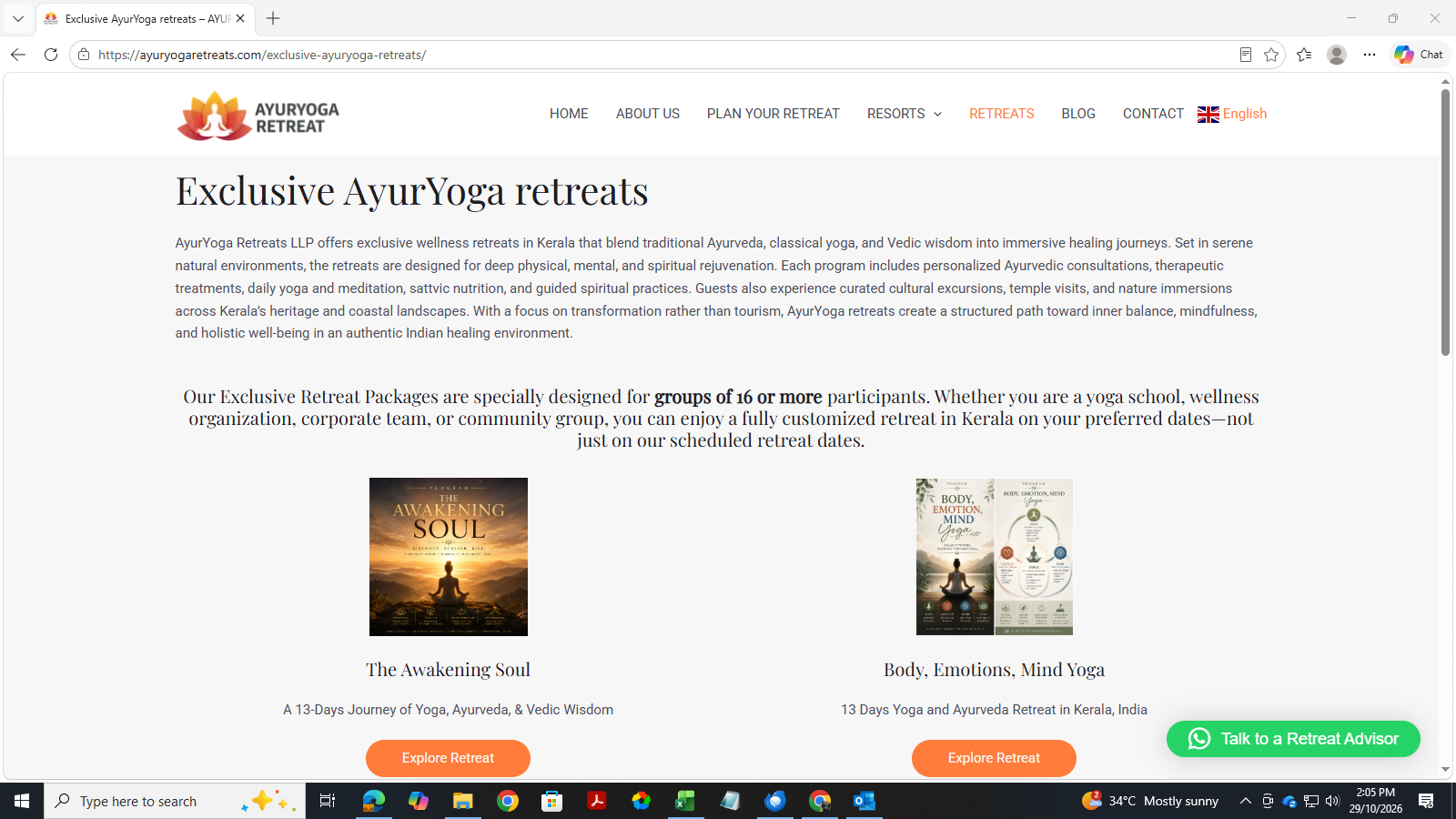
At ayuryogaretreats.com, our mission is to eliminate that uncertainty. We curate vetted, doctor-led Ayurveda and yoga sanctuaries throughout Kerala, matching your personal health goals, comfort preferences, and budget with properties that honor authentic Vedic principles.
Whether you need a two-week intensive Panchakarma protocol to reverse severe corporate burnout or a tranquil coastal haven for solitary reflection and gentle yoga, our team provides comprehensive guidance. From matching you with senior Vaidyas to organizing private airport logistics, we ensure your solitary healing journey is safe, authentic, and restorative from start to finish.
Frequently Asked Questions About Solo Retreats
What makes solo retreats more effective for stress relief than traveling with friends or family?
Solo journeys eliminate the continuous, subtle work of social coordination. You are not responsible for anyone else’s comfort, meals, or moods. This total lack of external obligation lets your sympathetic nervous system power down, enabling deeper physiological rest than shared vacations can provide.
Is safe solo travel in Kerala realistic for women seeking wellness retreats?
Yes. Kerala is widely recognized as one of India’s safest states, characterized by progressive social structures, high literacy, and a hospitable culture. Dedicated wellness estates provide secure, self-contained environments with 24/7 staff, professional therapists, and private airport transfers, making it a dependable destination for solo female travelers.
What is the ideal duration for a personalized solo wellness program in Kerala?
For genuine therapeutic results, a stay of 14 to 21 days is ideal. This window allows the body to move through the classic phases of Panchakarma: preparatory oiling and sweating (Purva Karma), deep cleansing treatments (Pradhana Karma), and restorative rejuvenation (Paschat Karma). However, even a 7-day stay can deliver a profound reset for general stress and fatigue.
Will I feel isolated or lonely during a private Ayurveda retreat?
Solitude on a structured retreat feels very different from isolation at home. Your days are gently anchored by morning yoga, meals, consultations, and multi-hour treatments with dedicated therapists. Guests often discover that this steady rhythm provides a reassuring sense of care, leaving little room for loneliness.
What is typically included in a private AyurYoga retreat package?
A complete private package generally covers:
- Complete initial and follow-up medical consultations with a certified Ayurvedic doctor (Vaidya).
- All prescribed daily treatments, herbal oils, and therapies (typically 2 to 2.5 hours per day).
- Personalized one-on-one or small-group therapeutic yoga, breathwork, and meditation.
- Three freshly cooked, dosha-specific Satvik meals daily along with medicinal herbal teas.
- Private accommodation within quiet, natural estate grounds.
- Private arrival and departure airport transfers.