

If you feel stretched thin by constant notifications, demanding schedules, and urban noise, stepping away for a yoga vacation is one of the most effective ways to reset your nervous system. Kerala, a narrow tropical strip along India’s southwestern Malabar Coast, has drawn spiritual seekers and wellness travelers for centuries. Here, authentic Hatha yoga and classical Ayurveda exist not as luxury hobbies, but as living traditions.
According to research by the Global Wellness Institute, mind-body activities like yoga retreats are driving over $800 billion in global wellness expenditure as travelers prioritize internal restoration over traditional sightseeing. Choosing Kerala for your journey places you at the source of this ancient healing wisdom.
Planning a trip to India can feel daunting if you don’t know what to expect. In this guide, I will walk you through Kerala yoga holiday planning step by step—from picking the right season and deciding on your ideal length of stay to understanding the daily rhythm of an authentic retreat.
What You Need Before You Start
Before diving into travel logistics, gather these essential items and information:
- Time Commitment: 7 to 21 uninterrupted days.
- Travel Documents: Passport (valid for at least 6 months) and an Indian e-Tourist Visa.
- Medical Clearances: A quick check-in with your doctor if you have spinal injuries, chronic conditions, or recent surgeries.
- Mindset: Openness to early mornings, simplified vegetarian meals, and digital detachment.
What Should You Know Before Planning a Yoga Vacation in Kerala?
Not all retreats in South India offer the same experience. Before booking, you must clarify what type of environment will best serve your current physical and emotional needs.
Authentic Kerala Yoga vs. Commercial Wellness Resorts
Kerala is filled with wellness options ranging from strict ashrams to high-end beach resorts. Traditional ashrams focus heavily on self-discipline, communal chores (karma yoga), mandatory morning chantings, and simple shared quarters. They are wonderful for deep spiritual immersion, but they can be a shock if you expect private air-conditioned rooms or leisure time.
On the flip side, commercial luxury resorts often treat yoga as just a 60-minute hotel amenity sandwiched between buffet breakfasts and lounge time. The sweet spot for most international visitors is an authentic Ayurvedic yoga retreat center. These properties offer expert tuition from certified traditional teachers, individual health consultations, and comfortable accommodations without losing the sacred integrity of the practice.
Assessing Your Personal Health and Fitness Goals
Are you looking for physical detox, stress relief, spinal rehabilitation, or an advanced posture workshop?
- If your body is chronically fatigued, a heavy physical dynamic vinyasa program will burn you out. You need restorative Hatha, gentle pranayama, and soothing Ayurvedic therapies like Abhyanga (oil massage).
- If you are looking to build strength and discipline, seek out centers specializing in traditional Classical Hatha or Ashtanga systems.
Step 1: How Do You Choose the Best Season for Your Yoga Vacation?
Kerala experiences three primary climatic phases each year. Selecting the right window depends on whether you value breezy coastal weather, deep therapeutic healing, or budget travel.
| Season | Months | Climate | Best For |
|---|---|---|---|
| Peak Winter | October – March | Warm, dry, pleasant ocean breeze | First-time visitors, beach yoga, combined sightseeing |
| Monsoon | June – September | Heavy rains, high humidity, cool air | Deep Ayurvedic detox, body flexibility, quiet reflection |
| Summer | April – May | Hot, humid, sunny | Budget travelers, peaceful hill-station retreats |
Peak Winter Season (October to March): Ideal Weather and Coastal Breeze
The winter months offer the most comfortable weather across Kerala. Temperatures hover around 28°C to 32°C (82°F–90°F) with clear skies and low humidity. Morning practice on outdoor decks overlooking the Arabian Sea or backwater lagoons feels effortless.
Data from Kerala Tourism indicates that international arrivals peak between October and March, with over 60% of wellness visitors choosing retreats during these cooler dry months. Because this is peak season, booking 3 to 6 months in advance is essential.
Monsoon Season (June to September): Prime Time for Ayurvedic Alignment
Monsoon is traditional India’s best-kept secret for deep healing. The heavy tropical rains wash away atmospheric dust, cool the air, and open up the body’s pores.
In classical Ayurvedic texts, the monsoon (Karkidaka season) is regarded as the best time for Panchakarma (detoxification) and physical alignment. The atmosphere is naturally humid and warm, keeping muscles supple and joints fluid, which allows you to work deeper into yoga postures without strain.
Pro Tip: If your primary goal is physical transformation and deep stress relief, book your yoga vacation during the July-August monsoon window. The sound of rain falling on palm fronds creates an unmatched natural acoustic backdrop for meditation.
Why Monsoon Season is Underrated (My Editorial Take)
While most tourists run away from rain, serious practitioners run toward it. Having experienced Kerala in both December sunshine and July downpours, I will take monsoon season every single time. There is a serene quietness that settles over the palm groves during monsoon. The cool rain keeps your body temperature balanced during practice, and the surrounding jungle turns a vivid green that energizes your spirit. Plus, retreat rates are significantly lower.
Shoulder Summer Months (April to May): Quiet Atmosphere on a Budget
The summer months bring warm weather and high humidity before the rains arrive. While coastal stays can feel hot during midday hours, hill-station retreat locations like Munnar and Wayanad remain pleasantly temperate. If you are looking for quiet surroundings, smaller class sizes, and accessible rates, summer is an excellent window. You can explore a peaceful mountain sanctuary like an Ayurveda & Yoga Retreat in Wayanad to enjoy elevated cool breezes.

Step 2: Deciding How Long to Stay on Your Yoga Vacation
A frequent question travelers ask is: how long should a yoga retreat stay be to achieve real benefits? The physical and mental adaptation timeline dictates how much your body can shift during your stay.
Research published by the National Center for Complementary and Integrative Health shows that over 80% of yoga practitioners report reduced stress and improved emotional balance. However, achieving lasting physiological changes requires adequate time for nervous system down-regulation.

Infographic by SiteLift
The 7-Day Reset: Quick Stress Relief and Introduction
A 7-day stay acts as a quick circuit breaker for high-stress work routines.
- Days 1–3: Jet lag recovery, dietary adjustment, and physical softening.
- Days 4–7: Deepened breathing, improved sleep quality, and mental clarity.
A week is ideal if you have limited vacation time or want to combine a short retreat with travel across South India. Busy executives frequently book a targeted healing vacation for professionals to clear mental fatigue and return home rejuvenated.
The 14-Day Transformation: Optimal Body-Mind Rejuvenation
Two weeks is the sweet spot for a yoga vacation. It provides sufficient time for structural bodily adjustments, real muscle flexibility gains, and nervous system recalibration.
By day eight, your mind stops racing, your posture naturally straightens, and digestion settles into a balanced rhythm. A fortnight also gives an Ayurvedic physician enough time to administer a structured series of herbal treatments alongside your daily yoga practice.
The 21+ Day Deep Immersion: Panchakarma and Advanced Practice
If you are dealing with chronic burnout, inflammatory conditions, or seeking profound spiritual growth, 21 days or longer is ideal. Three weeks allows for a complete classical Panchakarma detox alongside daily Sadhana (dedicated practice). You will undergo full body purification, daily herbal oil therapies, prescribed dietary steps, and progressive posture refinement.
Step 3: What Does an Ideal Daily Yoga Vacation Rhythm Look Like?
A structured daily schedule (Dinacharya) is the foundation of traditional yogic living. Instead of erratic schedules, your day follows natural solar rhythms to restore your circadian clock.
05:30 AM – Morning Bell / Herbal Tea
06:00 AM – Sunrise Meditation, Pranayama & Asana (90-120 mins)
08:30 AM – Fresh Sattvic Breakfast
10:00 AM – Ayurvedic Consultation / Oil Massage / Free Time
01:00 PM – Vegetarian Ayurvedic Lunch
02:30 PM – Yogic Philosophy Class / Rest / Nature Walk
04:30 PM – Sunset Restorative Yoga & Breathwork (75 mins)
06:30 PM – Gentle Sattvic Dinner
07:30 PM – Evening Satsang / Chanting / Meditation
09:30 PM – Lights Out / Sleep
Morning Sadhana: Sunrise Pranayama and Asana
Your day begins before sunrise when the atmosphere is dominated by Sattva (purity and stillness). Morning sessions emphasize vitalizing breathwork (pranayama), dynamic sun salutations (Surya Namaskar), and standing postures to build strength, circulation, and focus.
Midday Healing: Ayurvedic Consultations and Sattvic Meals
After morning practice, you are served a nourishing Sattvic breakfast—fresh fruit, freshly pressed coconut milk, steamed rice cakes (Idli), and herbal infusions.
Midday hours are dedicated to rest, individual consultations with Ayurvedic doctors, and specialized body treatments like Shirodhara (warm herbal oil gently poured on the forehead). Meals are prepared according to Ayurvedic dietary principles: vegetarian, light, freshly cooked, and tailored to balance your body constitution (Dosha).
Evening Reflection: Restorative Yoga and Satsang
As the sun sets, practice shifts to restorative postures, gentle hip openers, and deep Yoga Nidra (psychic sleep). After an early dinner, guests gather for Satsang—a quiet gathering involving community reflection, philosophy talks, or quiet meditation. Sleep comes easily around 9:30 PM, restoring your body’s natural circadian rhythm.
If you prefer a tailored schedule that balances rest with personal exploration, consider booking a customized healing holiday in Kerala.
Step 4: How to Book and Prepare Your India Yoga Travel Itinerary
Building a smooth yoga travel itinerary in India requires paying attention to key details ahead of time.
1. Check Accreditations and Credentials
Ensure your chosen retreat center holds legitimate certifications:
- Kerala Tourism Green Leaf / Gold Leaf Certification: Guarantees verified Ayurvedic facilities, qualified doctors, and hygienic standards.
- Yoga Alliance Registration: Ensures teachers are formally trained in anatomy, philosophy, and instruction methods.
2. Pack Smart for the Tropics
Keep your luggage light, functional, and culturally respectful:
- Clothing: 4-5 sets of lightweight, loose-fitting cotton or linen pants and tops. Modest clothing covering shoulders and knees is required when stepping outside the resort or visiting local temples.
- Yoga Accessories: A lightweight travel mat and a refillable stainless steel water bottle.
- Personal Care: Natural, non-toxic insect repellent, reef-safe sunscreen, and personal medications.
3. Coordinate Airport Transfers and Arrivals
Book your international flight into one of Kerala’s two main international airports:
- Cochin International Airport (COK): Best for retreats in Central Kerala, Munnar, Wayanad, and backwater regions.
- Trivandrum International Airport (TRV): Best for southern beach retreats in Kovalam, Varkala, and Chowara.
Most reputable retreats offer direct airport pickups. Have cash in Indian Rupees (INR) or an international debit card ready for small expenses upon arrival, and pick up a local e-SIM card at the airport terminal for smooth connectivity.
Explore all-inclusive options through curated Ayurveda vacation packages that combine transport, food, consultations, and stays seamlessly.
Common Pitfalls When Planning a Yoga Vacation (and How to Avoid Them)
Even well-intentioned travelers fall into common traps when planning their journey. Here is how to keep your retreat experience smooth:
Over-Scheduling Sightseeing During Your Stay
- The Mistake: Trying to squeeze day trips to tea plantations, backwater cruises, and spice markets into an intensive 7-day retreat program.
- The Fix: Treat your retreat as quiet sanctuary time. Save heavy sightseeing for a separate travel window before or after your retreat dates.
Ignoring the Pre-Travel Dietary Transition
- The Mistake: Eating heavy meals, drinking alcohol, and consuming high amounts of caffeine right up until your arrival flight.
- The Fix: Begin paring down processed foods, sugar, meat, and coffee 5 to 7 days before traveling to avoid experiencing withdrawal headaches or digestive upset during your first days at the retreat.
Pro Tip: Avoid drinking iced tap water or eating raw unpeeled street food right before starting your retreat program. Keep your stomach settled so your body can focus on detoxing naturally.
What Is the Expected Outcome of a Kerala Yoga Vacation?
When planned properly, a yoga vacation in South India delivers far more than pleasant holiday memories. You return home with:
- Restored Circadian Rhythms: Deep, restorative sleep patterns established through regular sleep hours and outdoor practice.
- Increased Flexibility and Postural Realignment: Noticeable tension release across your hamstrings, hips, shoulders, and lower back.
- Mental Space: Lowered baseline anxiety and clear mental focus.
- Sustainable Lifestyle Tools: A practical foundation in daily breathwork and meditation that easily translates back into your normal routine.
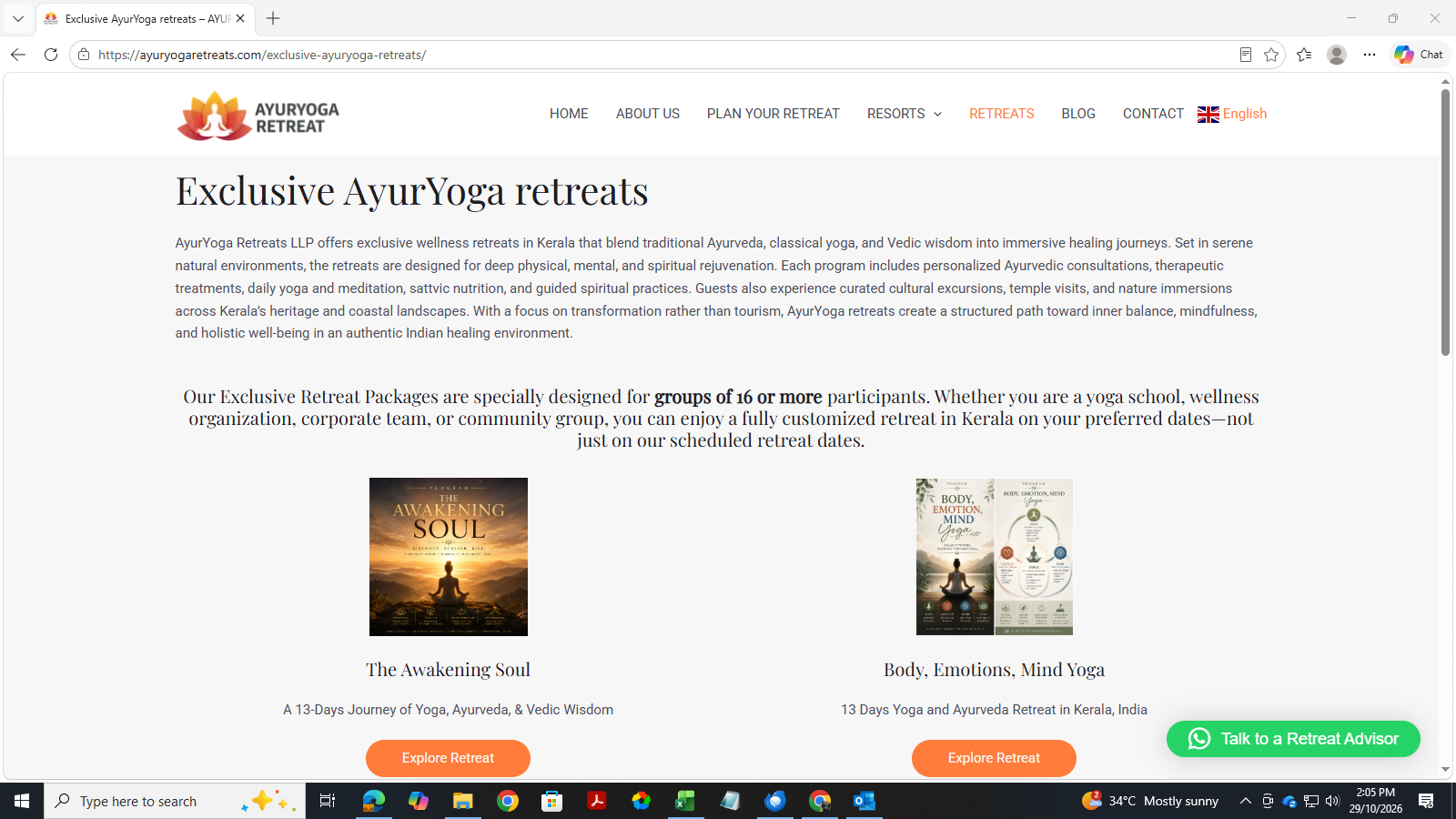
Start Planning Your Journey with AyurYoga Retreats
Planning an authentic wellness journey to India should feel inspiring, not confusing. At ayuryogaretreats.com, we connect global seekers with verified, top-tier retreat properties throughout Kerala.
Whether you are looking for a secluded mountain sanctuary in Wayanad or a quiet seaside resort, our team provides handpicked stays, certified Ayurvedic doctor consultations, personalized group arrangements, and full travel assistance from arrival to departure.
— ayuryogaretreats.com
Frequently Asked Questions
What is the best month to go on a yoga vacation in Kerala?
The overall best months for ideal dry weather are October through March. However, if your primary goal is deep Ayurvedic detox and body flexibility, the monsoon months of July and August are considered optimal by traditional practitioners.
How long should a yoga retreat stay be to see real health benefits?
While a 7-day reset offers quick stress relief, a 14-day stay is recommended for noticeable physical transformation, improved flexibility, and deep nervous system restoration. 21 days is ideal for full Ayurvedic detox treatments.
Can absolute beginners join a yoga vacation in Kerala?
Yes, absolute beginners are welcome at most retreat centers in Kerala. Qualified instructors adapt postures to suit your experience level, ensuring safe alignment and comfortable progression throughout your stay.
What should I pack for a yoga holiday in Kerala?
Pack breathable cotton or linen clothing, modest attire covering shoulders and knees for local community visits, a lightweight travel yoga mat, natural mosquito repellent, sunscreen, and slide-on sandals.
Is Ayurveda always included in a Kerala yoga retreat package?
Most traditional retreats in Kerala integrate fundamental Ayurvedic principles, including doctor consultations and vegetarian meals tailored to your body type. However, intensive daily oil massage treatments (Panchakarma) may need to be specifically selected in your package.