

If you are seeking genuine cellular restoration rather than a superficial spa weekend, kerala indien ayurveda offers an unparalleled sanctuary. Tucked along India’s tropical southwestern coast, Kerala has preserved classical Vedic medicine continuously for over two millennia.
According to the Global Wellness Institute, wellness tourism has expanded globally at an annual rate exceeding 12%, with India ranking among the primary destinations for health-seeking travelers. Furthermore, data published by Kerala Tourism indicates that over 30% of international tourists visiting the state actively participate in certified Ayurvedic healthcare or wellness therapies during their stay.
Navigating the landscape of authentic centers, clinical protocols, and travel arrangements can feel overwhelming. This guide breaks down everything you need to know to plan a transformative, medically sound Ayurvedic retreat in Kerala.
Key Takeaways
| Planning Aspect | Details & Recommendations |
|---|---|
| Recommended Stay | 14 to 28 days for full Panchakarma detoxification |
| Optimal Season | Monsoon season (Karkidakam, June–Sept) or dry winter (Nov–March) |
| Accreditation Standard | Green Leaf, Olive Leaf (Kerala Tourism), or NABH (Hospital Grade) |
| Primary Goal | Root-cause treatment, metabolic reset, and dosha balance |
| Dietary Protocol | Strictly Sattvic, dosha-specific, freshly cooked vegetarian meals |
Why Kerala Indien Ayurveda is the Global Gold Standard for Authentic Healing
Ayurveda is practiced across India, but Kerala holds a distinctive position. While foreign invasions and historical shifts disrupted classical traditions across much of the subcontinent, Kerala preserved these therapeutic systems intact.
       ┌─────────────────────────────────────────────────────────┐
       │             THE KERALA AYURVEDIC TRIAD                  │
       └─────────────────────────────────────────────────────────┘
                                    │
         ┌──────────────────────────┼──────────────────────────┐
         ▼                          ▼                          ▼
┌──────────────────┐       ┌──────────────────┐       ┌──────────────────┐
│   ASHTAVAIDYA    │       │    MONSOON       │       │    GOVERNMENT    │
│    LINEAGE       │       │   CLIMATE        │       │  ACCREDITATION   │
│ Preserved texts  │       │ Opens pores &    │       │ Green Leaf /     │
│ & lineage wisdom │       │ aids oil absorption│     │ NABH standard    │
└──────────────────┘       └──────────────────┘       └──────────────────┘
The Ashtavaidya Tradition and Unbroken Classical Lineage
The core of Kerala’s medical authority rests upon the Ashtavaidyas—eight traditional families of Ayurvedic physicians who distilled classical Sanskrit treatises, primarily the Ashtanga Hridayam, into practical clinical methods. These families pioneered specialized external oil therapies and internal purifications that remain the baseline of authentic Kerala treatment today.
Kerala’s Tropical Microclimate and Native Medicinal Flora
Physiology and environment work hand-in-hand in Ayurvedic science. Kerala’s high atmospheric humidity and abundant rainfall maintain body temperature while softening bodily tissues. This environmental warmth opens skin pores (srotas), allowing medicated oils (thailams) infused with freshly harvested native herbs to penetrate deeply into systemic circulation.
Government Certifications: Understanding Green Leaf and Olive Leaf Accreditations
To protect travelers from commercial non-medical spas, the government introduced rigorous certification programs. According to standards backed by the Ministry of Ayush, centers are vetted for medical credentials, equipment hygiene, and authentic treatment spaces.
- Green Leaf Certification: Indicates the highest clinical standard, requiring full-time qualified Ayurvedic doctors (BAMS degrees), certified therapists, authentic treatment rooms, and an on-site herbal medicine dispensary.
- Olive Leaf Certification: Denotes high-quality wellness facilities that meet strict hygiene and professional standards but may offer lighter rejuvenation packages rather than full hospital-grade protocols.
- NABH (National Accreditation Board for Hospitals): The gold standard for clinical Ayurvedic hospitals catering to serious medical conditions.
The World Health Organization (WHO) Traditional Medicine Strategy notes that roughly 80% of the population in parts of Asia and developing nations rely on traditional medicine for primary health needs. In Kerala, this reliance is built directly into the formal healthcare infrastructure.
Decoding Ayurvedic Treatments: Panchakarma, Rasayana, and Therapeutic Programs
Authentic kerala indien ayurveda does not rely on a standard menu of massage options. Treatments are prescribed only after a deep assessment of your baseline constitution (Prakriti) and current metabolic imbalances (Vikriti).
┌─────────────────────────────────────────────────────────────────┐
│                 THE 3 PHASES OF PANCHAKARMA                      │
└─────────────────────────────────────────────────────────────────┘
                                   │
 1. PURVA KARMA (Preparation)      │ Snehana (Internal Oleation)
                                   │ Swedana (Herbal Steam Therapy)
                                   ▼
 2. PRADHANA KARMA (Elimination)   │ Vamana / Virechana / Basti /
                                   │ Nasya / Raktamokshana
                                   ▼
 3. PASCHAT KARMA (Rebuilding)     │ Samsarjana Krama (Graded Diet)
                                   │ Rasayana (Tissue Rejuvenation)
Panchakarma: The Five Deep Cleansing Therapies Explained
Panchakarma is a multi-step physiological detox designed to purge accumulated toxins (Ama) from deep tissues. It is divided into three distinct phases:
- Purva Karma (Preparatory Phase): Involves internal oleation (Snehana) through daily doses of medicated ghee and external oil massages (Abhyanga), followed by herbal steam therapy (Swedana). This mobilizes fat-soluble toxins from peripheral tissues into the digestive tract.
- Pradhana Karma (Primary Cleansing Phase): Depending on your health profile, physicians administer targeted elimination therapies. These include Virechana (therapeutic purgation), Basti (medicated enemas), or Nasya (nasal administration of medicinal oils).
- Paschat Karma (Post-Detox Rehabilitation Phase): A delicate, essential phase focused on rebuilding digestive strength (Agni) using a strictly managed progressive diet (Samsarjana Krama).
Rasayana and Rejuvenation: Restoring Vitality (Ojas)
Once detoxification is complete, Rasayana therapies are introduced to nourish newly cleansed tissues (Dhatus). Using concentrated herbal formulations like Ashwagandha, Shatavari, and Chyawanprash, these treatments build vital immunity (Ojas), enhance mental clarity, and slow cellular aging.
Addressing Chronic Conditions: Joint Care, Metabolic Health, and Stress
Clinical retreats in Kerala specialize in managing chronic ailments that often resist Western medicine. Conditions such as osteoarthritis, rheumatoid arthritis, psoriasis, metabolic syndrome, insomnia, and chronic burn-out respond exceptionally well to extended 21-to-28-day protocols.
Pro Tip: Never book a program that promises Panchakarma in less than 14 days. Proper tissue prep and recovery require time; rushing the process can cause digestive stress and systemic fatigue.
If you are trying to structure your stay around specific clinical goals, our comprehensive Ayurveda Retreat Planning Guide für Kerala outlines how to coordinate treatment lengths with your medical needs.
How to Choose the Right Kerala Indien Ayurveda Retreat or Hospital
Selecting the right center depends heavily on whether your goal is medical treatment for a chronic condition or stress relief and deep rest.

Infographic by SiteLift
Ayurvedic Hospital vs. Dedicated Retreat vs. Beach Resort
| Category | Typical Setting | Medical Oversight | Best Suited For |
|---|---|---|---|
| Clinical Hospital | Institutional / Urban | 24/7 Physician Presence, High Rigor | Severe Chronic Illness, Autoimmune Disorders |
| Dedicated Wellness Retreat | Serene Nature / River / Hills | Daily Consultations, High Rigor | Panchakarma, Stress Reset, Metabolic Balance |
| Beach Resort with Spa | Coastal Tourist Hubs | On-call or Light Consultations | Gentle Rejuvenation, Holiday Focus |
Evaluating Physician Credentials and Doctor-Patient Ratios
Before booking, review the background of the clinical team:
- Ensure senior doctors hold a BAMS (Bachelor of Ayurvedic Medicine and Surgery) degree, which requires five and a half years of rigorous university study.
- Look for medical heads holding an MD or PhD in Ayurveda.
- Verify that the property maintains a low doctor-to-patient ratio (ideally 1 doctor for every 8–10 guests) to guarantee detailed daily check-ins.
Assessing Property Locations: Coastal Chowara, Backwaters, or Wayanad Hills
The location of your stay directly impacts your body’s response to therapy:
- Southern Coastal Region (Chowara, Kovalam, Varkala): Warm ocean air helps open skin pores, making it ideal for skin conditions, joint stiffness, and classic Panchakarma treatments.
- Central Backwaters (Kumarakom, Alleppey): Calm, water-centric surroundings provide a naturally quiet environment, excellent for nervous system recovery, insomnia, and deep stress release.
- Northern Hill Stations (Wayanad, Palakkad): Cooler, herb-rich mountain air provides optimal conditions for respiratory healing, mental rejuvenation, and immersive nature retreats.
If you are evaluating different regional atmospheres across Asia, take a look at our comparison guide on Kerala oder Sri Lanka Ayurveda: Which Fits? to see how regional climates alter treatment styles.
Step-by-Step Logistics: Planning Your Ayurveda Healing Trip to Kerala
Determining the Ideal Duration: Why 14 to 28 Days is Recommended
  7 DAYS                    14 DAYS                    21-28 DAYS
┌─────────┐                ┌──────────┐               ┌──────────────────┐
│  Light  │                │ Standard │               │ Complete Deep    │
│ Relax   │                │ Detox    │               │ Panchakarma      │
└─────────┘                └──────────┘               └──────────────────┘
 Surface relief            Initial metabolic reset     Deep cellular purge
 No deep purge             Basic elimination          & full Rasayana
A common mistake international travelers make is booking a 7-day stay expecting a complete transformation.
- 7 Days: Suitable only for light relaxation, introductory herbal massages, and preliminary stress reduction.
- 14 Days: The minimum time required for a basic Panchakarma protocol covering tissue oleation and minor purgation.
- 21 to 28 Days: The gold-standard clinical window. This duration provides enough time for deep tissue preparation, full elimination therapies, and essential post-treatment dietary rebuilding.
Best Season to Visit: The Unique Power of the Monsoon (Karkidakam)
While Western travelers typically favor the dry winter months (November to March), classical texts consider the monsoon season—specifically the month of Karkidakam (mid-June to mid-August)—the optimal period for treatment.
During the monsoon, atmospheric dust drops, temperature remains consistent, and body pores naturally open wide. This environment allows medicated oils to be absorbed rapidly while minimizing body heat stress during intensive cleanses.
Practical Travel Details: Visas, Flights, and Pre-Arrival Preparations
- Visas: Most foreign visitors enter on an e-Tourist Visa (valid for 30 days, 1 year, or 5 years) or an e-Medical Visa if attending an accredited Ayurvedic hospital.
- Flights: Fly directly into Cochin International Airport (COK) for backwater and hill retreats, or Trivandrum International Airport (TRV) for southern coastal retreats.
- Pre-Arrival Preparation: One week before departure, reduce your intake of caffeine, alcohol, refined sugars, and heavy meats. This eases the initial digestive shock when transitioning to a Sattvic treatment diet.
If you are looking to build a custom travel plan that matches treatment dates with peaceful transit, explore our guide on how to Ayurveda Urlaub individuell gestalten for practical advice on balancing therapy with rest.
Daily Life at an Authentic Ayurvedic Retreat: What Global Seekers Should Expect
A stay at a true Ayurvedic healing sanctuary follows a structured daily rhythm designed to realign your internal biological clock.
05:30 AM ─── Sunrise Wake-up & Herbal Tea
06:00 AM ─── Gentling Yoga & Pranayama
08:00 AM ─── Individualized Sattvic Breakfast
09:00 AM ─── Doctor Consultation & Main Treatment (90 mins)
12:30 PM ─── Tailored Dosha-Specific Lunch
02:30 PM ─── Rest, Reading, or Secondary Light Therapy
05:30 PM ─── Evening Meditation / Gentle Movement
07:00 PM ─── Light Sattvic Dinner
09:30 PM ─── Lights Out / Deep Sleep
The Dinacharya Routine: Waking Up to Restorative Rhythms
The daily routine (Dinacharya) begins early. Guests wake around sunrise (Brahma Muhurta) to take herbal decoctions, followed by morning yoga and breathing exercises (Pranayama) designed to clear energy channels without overexerting the body.
Strictly Tailored Nutrition: The Role of Sattvic, Dosha-Specific Meals
Diet is a core component of treatment in traditional Ayurveda. Meals are strictly vegetarian, freshly prepared, and light on digestive energy.
- No cold drinks or ice: Water is served warm or infused with digestive seeds like coriander, cumin, or ginger.
- No stimulants: Alcohol, commercial coffee, and black tea are excluded to allow the nervous system to settle.
- Tailored portions: Your prescribing physician outlines exact meal requirements based on your current imbalances.
Managing the Healing Crisis: Physical Detox, Emotional Release, and Rest
As deep-seated toxins move out of tissues, you may experience a temporary period of fatigue, mild headaches, breakout skin, or emotional fluctuations. Known as a “healing crisis,” this is a normal part of the physiological shift.
Pro Tip: Plan for sensory rest. Turn off work notifications, limit screens, and resist the urge to go on long sightseeing excursions between treatment sessions.
The Reality of Authentic Healing: Clinical Integrity vs. Luxury Spas
In our work assisting international travelers, we often see people confuse authentic healing stays with regular beachfront vacations. Real Ayurvedic therapy is an active biological intervention, not passive pampering.
       AUTHENTIC HEALING                      SURFACED LUXURY SPA
 ┌──────────────────────────┐            ┌──────────────────────────┐
 │ Physician-Led Care       │            │ Aesthetic Focus          │
 │ Custom Herbal Oils       │     VS     │ Generic Massage Oils     │
 │ Strict Sattvic Diet      │            │ Open Buffet & Alcohol    │
 │ Deep Cellular Purification│           │ Temporary Surface Relief │
 └──────────────────────────┘            └──────────────────────────┘
Treating authentic healing as a simple resort holiday usually leads to mixed results. If you drink cold cocktails by the pool after receiving a intense Abhyanga treatment, you conflict with the body’s digestive healing response.
True recovery requires honoring the quiet, slow rhythm of classical medicine. Choosing a retreat that prioritizes physician oversight over resort entertainment yields deeper, longer-lasting health benefits.
Planning Your Authentic Healing Journey with AyurYoga Retreats
Navigating dozens of retreat options across South India requires clear guidance and local insights. At ayuryogaretreats.com, we connect international wellness seekers with vetted, certified Ayurvedic properties throughout Kerala.
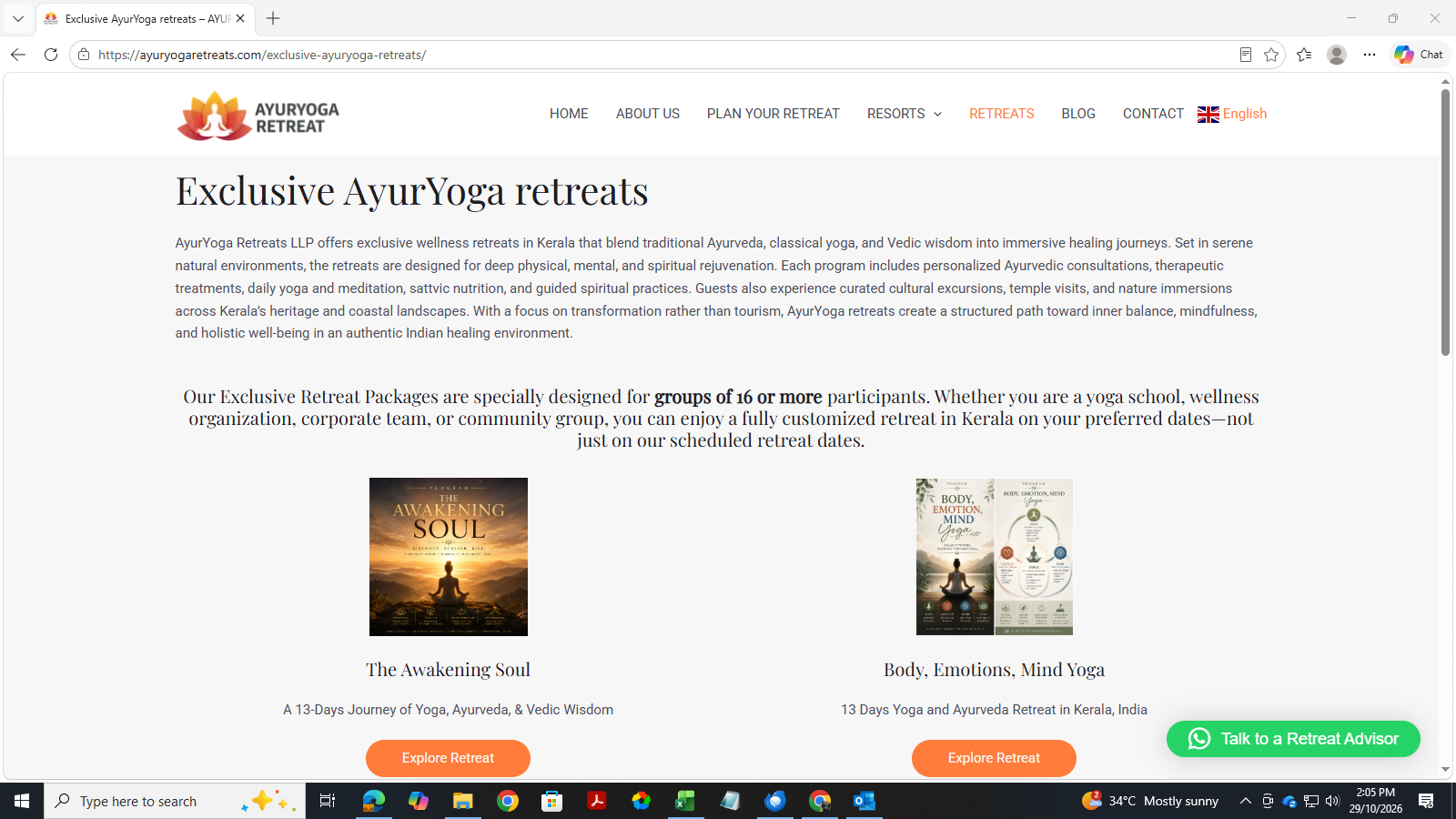
Whether you need a specialized hospital for joint management, a quiet backwater sanctuary for nervous system recovery, or a combined yoga and Panchakarma program, we provide personalized guidance from start to finish:
- Handpicked Verified Properties: We screen facilities for authentic Green Leaf, Olive Leaf, and NABH accreditations.
- Doctor-Led Selection: Align your unique health goals with properties staffed by experienced BAMS and MD physicians.
- End-to-End Coordination: From selecting treatment length to organizing transfers, we make your journey simple and seamless.
— ayuryogaretreats.com
Frequently Asked Questions About Kerala Ayurveda
What is the minimum recommended stay for an authentic Ayurveda treatment in Kerala?
The absolute minimum recommended duration for a true Panchakarma treatment is 14 days. However, 21 to 28 days is highly recommended by classical physicians to complete all three phases of cleansing: preparation (Purva Karma), deep elimination (Pradhana Karma), and metabolic rebuilding (Paschat Karma).
Why is the monsoon season considered the best time for Ayurveda in Kerala, India?
During the monsoon season (mid-June to September), atmospheric humidity is high and temperatures remain steady. This opens skin pores and softens tissues, allowing medicated oils to penetrate deeply into the body while preventing metabolic heat buildup during intensive treatments.
How does a medical Ayurvedic retreat differ from a standard resort wellness spa?
A medical Ayurvedic retreat is led by university-educated physicians (BAMS/MD) who prescribe individualized treatments, custom herbal formulas, and specific diets following detailed pulse diagnosis. Standard resort spas offer non-clinical massage treatments using generic oils without medical oversight or dietary management.
Can foreign travelers with chronic ailments safely undergo Panchakarma?
Yes, foreign travelers with chronic ailments can safely undergo Panchakarma, provided they select a accredited retreat or hospital with qualified physicians. Before treatments begin, senior doctors conduct a full intake assessment to adapt protocols to your specific physical condition.
What should I avoid eating or drinking prior to and during an Ayurvedic retreat?
Prior to and during an Ayurvedic stay, avoid alcohol, caffeine, refined sugars, cold or icy beverages, and processed foods. The treatment diet emphasizes freshly cooked, easily digestible, warm vegetarian meals to support digestive health (Agni) and tox purging.