
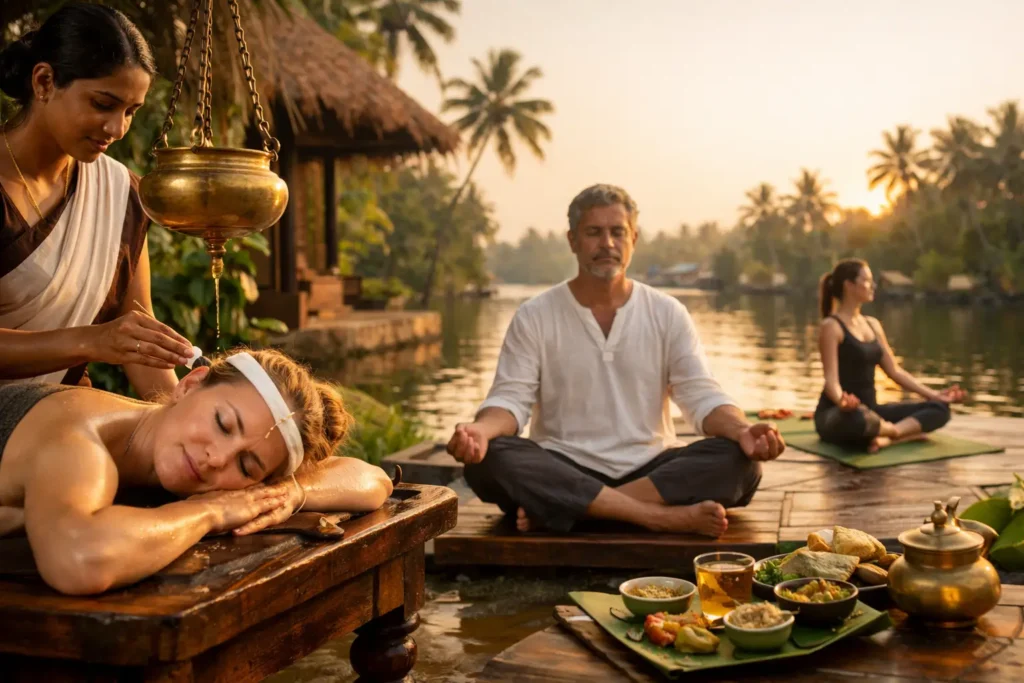
When your calendar is full but your energy is gone, another weekend of scrolling, errands, and interrupted sleep rarely feels like enough. Understanding how panchakarma retreat supports burnout begins with a more compassionate question: what would it look like to step away from constant demands and give your body and mind a structured opportunity to rest, be cared for, and reset?
Burnout can leave people feeling wired yet exhausted, disconnected from routines that once felt grounding, and unable to recover even after time off. A thoughtfully planned Panchakarma retreat does not promise a cure for burnout. It can, however, create the protected conditions that modern life often denies us: slower days, personal attention, nourishing food, restorative movement, and time away from the pressures that have depleted you.
How a Panchakarma Retreat Supports Burnout
Panchakarma is a traditional Ayurvedic approach designed around purification, restoration, and balance. In a retreat setting, it is not a single treatment or a generic detox package. It is a carefully paced program that begins with an Ayurvedic consultation and is adapted to your constitution, current concerns, energy level, travel history, and capacity for treatment.
For someone experiencing burnout, that personalization matters. An intensive schedule may not be appropriate when the nervous system already feels overwhelmed. A qualified Ayurvedic doctor can recommend a gentler path, with supportive therapies, rest periods, simple meals, and calming practices rather than trying to fit every traditional procedure into a short stay.
The value of the retreat is often as much about rhythm as treatment. Instead of beginning the day with alerts and obligations, guests may wake slowly, attend a gentle yoga or breathing session, receive prescribed therapies, eat meals prepared for their program, and have space to rest. Repeating this rhythm over several days can help replace overstimulation with a more predictable, regulated pace.
Care that responds to the individual
Burnout does not look the same for everyone. One person may feel restless, irritable, and unable to sleep. Another may feel heavy, unmotivated, and mentally foggy. Ayurveda views these patterns through its own traditional framework and uses an individual assessment to guide food, daily routine, oil therapies, herbs when clinically appropriate, and body treatments.
At an authentic Kerala retreat, the consultation should be more than a formality. Your practitioner should ask about your sleep, digestion, appetite, stress patterns, medications, health history, and what you hope to regain from the experience. This allows the program to be adjusted as you go. If you arrive depleted, the most supportive plan may emphasize nourishment and restoration over more demanding cleansing procedures.
This is also why a Panchakarma retreat is different from booking a massage while on vacation. Treatments are selected as part of a coordinated wellness plan, with observation and guidance throughout your stay.
The Retreat Elements That Help You Recover Your Rhythm
Therapeutic treatments and the experience of being cared for
Ayurvedic therapies may include warm herbal oil applications, massage, steam therapies, and other doctor-prescribed treatments. For many guests, the immediate benefit is not simply physical relaxation. It is the rare experience of having nothing to manage for a while. You do not need to choose meals, plan the next appointment, or perform at your usual level.
That sense of being held within a clear, professional structure can be deeply restorative. The treatment itself should never feel rushed or standardized. Skilled therapists, clear hygiene standards, medical oversight, and time to rest afterward are essential parts of a safe, high-quality experience.
Gentle yoga, breathwork, and meditation
Yoga at a burnout-focused retreat should meet you where you are. It is not an invitation to push through fatigue or achieve advanced postures. Gentle asana, mindful movement, guided relaxation, breathing practices, and meditation can offer a quieter way to reconnect with your body.
For beginners, this may be the first time movement feels supportive rather than another task to complete. Experienced practitioners may find value in simplifying their practice and returning to breath, awareness, and recovery. The best sessions leave you steadier, not drained.
Food that reduces decision fatigue
When energy is low, even planning meals can feel demanding. Ayurvedic retreat cuisine is typically prepared fresh and aligned with the treatment plan, favoring meals that are warm, simple, and easy to digest. Dietary recommendations should be practical and individualized, especially for guests with allergies, medical conditions, or specific nutritional needs.
Regular meals also create a rhythm that many burnt-out travelers have lost. Eating without multitasking, screens, or meetings may sound small, yet it becomes a meaningful practice in attention. You begin to notice hunger, fullness, comfort, and the effect of routine on your energy.
Sleep, stillness, and a change of environment
A retreat cannot make up for months or years of exhaustion in a few days. What it can offer is uninterrupted space to rest. Quiet accommodations, calming natural surroundings, reduced screen time, and fewer decisions can make sleep and stillness feel more accessible.
Kerala is especially suited to this slower form of wellness travel. The region’s longstanding Ayurvedic tradition means guests can access experienced doctors and therapists within settings that feel restorative rather than clinical. Whether the backdrop is backwaters, gardens, hills, or the coast, the environment becomes part of the reset – not through spectacle, but by making it easier to slow down.
What a Burnout-Supportive Panchakarma Program Should Include
Not every Panchakarma program is right for every traveler. A responsible retreat will be clear that treatment recommendations follow an assessment, not an online promise. It should also make time for integration, because a packed day of therapies can become another form of pressure.
Look for a program with these practical foundations:
- An initial consultation with a qualified Ayurvedic doctor and regular check-ins during the stay.
- A personalized treatment plan that can be modified according to your response and energy.
- Comfortable accommodations, nourishing cuisine, and enough unscheduled time to rest.
- Gentle yoga and meditation options suitable for beginners as well as experienced practitioners.
- Clear support before arrival, including travel coordination, health information, and realistic guidance on program length.
For international guests, seamless logistics are not a luxury detail. Airport transfers, clear communication, and a team that understands the needs of long-haul travelers reduce stress before the retreat even begins. AyurYoga Retreats coordinates these elements with carefully selected Ayurvedic and yoga partners in Kerala, so the practical side of the journey supports the healing intention.
Set Realistic Expectations Before You Travel
A Panchakarma retreat can be meaningful, but it is not a substitute for medical or mental health care. If you are experiencing persistent low mood, panic, thoughts of self-harm, severe insomnia, or difficulty functioning day to day, seek support from a licensed health professional promptly. Tell the retreat team about relevant diagnoses, medications, pregnancy, chronic conditions, allergies, and recent procedures before booking so they can advise on suitability.
It also helps to choose a realistic duration. A short retreat can provide valuable rest and an introduction to Ayurveda. A longer stay generally gives more time for consultation, gradual treatment, rest, and learning routines you can sustain at home. More is not automatically better, though. The right length depends on your health, travel tolerance, budget, and how much time you can protect afterward for a gentle return.
The transition home deserves planning. Avoid scheduling a demanding workday immediately after a long international flight if possible. Keep your first week simple, continue a few practices that felt manageable at the retreat, and notice which pressures need firmer boundaries. The goal is not to recreate retreat life perfectly. It is to carry forward a more realistic rhythm of meals, sleep, movement, and rest.
A well-chosen Panchakarma retreat offers something burnout often takes away: the permission to stop proving your capacity and start listening to it. Let the experience be a beginning – a quiet, well-supported place from which to build a life with more room to breathe.