
You do not need another vacation that leaves you tired, overbooked, and mentally crowded. A complete ayurveda travel guide should help you choose a journey that actually restores your energy, supports your health goals, and gives you the confidence to travel well in Kerala.
For many travelers from the US, Ayurveda feels both deeply appealing and slightly unclear. You may know it involves treatments, herbal therapies, yoga, and nourishing meals, but still wonder how to choose the right retreat, how long to stay, or whether a program is truly authentic. Those questions matter, because the quality of your experience depends less on pretty photos and more on clinical credibility, personalization, and thoughtful travel coordination.
Kerala remains the most trusted destination for Ayurvedic healing because the tradition is rooted in daily life here, not presented as a trend. The strongest retreats combine certified Ayurvedic doctors, trained therapists, structured treatment plans, and a peaceful setting that allows the nervous system to settle. When those elements come together, an Ayurveda trip becomes more than wellness travel. It becomes a deliberate reset.
Why Kerala is the heart of a complete ayurveda travel guide
If you are planning around authenticity, Kerala deserves your attention first. Ayurveda in Kerala is supported by a longstanding medical tradition, experienced practitioners, and retreat environments designed for sustained healing rather than quick spa-style treatments.
That distinction is important. A true Ayurvedic retreat begins with consultation, not a menu of massages. Your body type, current imbalances, digestion, sleep, energy, stress level, and health history should shape the program. Two people arriving with burnout may receive very different recommendations. One may need gentle therapies, grounding meals, and rest. Another may benefit from a more structured Panchakarma-based approach under medical supervision.
Kerala also offers something that many wellness travelers underestimate – climate, pace, and cultural continuity. The greenery, warm air, and slower rhythm support the treatments themselves. Healing is not only in the therapy room. It happens through the environment, the food, the routine, and the sense of being cared for.
How to choose the right Ayurvedic retreat
The best retreat is not always the longest, the most expensive, or the most luxurious. It is the one that aligns with your health goals and your current capacity. If you are depleted, a tightly packed schedule may not serve you. If you are managing chronic issues, a weekend retreat may feel pleasant but too brief to create meaningful change.
Start by asking what you want from the journey. Some travelers need stress recovery and better sleep. Others are seeking digestive balance, hormone support, pain management, emotional reset, or post-burnout healing. Your intention helps determine the right program length, treatment intensity, and setting.
Medical credibility should come next. Look for certified Ayurvedic doctors, experienced therapists, and retreats that work within recognized standards. This is especially important if you are considering Panchakarma or traveling with existing health concerns. Authentic care should feel calm and personalized, but it should also be structured and accountable.
Then consider the retreat experience as a whole. Airport transfers, accommodation quality, dietary personalization, on-ground support, and a manageable daily schedule all shape how safe and restorative the journey feels. This is one reason curated wellness travel matters. When logistics are handled well, you can arrive ready to heal rather than spend your first days recovering from the travel itself.
What a complete ayurveda travel guide should tell you about treatments
Many first-time guests assume Ayurvedic treatment is mostly massage. In reality, treatment plans can include oil therapies, steam, herbal preparations, detox support, bodywork, breath practices, yoga, meditation, and therapeutic meals. The exact mix depends on your constitution and your goals.
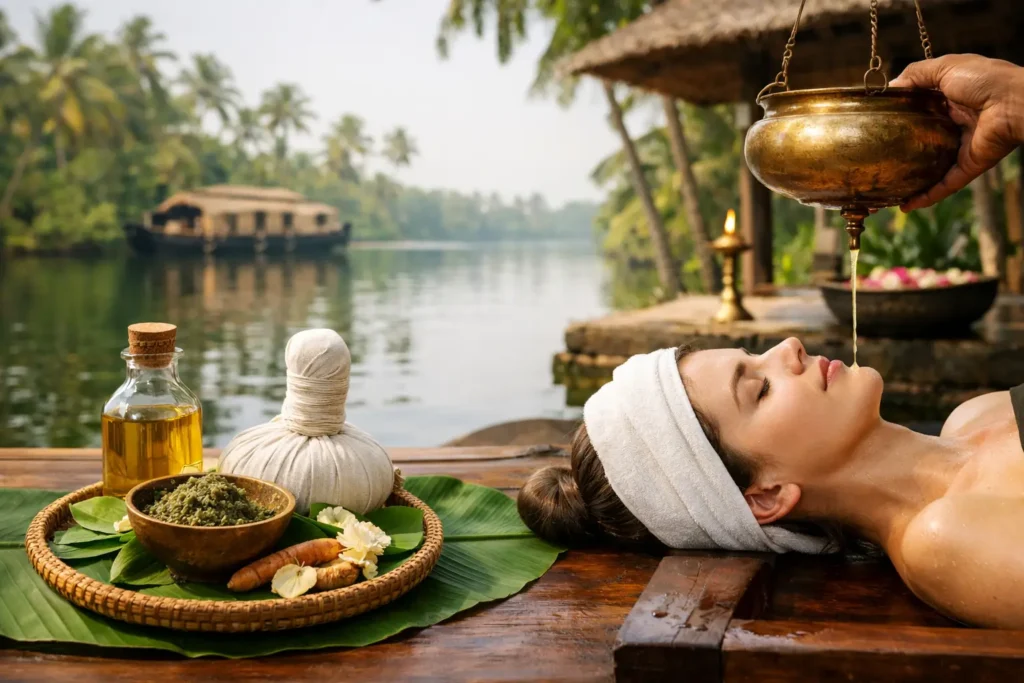
Abhyanga, the classic warm oil massage, is one of the better-known therapies and often profoundly calming. But even this is not one-size-fits-all. The oils, pressure, duration, and sequence may be adjusted according to your needs. Shirodhara, where warm oil is poured steadily over the forehead, is often recommended for stress, insomnia, and mental fatigue, yet it should still be prescribed thoughtfully rather than offered as a generic signature treatment.
Panchakarma deserves special care in planning. It is not simply a detox package. Traditional Panchakarma is a structured cleansing and rebalancing process that should be supervised by qualified Ayurvedic doctors. It can be transformative, but it is not ideal for every traveler on every timeline. Some guests benefit from a gentler restorative program instead. That is not a lesser experience. It is often the wiser one.
When to travel to Kerala for Ayurveda
Kerala can be visited year-round, but the ideal season depends on your priorities. If you want milder sightseeing weather and broader vacation flexibility, the winter season is popular with international travelers. If your primary focus is treatment, the monsoon months are often highly valued in Ayurveda because the atmosphere is naturally cooling, grounding, and supportive of therapies.
This is one of those places where it depends. If you are looking for a combined healing and leisure trip, peak travel months may suit you better. If you want a quieter, more immersive therapeutic experience, rainy season travel can feel especially nurturing. A well-curated retreat can help you weigh climate, comfort, treatment goals, and schedule before you book.
How long should your retreat be?
A short stay of five to seven days can be enough for rest, stress relief, and a meaningful introduction to Ayurveda. You may sleep better, feel lighter, and reconnect with a healthier rhythm. For many busy professionals, this is a realistic and worthwhile starting point.
A stay of 10 to 14 days allows more time for the body to settle and for treatments to build on each other. This is often a strong choice for guests dealing with fatigue, chronic stress, digestive imbalance, or nervous system overload. If you are considering deeper therapeutic work, especially Panchakarma-based programs, two to three weeks is often more appropriate.
The key is honesty. If you only have a week, do not force an intensive program that leaves you overwhelmed. If you have longstanding concerns, do not expect a three-day reset to solve them. Ayurveda works best when the program respects both the body and the real timeline of healing.
Practical travel planning for US guests
A healing retreat starts before you land. International travelers should plan enough buffer time around flights, especially after long-haul travel. Try not to arrive with a packed itinerary or immediate pressure to sightsee. Your first days should support acclimation, consultation, and rest.
Pack light, breathable clothing, simple sandals, any regular medications, and copies of relevant health information. Most retreat days are intentionally uncomplicated. You are not dressing for performance. You are dressing for comfort, treatments, yoga, and warm weather.
It also helps to prepare mentally. Ayurveda is personalized care, which means your meals, treatment schedule, and daily routine may differ from another guest’s. If you are used to highly independent travel, this can feel new at first. Yet for many people, being guided well is exactly what makes the experience restorative.
For travelers who want both authenticity and ease, a company like AYUR YOGA can simplify the process by matching guests with certified Kerala retreats, coordinating transfers, and shaping the stay around health goals, budget, and travel style.
Cost, value, and what you are really paying for
Ayurveda travel is not just a room with spa add-ons. At a well-managed retreat, you are paying for medical assessment, skilled therapists, customized treatments, therapeutic meals, daily practices, accommodation, and coordinated support. The value is in the integration.
Price differences often reflect real differences in quality. Doctor access, treatment frequency, property standards, staff training, and program customization all matter. At the same time, the most expensive retreat is not automatically the best fit. Some travelers benefit from a quieter, simpler property with strong clinical depth. Others want a more elevated setting that supports privacy, comfort, and longer stays.
A good question is not only What does it cost, but What is included and how personalized is the care? That is where true value becomes clear.
What to expect emotionally during an Ayurvedic retreat
Healing is rarely only physical. Once your schedule slows down and your body begins to soften, emotions may surface too. Some guests feel immediate calm. Others notice restlessness before relief. Both responses can be normal.
This is another reason professional support matters. A high-quality retreat does not push transformation as a performance. It creates the conditions for safe, steady change. The goal is not to return home as a different person overnight. It is to leave more regulated, more connected to your body, and more aware of what supports your well-being.
The most meaningful Ayurveda journeys are not dramatic. They are clarifying. You begin to notice that good sleep feels possible again, that your digestion is improving, that your mind is less noisy, that your body is asking for different things. Those changes may be subtle at first, but they tend to last longer because they are grounded in lived experience, not intensity.
If you choose carefully, Kerala can offer more than a break from routine. It can give you a healthier rhythm to return to, and sometimes that is the real beginning of renewal.
Pingback: Why an Ayurveda Consultation Before a Retreat Matters – AYUR YOGA
Pingback: Yoga Reise für Anfänger – bien commencer – AYUR YOGA
Pingback: Ist Panchakarma es wert? – AYUR YOGA