
A full calendar can make a team look successful while quietly draining the people carrying it. Corporate wellness is most meaningful when it gives employees more than a token pause between meetings. It should create protected space to rest, move, reflect, and return to their work with greater steadiness.
For organizations that value their people, a thoughtfully designed retreat can be a powerful expression of care. Kerala offers a particularly grounding setting for this work, where Ayurveda, yoga, nature, and attentive hospitality can come together in an experience that feels both restorative and professionally organized.
What Corporate Wellness Should Feel Like
The strongest corporate wellness programs are not built around pressure to become a better version of oneself by Monday morning. They acknowledge that people arrive with different energy levels, responsibilities, and relationships to wellbeing. A senior leader may need quiet and clarity. A distributed team may need time to reconnect face-to-face. Someone new to yoga may simply need a welcoming place to slow down without feeling out of place.
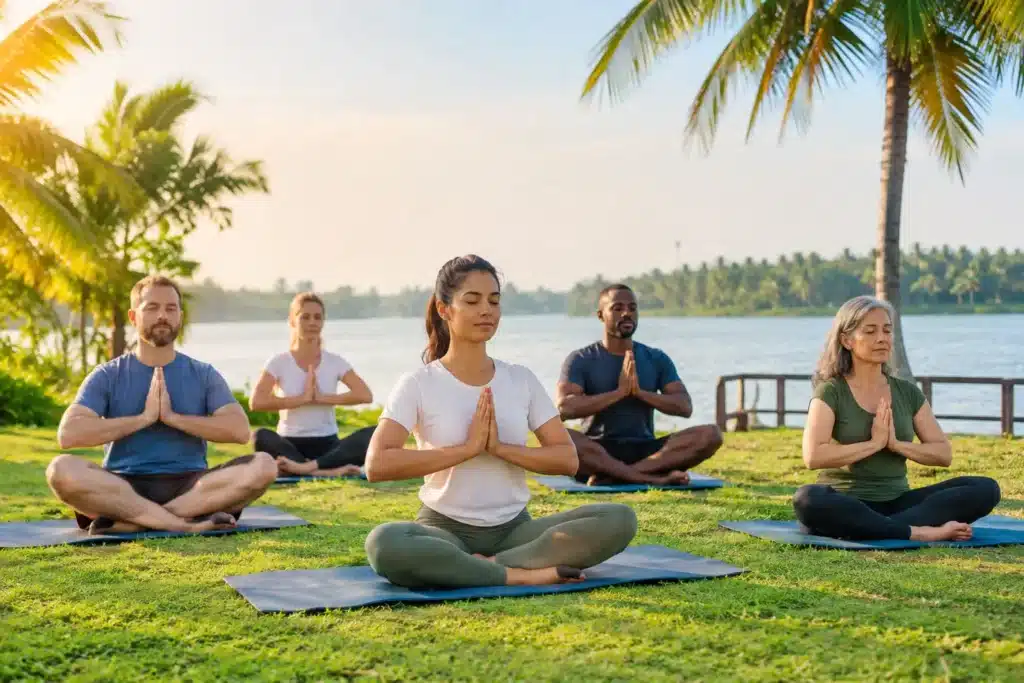
This is why an effective retreat balances shared experiences with personal choice. Gentle yoga can support mobility and body awareness without demanding advanced practice. Guided meditation and breathwork can offer moments of calm. Ayurvedic consultations, where appropriate, can help guests understand the traditional wellness approach behind their program. Nourishing meals, restful accommodation, and time in natural surroundings make the experience feel whole rather than scheduled to the minute.
The aim is not to make health promises or prescribe one solution for every employee. It is to create conditions in which people can feel cared for, more present, and better connected to sustainable daily routines.
Why a Retreat Can Add Depth to Corporate Wellness
Many workplace wellness efforts take place in the same environment that creates the strain: a short online session between calls, a fitness challenge, or a monthly wellbeing email. These initiatives can be helpful, especially when they are voluntary and easy to access. Yet they rarely provide the uninterrupted time needed to genuinely step back.
A destination retreat changes the context. Away from screens, commutes, and familiar demands, participants have room to notice what restores them. The value is not found in a packed itinerary. It is found in an intentional rhythm: an unhurried morning practice, a consultation or treatment session, a wholesome meal, time to walk or rest, and a relaxed group activity that does not feel like another work obligation.
For international teams, a retreat in Kerala also offers a sense of place. Authentic Ayurvedic traditions are part of the region’s living culture, not an imported theme. When delivered through carefully selected facilities and qualified practitioners, this setting adds depth and credibility to the experience while allowing guests to enjoy Kerala’s quiet backwaters, tropical landscapes, and warm hospitality.
Designing a Corporate Wellness Retreat With Care
A memorable program begins well before the group arrives. The first question is not, “What activities can we fit in?” It is, “What does this team need from its time away?” The answer may be rest after an intense period of growth, stronger connection among remote colleagues, support for a leadership offsite, or a more meaningful way to recognize a team’s contribution.
Start with a clear intention
A retreat works best when its purpose is simple and communicated honestly. If the primary goal is restoration, protect free time and avoid filling every evening with group programming. If connection matters most, include shared meals and low-pressure cultural experiences where conversation can happen naturally. If the retreat accompanies strategic planning, keep wellbeing sessions separate enough that participants do not feel they are attending an extended meeting.
Clarity also helps employees decide whether the experience is right for them. Participation should feel welcoming, not compulsory, especially when activities involve personal wellbeing preferences or physical movement.
Make the program accessible
Corporate groups are rarely made up of experienced yoga practitioners. A good program offers beginner-friendly options, encourages guests to work within their comfort level, and avoids presenting wellness as a performance. Small-group classes, adaptable movement practices, guided relaxation, and optional meditation sessions make participation easier for a wider range of people.
Ayurveda deserves the same thoughtful approach. It is a traditional system of wellbeing that should be introduced with respect and without exaggerated claims. Individual consultations and treatments, when included, should be provided by qualified professionals and coordinated around each guest’s preferences and suitability. Guests should always feel comfortable asking questions and choosing how they participate.
Protect space for individual renewal
Group bonding has value, but constant togetherness can be tiring, particularly for people who spend their working lives in collaborative settings. Build in time for a massage or therapy session, a quiet reading hour, a swim, a walk, or simply an afternoon with no agenda.
This is one of the most overlooked parts of retreat design. Rest is not empty time. It is often where participants process the experience, sleep more deeply, and reconnect with their own needs.
Treat logistics as part of wellbeing
A beautiful setting cannot compensate for confusing travel arrangements or uncertain schedules. For corporate wellness travel, operational details are part of the guest experience. Clear pre-arrival information, airport transfers, room coordination, dietary communication, on-ground support, and an organized yet flexible itinerary allow participants to relax from the moment they land.
This is especially relevant for teams traveling from the United States, Europe, or other international markets. A trusted local retreat management partner can coordinate the practical elements while corporate organizers stay focused on their people and objectives. AyurYoga Retreats supports this process with curated venues, experienced wellness providers, transportation, and end-to-end program coordination in Kerala.
A Balanced Retreat Rhythm
The most restorative days tend to have a gentle structure. A morning may begin with yoga, mindful movement, or meditation, followed by a nourishing breakfast. Midday can allow for Ayurvedic wellness experiences, rest, or a quiet exploration of the property. Later, a light group session might focus on breath awareness, a mindful activity, or an unhurried conversation over dinner.
Not every team needs the same schedule. A three-day retreat may focus on decompression and connection, while a longer program can offer more personal wellness time and a deeper introduction to Ayurvedic lifestyle principles. The trade-off is simple: more activities can create variety, but too many can undermine the calm the retreat is meant to provide.
Cultural excursions can also add meaning when they are chosen carefully. A tranquil backwater experience, a visit connected to local craft or food traditions, or time in a peaceful coastal setting can complement the wellness program. These should feel like invitations to experience Kerala, not sightseeing obligations.
How to Measure Value Without Reducing It to a Score
Leaders often need to demonstrate that a corporate retreat was worthwhile. Some practical indicators are useful: attendance, voluntary feedback, repeat interest, and whether participants felt the program was accessible and well organized. Post-retreat reflections can also reveal what employees valued most, whether that was time to rest, a stronger sense of connection, or inspiration to continue simple wellbeing practices at home.
Still, not every outcome needs a spreadsheet. The value of a well-held retreat may appear in quieter ways: a team that speaks more openly, a manager who recognizes the need for boundaries, or an employee who feels genuinely seen by their organization. These moments are difficult to quantify, but they influence the culture people experience every day.
The most credible approach is to treat a retreat as one part of a wider commitment to employee wellbeing. Follow it with reasonable workloads, respectful leadership, flexible support where possible, and wellness resources that employees can choose on their own terms. A beautiful retreat should reinforce a caring culture, not stand in for one.
When people are given time, trust, and thoughtful support, they do not need to be told to recharge. They begin to remember what balance feels like – and carry a little of that steadiness back into the life they are building.