
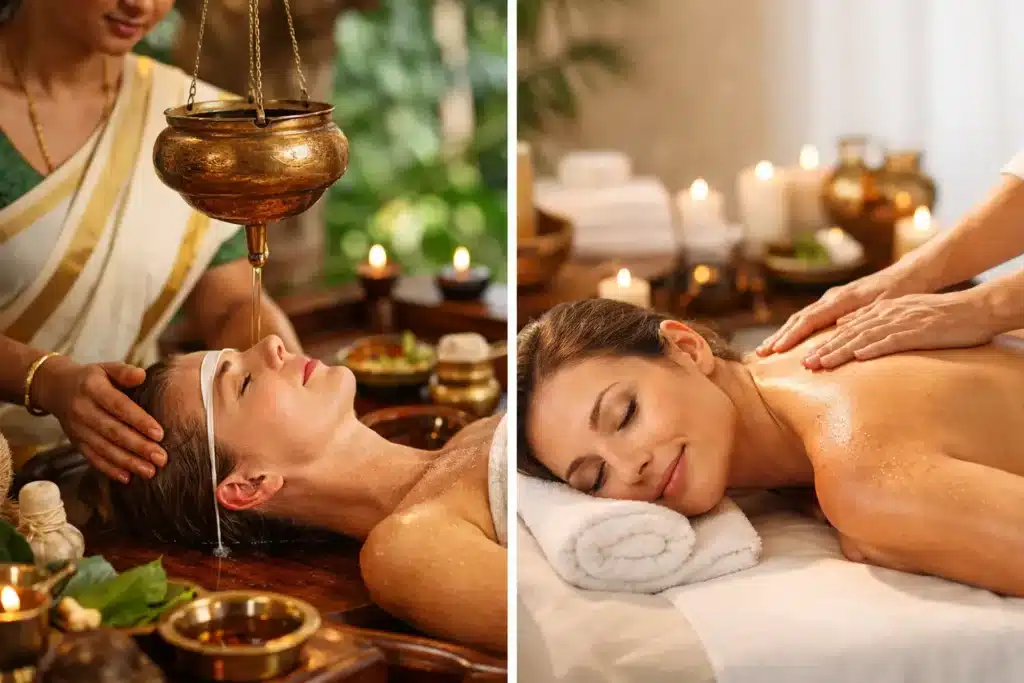
A warm oil massage can feel deeply restorative whether it takes place in a luxury spa or an Ayurvedic retreat. Yet Ayurvedic therapy versus spa treatment is not simply a choice between two massage menus. The real difference is purpose: one is usually designed for immediate relaxation, while the other is traditionally part of a personalized wellness approach shaped around your constitution, current needs, daily rhythm, and retreat goals.
For international travelers considering a wellness stay in Kerala, understanding this distinction helps set realistic expectations. A beautiful spa experience can be exactly what you need after a demanding season. An authentic Ayurvedic program may be more suitable when you want dedicated time for rest, mindful routine, nourishment, yoga, and guided renewal.
Ayurvedic Therapy Versus Spa Treatment: The Core Difference
A spa treatment is generally a stand-alone service. You select a massage, facial, body scrub, hydrotherapy session, or beauty ritual, enjoy it for a set period, and leave feeling refreshed. The experience may be highly skilled, luxurious, and calming, but it is often designed to deliver a short-term sensory benefit: easing tension, supporting relaxation, or helping you feel cared for during a holiday.
Ayurvedic therapy is traditionally more contextual. At a reputable Ayurveda retreat, treatments are not selected only because they sound appealing on a menu. They are commonly recommended after an individual consultation with a qualified Ayurvedic doctor or practitioner. Your preferences, lifestyle, sleep, digestion, energy, stress levels, and body constitution may all inform the program.
This does not mean every Ayurvedic stay must be intensive or clinical. Many guests come to relax and reset. The difference is that relaxation is approached as one part of a wider, intentional rhythm that may include treatment therapies, gentle yoga, meditation, personalized meals, adequate rest, and guidance for carrying supportive habits home.
The intention behind the experience
A spa usually begins with the question, “What would feel good today?” Ayurveda often begins with, “What would support balance for this person at this time?” Both questions are valuable, but they lead to different experiences.
A spa therapist may tailor pressure, fragrance, or focus areas according to your comfort. An Ayurvedic practitioner may recommend particular oils, therapy duration, meal timing, movement, or rest based on a broader assessment. Treatments can still feel wonderfully indulgent, but their place within the program is more deliberate.
A single appointment or a connected program
Spa treatments are often easy to fit into a busy itinerary. You might book a 60-minute massage between sightseeing plans or add a facial before dinner. This flexibility is part of their appeal.
Ayurvedic therapy tends to work best when you give it time. A retreat program may follow a daily schedule, with consultations, prescribed therapies, yoga or breathwork, simple nourishing meals, and quiet intervals between sessions. The goal is not to fill every hour. It is to create enough space for the body and mind to slow down.
For a guest with only a free afternoon, a spa may be the natural choice. For someone seeking a more structured period of restoration, an Ayurveda retreat can offer a richer container.
What an Authentic Ayurvedic Retreat May Include
Authenticity is not measured by carved wooden décor, copper bowls, or an exotic treatment name. It is reflected in thoughtful assessment, qualified care, appropriate hygiene standards, clear communication, and recommendations that are suited to the individual rather than copied from a generic package.
At a well-managed retreat, the experience often begins with a consultation. This conversation gives the Ayurvedic doctor or practitioner a foundation for suggesting suitable therapies and daily practices. It also gives guests an opportunity to discuss comfort, dietary preferences, travel fatigue, accessibility needs, and any health information relevant to their stay.
Treatments may include traditional oil therapies, herbal applications, gentle cleansing rituals, or other classical approaches selected for the guest. The exact plan can evolve during the retreat. A responsible provider should never present one treatment as a guaranteed cure or promise identical results for every visitor.
Yoga and meditation are often included because they complement the quieter pace of Ayurveda. A beginner does not need advanced flexibility or previous knowledge. Gentle movement, breath awareness, and guided relaxation can be adapted to different ages and experience levels.
Meals also have a more central role than they would in a typical spa visit. Rather than treating food as an afterthought, many Ayurveda retreats offer fresh, balanced dishes designed to feel light, satisfying, and supportive of the program. This is one reason a multi-day stay can feel so different from a single massage appointment.
When a Spa Treatment Is the Better Choice
There is no need to make a spa experience seem less meaningful. Sometimes uncomplicated pleasure is exactly the right form of care. A spa treatment may suit you if you are on a short vacation, want a familiar wellness service, prefer complete flexibility, or simply wish to relax without following a structured schedule.
Spas can also be a welcoming introduction for guests who are curious about wellness but not ready to commit to a retreat. A calming massage, steam session, or facial can create a valuable pause in a full life. The benefit may be immediate: a quieter mind, softer muscles, and a renewed sense of comfort.
Be aware, though, that terms such as “Ayurvedic massage” are sometimes used loosely. A spa may offer an Ayurveda-inspired oil massage without providing a full Ayurvedic consultation or personalized treatment plan. That does not automatically make the service poor. It simply means you should understand what is being offered.
How to Choose the Right Experience for You
Start with your intention, not the treatment name. If you want an hour of relaxation, a quality spa is likely to meet your needs beautifully. If you are craving a more immersive reset – one that allows you to step away from habits, screens, rushed meals, and packed schedules – a multi-day Ayurveda retreat may be a more fitting investment of your time.
Ask how treatments are selected. A trustworthy Ayurveda provider should be able to explain whether an initial consultation is included, who oversees the treatment plan, and how recommendations are personalized. Ask about practitioner qualifications, the pace of the program, food arrangements, yoga level, and the support available to international guests.
It is also wise to consider your travel style. Some people flourish with a gentle routine and appreciate having each day thoughtfully organized. Others feel restored by freedom and spontaneity. Neither preference is wrong. The best wellness experience is the one that feels supportive rather than demanding.
Why Kerala adds meaningful context
Kerala is widely respected as a living center of Ayurvedic knowledge, with a long tradition of Ayurvedic education and practice. For travelers, that can mean access to experienced doctors, trained therapists, fresh regional cuisine, and retreat settings where daily wellness routines are handled with care.
The setting matters, but standards matter more. Seek a retreat that combines traditional expertise with comfortable accommodation, clear guest communication, hygienic facilities, and thoughtful travel support. These details allow you to settle in fully, particularly if this is your first wellness journey in India.
AyurYoga Retreats curates personalized Kerala experiences that bring these elements together, from carefully selected accommodations and Ayurvedic consultations to yoga, local coordination, and space to rest at your own pace.
The Value of Choosing With Clarity
The most memorable wellness stays are rarely about collecting the longest list of treatments. They are about receiving the kind of care that matches the moment you are in. A spa can offer a beautiful pause. Ayurveda can offer a more connected opportunity to observe your rhythms and rebuild restorative ones.
Give yourself permission to choose simply, honestly, and without pressure. Whether you book one peaceful treatment or reserve time for a personalized retreat, the first step toward renewal is often creating room to listen to what you genuinely need.