
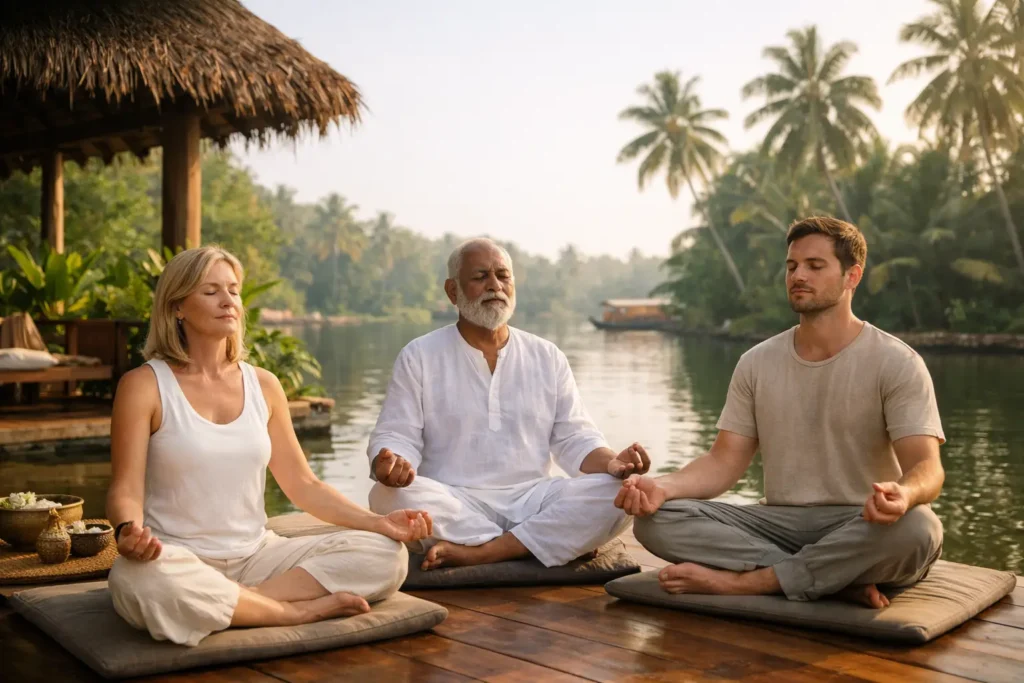
The sound of rain on palm leaves, an early practice before breakfast, and time that is not claimed by meetings or notifications – this is the setting many guests hope to find in a meditation and breathwork retreat Kerala travelers can experience with real depth. Yet a restorative retreat is about more than a beautiful location. The quality of guidance, the pace of the schedule, your comfort, and the way Ayurveda, movement, rest, and nourishment are brought together all shape what you take home.
For international guests, Kerala offers a rare combination: an established wellness tradition, lush natural surroundings, and the practical infrastructure needed to travel with confidence. Whether you are new to breathwork or returning to a long-held meditation practice, the right retreat creates enough structure to support your intentions and enough spaciousness to let your nervous system settle.
What a Meditation and Breathwork Retreat in Kerala Can Offer
Meditation and breathwork are often grouped together, but they serve different purposes within a well-designed wellness stay. Meditation develops attention and awareness. Breathwork uses intentional breathing patterns to help you notice the relationship between breath, body, and state of mind. Practiced gently and with qualified guidance, both can become practical tools for creating a calmer, more grounded daily rhythm.
In Kerala, these practices can sit naturally beside yoga and personalized Ayurvedic wellness care. Rather than treating every guest the same way, a thoughtful program considers your experience level, energy, travel fatigue, preferences, and the amount of quiet you genuinely need. A beginner may benefit from short, clearly instructed sessions and restorative yoga. An experienced practitioner may prefer longer sitting periods, mindful movement, and time for personal reflection.
This is also where the setting matters. A peaceful retreat near backwaters, a quiet beach, or a green inland garden can reduce the constant stimulation that makes it difficult to pause at home. Nature is not a replacement for skilled teaching, but it can make it easier to arrive, breathe more fully, and stay present.
The Value of an Ayurveda-Informed Approach
Ayurveda brings a personalized dimension to a meditation and breathwork retreat in Kerala. Following an initial consultation, qualified practitioners may recommend treatments, food choices, daily routines, and yoga practices that align with your current wellness goals. The aim is not to promise a cure or impose a rigid formula. It is to create a more supportive environment for rest, renewal, and self-awareness.
For some guests, this may include traditional oil therapies, gentle body treatments, or a carefully paced rejuvenation program. For others, the greatest benefit may be the simplicity of regular meals, unhurried mornings, and a schedule that leaves room to rest after a long flight. Ayurveda works best in this context as part of a whole experience, not as an isolated treatment added to a busy itinerary.
A well-managed retreat also recognizes that deeper practices are not always better. Extended breath retention, fast breathing techniques, or emotionally intense sessions may not suit every person. Guests with a health condition, pregnancy, recent surgery, or concerns about breathing should share these details before arrival and follow qualified professional advice. Gentle, adaptable practice is often the wiser choice, especially when your goal is lasting balance rather than a dramatic short-term experience.
What Your Days May Feel Like
The most effective retreat schedule has a rhythm, not a rush. Mornings often begin with guided meditation, breath awareness, or yoga while the day is still cool and quiet. A nourishing breakfast follows, with time to slow down rather than move immediately to the next activity.
Later sessions may include an Ayurvedic consultation or treatment, a workshop on mindful breathing, a gentle yoga class, or simply unstructured time to read, walk, journal, or rest. Evening meditation provides a natural transition out of the day. This repetition is valuable. When practices happen at a similar time each day, they become easier for the mind and body to recognize as a place of pause.
The exact balance depends on the length and focus of your stay. A three- or four-night retreat can be a meaningful reset, particularly if you need rest and a clear introduction to practice. Seven to 14 nights allow more room for gradual settling, Ayurvedic therapies, and a stronger sense of routine. Longer stays may be especially appealing to guests who want to combine a wellness holiday with a more intentional period of renewal.
Choosing the Right Retreat for Your Needs
A polished website and scenic photographs are not enough. Before selecting a retreat, look for signs that the experience is built around care rather than a one-size-fits-all schedule. The most reassuring programs explain who leads the yoga, meditation, and Ayurvedic components, how personal consultations are handled, and what support is available from arrival through departure.
Ask whether the program welcomes beginners and how practices are modified for different abilities. Find out whether private sessions can be arranged if you prefer a more personal approach. If you are traveling as a couple, with a friend, or as part of a small group, ask how much of the schedule is shared and how much can be tailored.
Accommodation also affects the quality of rest. Some travelers feel restored by a peaceful beachfront setting, while others prefer the green stillness of the backwaters or the cooler landscape of the hills. Consider practical details as carefully as the view: room comfort, meal preferences, airport transfers, language support, and how much assistance you would like with travel planning. A retreat should feel cared for from the moment you land, not only during the yoga session.
For hosted groups and retreat leaders, the same principles apply on a larger scale. Reliable local coordination, carefully selected venues, treatment scheduling, dietary planning, transport, and clear communication allow the leader to focus on their guests. AyurYoga Retreats designs these details around the character of each group, combining authentic local wellness expertise with attentive destination support.
Preparing to Receive More From the Experience
You do not need to arrive already calm, flexible, or experienced. In fact, many guests choose a retreat because their ordinary routine has left little room for themselves. A simple intention is enough: perhaps you want to sleep more deeply, feel less hurried, reconnect with a movement practice, or learn a breathing routine you can use during a demanding workday.
It helps to keep the first day light. International travel can bring fatigue, dehydration, and disrupted sleep, so give yourself permission to settle before expecting profound clarity. Wear comfortable clothing, bring a journal if writing supports reflection, and let the retreat team know about dietary needs, mobility considerations, and relevant health information in advance.
Try not to measure the experience by how much you accomplish. Some days meditation feels spacious; on others, your thoughts remain busy. Both are part of practice. The quieter gains often appear in small moments: noticing your breath before reacting, enjoying a meal without distraction, or returning home with a morning ritual that feels realistic rather than demanding.
The most valuable retreat is not the one that asks you to become someone else. It is the one that gives you a calm, well-supported place to hear what your body and mind have been asking for – and a practical way to continue listening after Kerala is behind you.