
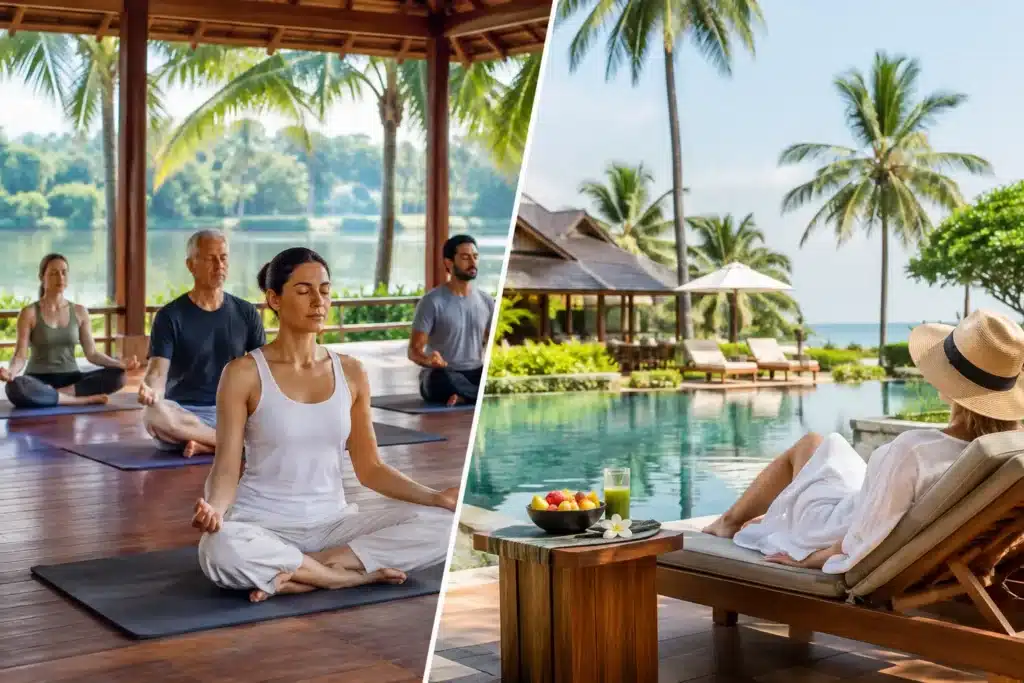
A sunrise yoga class overlooking palms, nourishing meals, time to rest, and a renewed sense of perspective can be part of either experience. Yet the choice between a yoga retreat versus wellness resort shapes far more than your room or daily schedule. It affects how much guidance you receive, how deeply you engage with your practice, and whether your stay feels like a purposeful reset or a restorative vacation with wellness included.
For many international travelers, both sound appealing. The better choice depends on what you need now: consistent practice, individualized Ayurvedic support, spacious flexibility, or a thoughtful combination of all three.
What Makes a Yoga Retreat Different?
A yoga retreat is built around intention. Rather than simply offering yoga as one activity among many, it organizes the stay around a dedicated path of movement, breathwork, meditation, rest, and reflection. Days usually follow a gentle rhythm, often beginning with an early practice and ending with an evening meditation, restorative session, or group discussion.
The defining feature is continuity. You are not just dropping into a class when it suits you. You return to your mat day after day, often with the same teacher, a small group, and an evolving focus. This creates room to notice subtle changes in your energy, posture, attention, and relationship with stress.
A well-designed retreat also accommodates different experience levels. Beginners may receive clear alignment guidance, accessible modifications, and reassurance that they do not need to be flexible or highly experienced to begin. Established practitioners may value longer sessions, pranayama, meditation, philosophy-informed teaching, or the quiet discipline of practicing twice daily.
In Kerala, a yoga retreat can become especially meaningful when paired with authentic Ayurveda. An Ayurvedic consultation may help shape appropriate therapies, meals, and rest periods around your individual constitution and wellness goals. This is not about chasing a dramatic transformation on a fixed timetable. It is about receiving attentive, traditional support within a calm and professionally managed setting.
The Retreat Rhythm Creates Space for Change
A retreat schedule can feel structured, but structure is often its gift. At home, a yoga practice competes with meetings, family commitments, notifications, and unfinished tasks. On retreat, the essentials are already arranged: your sessions, meals, treatments where included, accommodation, and time to pause.
That rhythm can be particularly supportive for travelers who feel depleted, disconnected from healthy routines, or ready to begin a more mindful chapter. It also suits solo travelers who appreciate the ease of a welcoming small group without needing to plan every part of their stay.
The trade-off is freedom. If your ideal holiday means deciding each morning whether to sleep late, take an excursion, swim, read, or book a treatment at the last minute, a highly scheduled retreat may feel too prescriptive. The best retreat programs leave room to breathe while still protecting the purpose that brought you there.
What Defines a Wellness Resort?
A wellness resort offers a broader, more flexible style of renewal. It may include yoga, meditation, spa therapies, Ayurveda-inspired treatments, healthy cuisine, fitness, nature experiences, and peaceful accommodation, but guests typically choose how much of each element they want.
The emphasis is less on a shared curriculum and more on personal preference. You might take yoga in the morning, enjoy an Ayurvedic treatment in the afternoon, spend the next day exploring Kerala’s backwaters or coastal landscapes, and reserve another afternoon for unstructured rest. This model can work beautifully for couples, families, and travelers with different interests or energy levels.
A quality wellness resort should still offer substance, not just attractive surroundings. Look for qualified yoga teachers, experienced Ayurvedic practitioners, clear treatment guidance, hygienic facilities, nourishing meals, and a team that understands the expectations of international guests. Beautiful design matters, but thoughtful care is what turns a pleasant stay into a restorative one.
Flexibility Is the Resort’s Strength
For some guests, the freedom to shape each day is essential. A wellness resort allows you to choose a slower pace without feeling that you have missed the core experience. It can also be a comfortable introduction to yoga and Ayurveda for someone who is curious but not ready to commit to a full retreat schedule.
This flexibility has a trade-off of its own. Without a clear program, it is easier to postpone the practices that initially drew you to wellness travel. A few yoga classes and a massage may leave you refreshed, but they may not provide the continuity or personal reflection that a dedicated retreat can encourage.
That does not make one option better than the other. It simply means that a resort works best when you are willing to create your own rhythm, while a retreat is designed to hold that rhythm for you.
Yoga Retreat Versus Wellness Resort: Key Differences
The simplest distinction is purpose. A yoga retreat is practice-led. A wellness resort is choice-led.
At a retreat, your days are usually shaped around a program, often with set yoga and meditation times, a shared wellness intention, and opportunities to connect with fellow participants. The atmosphere may be intimate and quietly focused. You arrive with a reason, whether that is to deepen practice, release accumulated tension, restore healthier habits, or spend meaningful time with a retreat leader and like-minded group.
At a wellness resort, yoga is usually one element of a wider menu. You have more autonomy over your schedule and may combine wellness with relaxation, sightseeing, and leisure. This can be especially appealing when one person in your party wants daily practice and another prefers treatments, nature, or downtime.
Personalization can exist in both formats. A retreat may tailor practices or Ayurvedic therapies to your needs, while a resort may create a flexible package around your preferred treatments and pace. The question is whether you want personalization within a guided container or personalization through greater independence.
How to Choose the Right Experience for You
Start by considering what you hope to carry home. If you want a stronger relationship with yoga, meditation, and daily self-care, choose a retreat with a clear program and experienced teachers. Consistent practice often makes it easier to establish habits that continue after you return home.
If your priority is rest with options, a wellness resort may be the right fit. It gives you the permission to slow down without asking you to follow a group schedule. This can be ideal after a demanding season of work, for a celebratory couples’ trip, or when you want wellness support alongside cultural exploration.
Your travel style matters as well. Solo travelers often find a retreat naturally sociable without being overwhelming. Couples and friends may appreciate a resort’s freedom, although private or small-group retreats can offer the best of both worlds. Families should look carefully at whether the property and program welcome varied ages and daily needs.
It is also wise to ask practical questions before booking. How many yoga sessions are included each day? Are teachers trained to support beginners? Is an Ayurvedic consultation available before treatments are recommended? Are meals aligned with the program? How much unscheduled time is built in? And if you are traveling to Kerala from abroad, is there reliable assistance with airport transfers, local transportation, accommodation, and pre-arrival planning?
These details protect the quality of your experience. Wellness travel should feel cared for from the first inquiry, not complicated once you arrive.
When a Blended Wellness Stay Is the Best Answer
You do not always have to choose a rigid category. Some of the most rewarding stays combine the depth of a yoga retreat with the comfort and flexibility of a wellness resort. You may begin with several days of structured yoga, meditation, and Ayurvedic treatments, then leave time for a quieter pace, a scenic excursion, or simple rest by the water.
This blended approach is especially helpful for first-time visitors to Kerala. It offers a meaningful introduction to traditional wellness practices while honoring the fact that travel itself should be spacious and enjoyable. At AyurYoga Retreats, thoughtfully curated programs can bring together yoga, Ayurveda, accommodation, and local support in a way that feels personal rather than standardized.
The right setting is not the one with the fullest schedule or the longest treatment menu. It is the one that makes you feel safe enough to soften, supported enough to listen inward, and inspired enough to continue caring for yourself after the journey ends.