
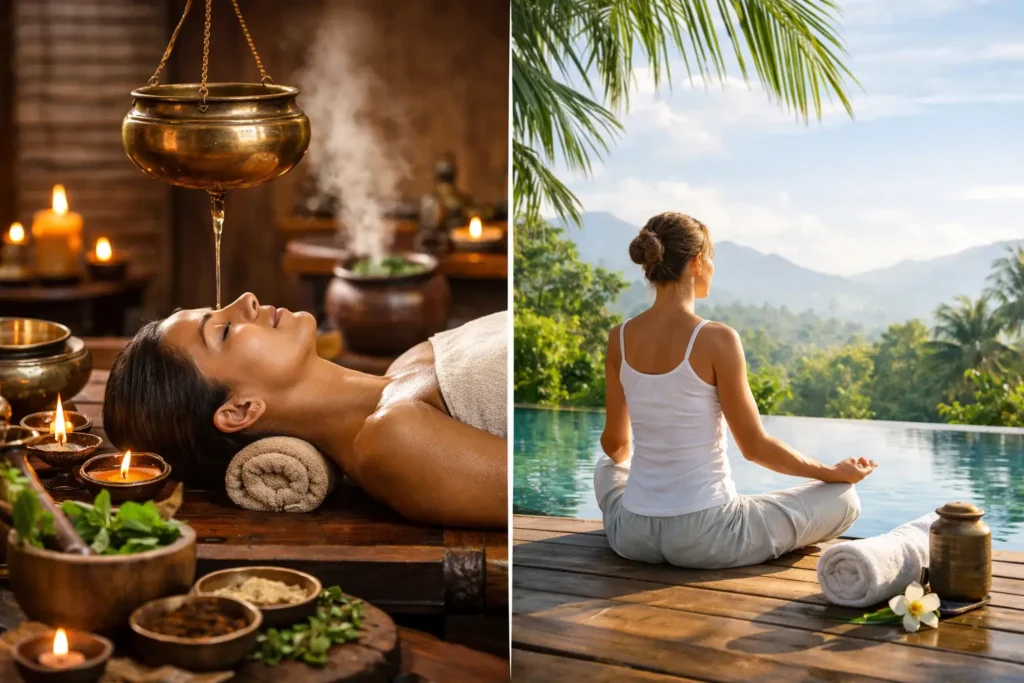
Some guests arrive in Kerala knowing they want deep Ayurvedic treatment. Others simply know they are tired – mentally, physically, emotionally – and need a place that helps them breathe again. If you are weighing a panchakarma or wellness retreat, the right choice depends less on trends and more on what your body, mind, and current life stage are truly asking for.
These two experiences can look similar from the outside. Both may include beautiful surroundings, nourishing meals, yoga, massage, time away from work, and attentive care. Yet their purpose is not the same. One is more clinical, structured, and therapeutic. The other is often gentler, broader, and designed around restoration. Knowing the difference can save you from choosing a program that feels either too intense or too light.
Panchakarma or wellness retreat – what is the real difference?
A wellness retreat is usually created to help you rest, reset habits, reduce stress, and reconnect with yourself. It may include yoga, meditation, Ayurvedic massages, healthy cuisine, nature, and guided wellness practices. The emphasis is often on balance, relaxation, and sustainable renewal.
Panchakarma is different. In Ayurveda, it is a traditional cleansing and therapeutic process designed to eliminate accumulated toxins, correct doshic imbalance, and support deeper healing. It is not simply a spa experience with Ayurvedic touches. A proper panchakarma program is guided by qualified Ayurvedic doctors, shaped by diagnosis, and adjusted according to your constitution, symptoms, strength, digestion, and treatment response.
That distinction matters because expectations shape outcomes. If you book a retreat hoping for medical-grade Ayurvedic intervention, a general wellness program may feel pleasant but incomplete. If you choose panchakarma when you really need rest and emotional decompression, the discipline of treatment may feel more demanding than restorative.
When a wellness retreat is the better choice
A wellness retreat is often ideal for people who are overextended rather than deeply unwell. If your main concerns are stress, poor sleep, screen fatigue, mild burnout, mental clutter, or a loss of routine, a retreat centered on yoga, meditation, wholesome food, body therapies, and calm surroundings can be exactly the right medicine.
It also suits first-time wellness travelers who want to experience Ayurveda in an accessible way. You may receive consultations and selected treatments, but the overall pace is usually more spacious and less restrictive than a full panchakarma program. There is often room for cultural experiences, beach walks, rest by the pool, or time to journal and reflect.
For couples or friends traveling together, this format can be especially appealing. One person may want yoga and meditation, while another is more interested in massage, nutrition, and relaxation. A well-designed retreat can meet both needs without forcing a highly clinical schedule.
That said, wellness retreats vary widely. Some are close to luxury vacations with a healthy theme. Others are serious, expertly managed programs with personalized consultations, structured daily routines, and measurable benefits. The best ones do not promise dramatic detox for everyone. They focus on helping you feel steadier, lighter, and more connected to your own wellbeing.
When panchakarma may be the wiser path
If you are dealing with chronic imbalance, recurring symptoms, sluggish digestion, inflammatory conditions, stress-related depletion, hormonal irregularity, pain patterns, or a long period of accumulated fatigue, panchakarma may be more appropriate. It is often chosen by guests who want focused therapeutic care rather than a simple reset.
A true panchakarma experience begins with assessment, not assumptions. An Ayurvedic doctor considers your prakriti and vikriti – your constitutional nature and your current imbalance – before prescribing therapies, herbs, diet, and rest. Treatment may include preparatory therapies, internal oleation, sweating therapies, cleansing procedures, and a carefully managed recovery phase. The process is individualized, not packaged as a one-size-fits-all detox.
This is one reason Kerala holds such significance. Here, Ayurveda is not a trend layered onto hospitality. In the right setting, it is practiced within a living medical tradition, supported by experienced physicians, trained therapists, therapeutic cuisine, and routines that honor the full logic of treatment.
Still, panchakarma is not for everyone at every moment. It requires commitment, time, and willingness to follow guidance. You may be asked to simplify your diet, reduce stimulation, rest more than you expected, and move through phases that are less glamorous than a brochure suggests. For the right person, this structure feels relieving. For the wrong person, it can feel restrictive.
Panchakarma or wellness retreat for stress and burnout
This is where many international guests hesitate, because burnout can look both medical and emotional.
If you are exhausted but still functioning, sleeping poorly, feeling mentally overloaded, and craving space, a wellness retreat is often the best starting point. It provides nervous system recovery without asking too much of a body that may already feel depleted. Gentle yoga, calming therapies, regular meals, circadian rhythm support, and a beautiful environment can create real change.
If stress has been left unaddressed for years and has progressed into persistent physical symptoms – digestive issues, headaches, skin flare-ups, menstrual disruption, anxiety-related fatigue, or chronic inflammation – panchakarma may offer the deeper intervention needed. But even then, suitability depends on your current strength. In Ayurveda, treatment intensity should match the patient, not the marketing language.
This is why thoughtful guidance matters. A reputable retreat partner will not push panchakarma simply because it sounds more specialized. They will help determine whether you need profound cleansing, a restorative retreat, or a phased approach that begins with recovery and moves into deeper therapy later.
How the guest experience feels different
A wellness retreat usually feels open, nurturing, and gently structured. Your days may include sunrise yoga, herbal tea, consultations, massage, meditation, nutritious meals, and time to rest or explore. You leave feeling reset and inspired, often with practical habits you can continue at home.
Panchakarma feels more intentional and treatment-led. Your schedule revolves around what your doctor prescribes. Meals may be simpler. Activities may be limited. Rest is not incidental – it is part of the therapy. Progress is often subtle at first and becomes clearer over time, sometimes after the program ends, when digestion, sleep, clarity, and energy begin to stabilize.
Neither is inherently better. They serve different purposes. One creates space for recovery and reconnection. The other is a traditional therapeutic process aimed at deeper correction.
Questions to ask before you choose
Before booking, it helps to be honest about your goal. Do you want to feel better, or do you want to address a specific imbalance? Are you looking for rest, or are you ready for treatment? Do you want flexibility and comfort, or are you prepared for dietary discipline and a clinically guided routine?
It is also wise to ask who is leading the program. A quality panchakarma retreat should involve qualified Ayurvedic doctors, not just therapists or spa staff. A quality wellness retreat should still offer credible wellness leadership, individualized support, and enough structure to create results rather than temporary indulgence.
Length of stay matters too. A short wellness retreat can be beneficial in five to seven days. Panchakarma usually requires more time to be meaningful, especially if consultation, preparation, cleansing, and recovery are all included properly. If your schedule is tight, forcing a shortened version of panchakarma may not deliver what you hope for.
Choosing well in Kerala
Kerala offers both gentle retreat experiences and serious Ayurvedic treatment programs, which is why so many global travelers come here seeking more than a vacation. The key is matching the right setting to the right need. At AyurYoga Retreats, that often means helping guests look past labels and choose a program that supports genuine healing, whether they need deep detoxification or a quieter path back to balance.
The most meaningful wellness journeys are rarely chosen by ambition alone. They begin with a more grounded question: what kind of care will truly support me now? When you answer that honestly, the choice between panchakarma and a wellness retreat becomes much clearer – and much more transformative.