
YOGA -A Journey of Union, Balance, and Inner Peace
Yoga is a profound physical, mental, and spiritual practice that originated in ancient India over thousands of years ago. The word “Yoga” comes from the Sanskrit root “yuj,” meaning to join or to unite. At its core, yoga unites the mind, body, and spirit. This practice guides us toward balance, well-being, and inner peace.
In today’s fast-paced world, yoga offers a timeless path to reconnect with ourselves, slow down, and live more consciously.
The Core Elements of Yoga
1. Asanas – The Physical Practice
Asanas are the physical postures of yoga designed to improve flexibility, strength, balance, and posture. Regular practice helps release physical tension, enhances circulation, and prepares the body for deeper meditative states.
Common asanas include:
- Downward Dog (Adho Mukha Svanasana)
A rejuvenating inversion that stretches the spine, hamstrings, and shoulders, improves circulation, relieves fatigue, and calms the nervous system while building strength and flexibility.
- Mountain Pose (Tadasana)
A foundational standing posture that improves posture, balance, and body awareness, grounding the practitioner while encouraging steady breathing, alignment, inner stability, and mindful presence.
- Tree Pose (Vrksasana)
A balancing posture that strengthens legs and core, enhances focus and concentration, improves stability, and cultivates mental clarity while promoting a sense of grounding and calm.
- Child’s Pose (Balasana)
A deeply restorative resting pose that gently stretches the spine and hips, relieves stress, calms the mind, and encourages surrender, relaxation, and conscious breathing.
- Cobra Pose (Bhujangasana)
A gentle backbend that opens the chest and heart, strengthens the spine, improves posture, stimulates digestion, and energizes the body while relieving stress and fatigue.
These postures not only strengthen the body but also calm the nervous system and promote relaxation.
2. Pranayama – The Art of Breathing
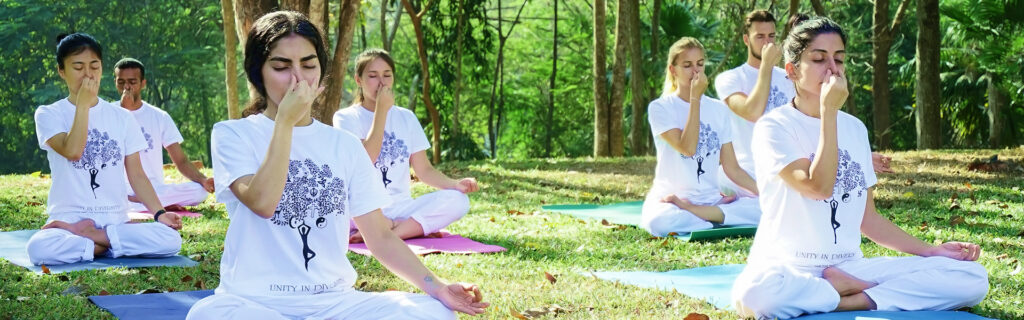
Pranayama refers to conscious breathing techniques that regulate prana, the vital life force. Breath control is central to yoga, helping to calm the mind and restore inner balance.
Popular pranayama practices include:
- Nadi Shodhana: Balances energy and reduces stress
A calming breathing technique that balances left and right energy channels, reduces stress and anxiety, improves mental clarity, and prepares the mind for meditation.
- Ujjayi Breathing: Creates rhythmic, calming breath flow
A slow, controlled breath creating a gentle ocean-like sound, promoting focus, calming the nervous system, regulating body temperature, and supporting mindful movement during yoga practice.
- Kapalabhati: Energizes the body and clears mental fog
An energizing cleansing breath that stimulates digestion, increases lung capacity, boosts metabolism, clears mental fog, and revitalizes the body and mind.
Through pranayama, practitioners experience clarity, vitality, and emotional stability.
3. Meditation – Cultivating Inner Stillness
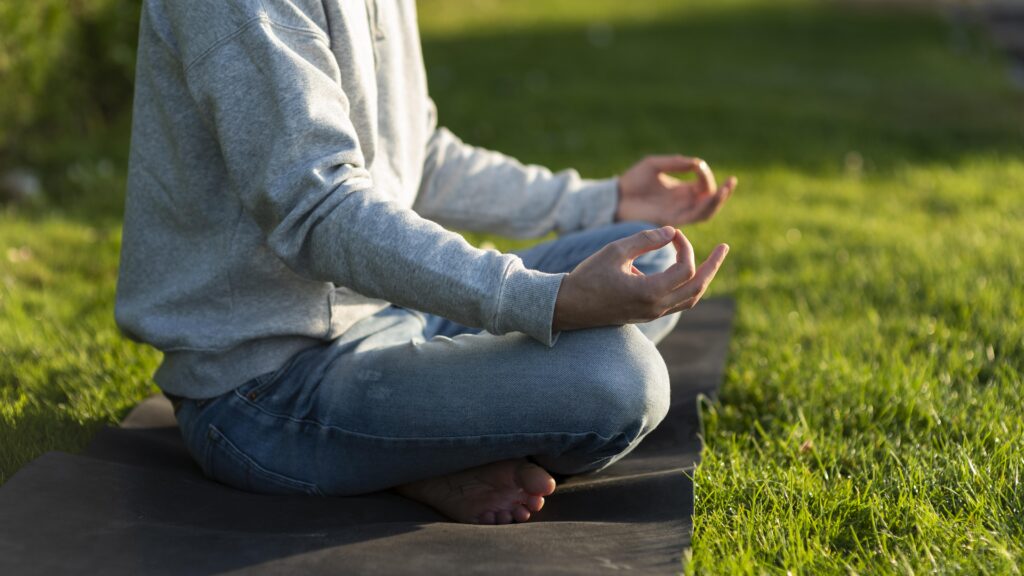
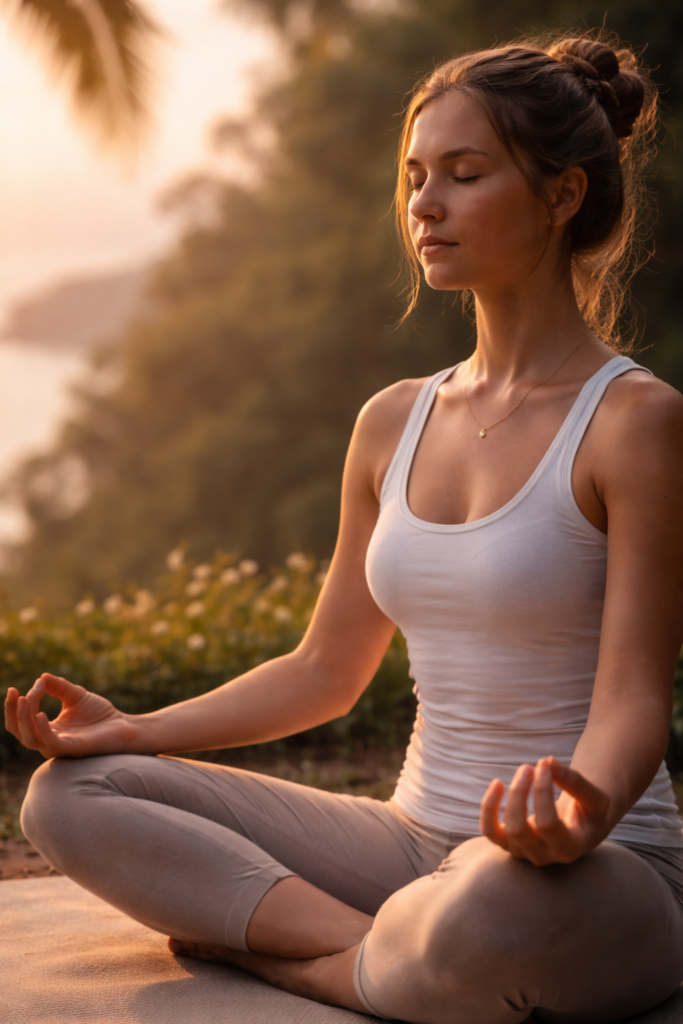
Meditation (Dhyana) is the heart of yoga. It trains the mind to become still, focused, and aware. With consistent practice, meditation reduces stress and enhances self-awareness.
Common meditation styles include:
- Mindfulness meditation
A practice of present-moment awareness that observes breath, sensations, and thoughts without judgment, reducing stress, improving focus, emotional balance, and cultivating inner calm.
- Mantra meditation (like chanting “Om”)
A meditative practice using repeated sacred sounds like “Om” to quiet mental fluctuations, deepen concentration, elevate awareness, and create a sense of inner harmony.
- Guided meditation
A structured meditation led by a teacher or audio guidance, helping relax the body, calm the mind, release emotional tension, and access deeper states of awareness.
The ultimate aim is inner silence, where clarity and peace naturally arise.
These principles lead practitioners toward self-realization and lasting harmony.
Yoga Philosophy: The Eightfold Path
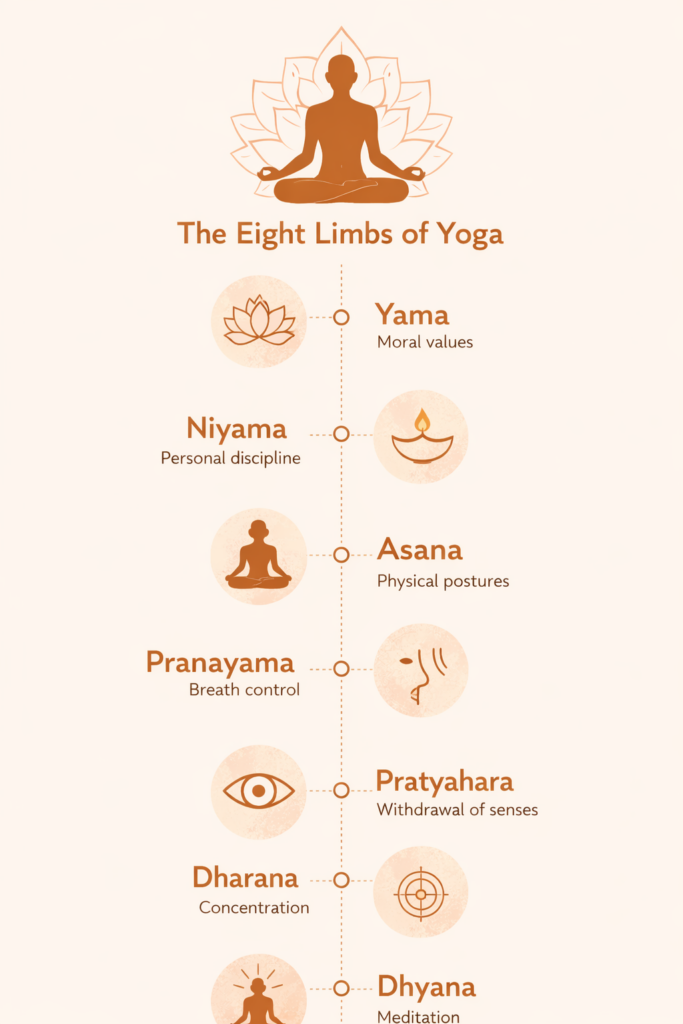
Yoga is more than exercise—it is a way of life. The Yoga Sutras of Patanjali outline the Eight Limbs of Yoga, a comprehensive guide to ethical and mindful living:
- Yama – Moral values :
Ethical guidelines promoting non-violence, truthfulness, honesty, self-restraint, and compassion toward all living beings.
- Niyama – Personal discipline :
Practices for self-purification, contentment, discipline, self-study, and devotion to cultivate inner growth and spiritual awareness.
- Asana – Physical postures :
Body postures improving flexibility, strength, balance, and stability, preparing the practitioner for meditation and mindfulness.
- Pranayama – Breath control
Techniques regulating breath to increase energy flow, calm the mind, and enhance mental clarity and vitality.
- Pratyahara – Withdrawal of senses
Detachment from external distractions, turning inward to focus on inner awareness and cultivate mental calm
- Dharana – Concentration
Focused attention on a single point, object, or mantra to stabilize the mind and deepen meditation practice.
- Dhyana – Meditation
Continuous, effortless awareness of the present moment, promoting deep mental stillness, clarity, and spiritual insight
- Samadhi – State of bliss and unity
Ultimate state of meditation where self merges with universal consciousness, experiencing profound joy, oneness, and enlightenment.

Hatha Yoga
Gentle, beginner-friendly practice emphasizing foundational postures, alignment, breath, and relaxation.
Vinyasa Yoga
Dynamic flowing practice linking breath with movement, building strength and flexibility.

Ashtanga Yoga
Structured, physically demanding series challenging strength, endurance, and mental focus.
Iyengar Yoga
Alignment-focused yoga using props to ensure precise posture and balance.

Kundalini Yoga
Energy-awakening practice combining breath, movement, meditation, and chanting techniques.

Restorative Yoga
Deeply relaxing practice supporting healing, stress relief, and body restoration.
The Transformational Benefits of Yoga
Physical Benefits
- Improved flexibility, strength, and posture
- Reduced chronic pain and fatigue
Mental Benefits
- Lower stress and anxiety
- Improved focus and emotional balance
Emotional & Spiritual Benefits
- Greater self-awareness
- Inner peace and connection with nature
Yoga as a Way of Life
Yoga is not limited to the mat. It influences how we eat, breathe, think, and relate to the world. When integrated with Ayurveda, yoga becomes a powerful lifestyle practice that supports long-term health and well-being.
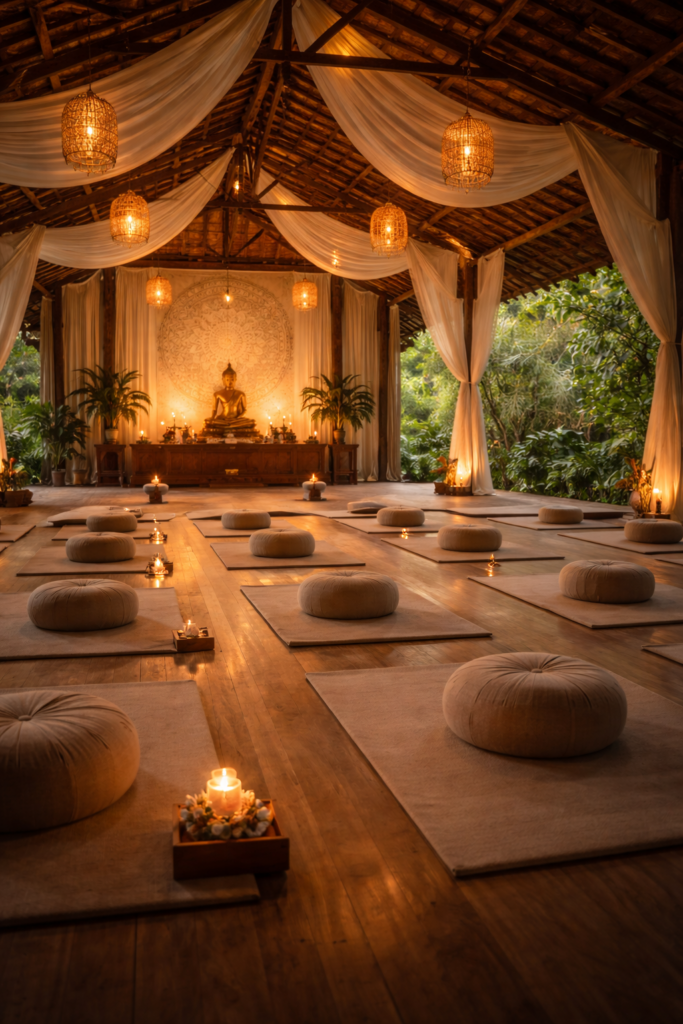
A yoga retreat lets you fully immerse yourself in this lifestyle—free from distractions—surrounded by nature, guided by experienced teachers.
Join This Yoga Retreat
Step away from routine and step into stillness. Our carefully curated Yoga & Ayurveda Retreat offers:
-
- Daily yoga and meditation sessions
-
- Guided pranayama practices
-
- Ayurvedic therapies and nourishing meals
-
- Peaceful natural surroundings
Reconnect with your true self. Restore balance. Awaken inner peace.